Rain in Conakry does not fall; it arrives. It drops from the heavy African sky in sheets of gray iron, turning the red dust of the capital into slick, viscous mud within minutes. For most of the city, the downpours signal a temporary retreat indoors, the rhythmic pounding of water on corrugated tin roofs, the smell of wet earth, and the waiting.
But on the outskirts, beneath the shadow of the massive dump site in the neighborhood of Hamdallaye, the rain meant something entirely different. It meant terror.
Mountains of refuse do not stay still when water gets inside them. They breathe. They shift. They liquefy.
Thirty lives. Snuffed out under tons of rotting plastic, industrial waste, and domestic trash. Thirty human beings whose daily existence was already a quiet negotiation with survival, swallowed whole by the very city they helped keep clean and functioning.
Consider what happens when a metropolis outgrows its conscience. Conakry sits on a narrow peninsula, squeezed between the Atlantic Ocean and rising hills. Space is a luxury reserved for the fortunate. For everyone else, life presses against the margins. And the margins of Conakry included the towering, unregulated rubbish mountain that loomed over the community like an industrial volcano.
No one wakes up expecting a landslide of garbage. Landslides belong to the Alps, to majestic peaks stripped of their trees by sudden tremors. They do not belong to the discarded remnants of daily consumerism. Yet, physics remains indifferent to poetry. When relentless seasonal downpours saturated the core of the dump, the internal pressure spiked. The garbage lost its friction. The slope gave way.
Night fell over Conakry, but the darkness brought no relief. Only sirens, the frantic shouts of neighbors digging with bare hands through reeking debris, and the agonizing realization that the state’s safety nets were woven from threadbare promises.
(Note: The following scene is a composite dramatization based on documented survivor accounts from municipal disaster reports, designed to illustrate the human cost of infrastructural neglect.)
Imagine a young mother named Aminata, huddled inside a cinderblock room while the wind howled outside. Her children are asleep under a single patched blanket. The roof leaks in two places, catching drops in plastic buckets with a steady ping-pong rhythm. Then comes the sound. Not a crash, but a low, subterranean groan, like the hull of a ship tearing apart under too much weight.
Before she can lift the youngest child, the wall bursts inward.
It is not water that floods the room. It is a thick, black tide of sludge, broken furniture, rotting organic matter, and jagged metal. In seconds, the familiar sanctuary of home transforms into a tomb.
This is the hidden cost of urban neglect. We treat waste management as an administrative nuisance, a line item on a bureaucratic budget sheet to be minimized or ignored until catastrophe forces our hand. We push our trash out of sight, placing it on the edges of poor neighborhoods, out of mind for those who write the policies, right in the path of those who have nowhere else to run.
The tragedy at the Conakry landfill is not an anomaly. It is a symptom of a global crisis unfolding in the fast-growing cities of the Global South, where urbanization outpaces infrastructure at a breakneck speed. Municipal authorities struggle to process the sheer volume of modern consumption. Plastic bottles, electronics, organic waste—it all accumulates faster than any municipal trucks can haul it away, piling higher and higher into unregulated mountains that defy gravity until they cannot.
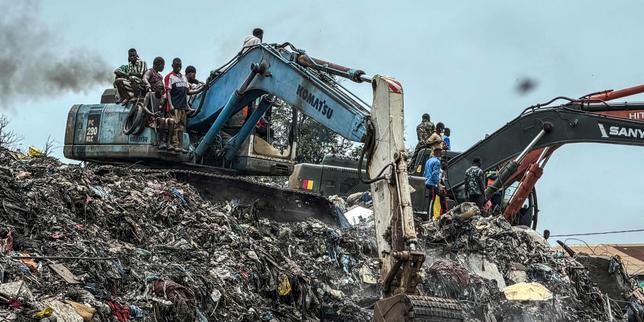
Rescue workers arrived at dawn, wading through knee-deep muck, their faces wrapped in cloth against the overwhelming stench of decay. Heavy machinery churned through the grey waste, lifting twisted sheets of corrugated iron and broken timber, searching for signs of life where none remained. Families gathered at the perimeter, their eyes hollow, clutching photographs and identification papers wrapped in plastic bags.
Each body recovered was a quiet indictment.
An indictment of a system that fails to designate safe zones for waste. An indictment of urban planning that prioritizes commercial growth over human habitation. An indictment of a globalized economy that exports consumer habits to regions unequipped to handle the resulting refuse.
When the rain finally stopped and the fierce tropical sun broke through the clouds, steaming vapor rose from the scar left by the collapse. The air smelled of rot and damp ash. Children from neighboring streets walked to the edge of the cordoned-off zone, staring silently at the raw, dark earth exposed by the slide.
They did not speak. They did not play. They simply looked up at what was left of the mountain, waiting for the next storm.


