The mainstream media loves a "bravery against the odds" narrative. Every spring, like clockwork, the headlines churn out the same tired tropes: the mountain is angry, the Khumbu Icefall is a deathtrap, and the climbers are rugged souls defying nature.
The latest obsession? A "massive ice block" dangling over the route, supposedly threatening the entire season.
Let’s stop pretending this is about adventure. It’s about logistics, ego, and a very expensive queue for a selfie. The narrative that climbers are "undeterred" by physical hazards isn't a testament to human spirit; it’s a reflection of the sunk-cost fallacy. When you’ve dropped $75,000 to $110,000 on a permit and a guided tour, an ice block isn't a deterrent—it’s an annoyance you pay someone else to mitigate.
The Myth of the Unpredictable Mountain
The standard reporting suggests that the "opening" of the Everest season is some organic event dictated by the gods of weather. In reality, it is a managed industrial process.
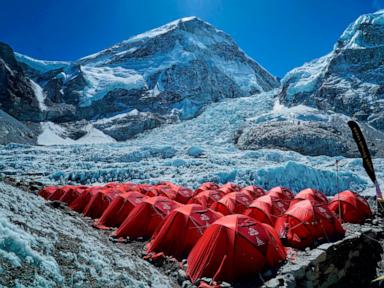
The "Icefall Doctors"—the highly skilled Sherpas who actually do the work—fix the ropes and ladders. They find the path. The "climbers" (mostly wealthy hobbyists) simply wait at Base Camp until the infrastructure is ready.
The presence of a large hanging serac or a precarious ice block isn't a shock. The Khumbu Icefall is a glacier that moves up to a meter a day. It is, by definition, a collapsing pile of frozen rubble. To act surprised that there is an "ice block" in the way is like acting surprised that there is traffic on the 405.
The delay in opening the route this year wasn't a crisis of safety; it was a bottleneck in production. We need to call it what it is: a supply chain issue for the summit industry.
Why "Risk" is the Product, Not the Obstacle
Why does the media fixate on these specific hazards? Because without the threat of death, the Everest business model collapses.
If Everest were actually safe, the prestige would vanish. The "Ice Block" serves as a perfect PR tool. It builds tension. It makes the eventual summit photos look like a victory over a sentient, malevolent force.
But look at the data. The vast majority of deaths on Everest in the last decade didn't happen because of freak ice movements. They happened because of overcrowding, exhaustion, and high-altitude pulmonary edema (HAPE) in the "Death Zone."
The industry focuses on the "huge ice block" because it’s a visible, cinematic threat. It distracts from the systemic failure of letting 400+ people with varying levels of competence stand in a line at 8,800 meters.
The Illusion of Expertise
I’ve watched the demographic of Everest shift for twenty years. We’ve moved from elite alpinists to "aspirational high-net-worth individuals."
These people aren't "undeterred" by the ice block because they don't truly understand the mechanics of the ice block. They rely entirely on the specialized labor of the Sherpas.
- Sherpas: Carry the oxygen.
- Sherpas: Set the fixed lines.
- Sherpas: Cook the meals.
- Sherpas: Risk their lives multiple times a day in the Icefall so the client only has to do it twice.
The client isn't conquering a mountain. They are consuming a high-end service package. The ice block is just part of the "immersive experience."
The Economics of the Death Zone
The competitor's article suggests that climbers are "undaunted." A more accurate word would be "leveraged."
Imagine a scenario where you invest your life savings into a tech startup. On the day of the IPO, the servers catch fire. Do you walk away? No. You demand the engineers fix it so you can get your payout.
The climbers at Base Camp are investors. The summit is the ROI.
The Nepalese government, which relies heavily on the $11,000 permit fees, has zero incentive to cancel a season over a single ice block. They will simply find a way around it. This isn't about human resilience; it's about the fact that the machine is too big to stop.
The Crowding Paradox
The irony of the "late start" caused by the ice block is that it actually makes the mountain more dangerous.
When you compress the climbing window, you create "human jams." Everyone tries to hit the same weather window. You get 200 people clipped into the same rope, moving at the pace of the slowest person.
The ice block isn't the killer. The delay is the killer.
By the time the route opens, the pressure to summit becomes frantic. Rational decision-making goes out the window. People who should turn back at 2:00 PM push on because "the season started late and this is my only shot."
Stop Asking "Will They Make It?"
The wrong question is being asked. The media asks, "Will the climbers overcome the ice block?"
The real question is: "Why are we still calling this mountaineering?"
Mountaineering involves self-sufficiency. It involves making your own route and managing your own risk. Everest, in its current state, is a guided industrial tour.
If you want to understand the "risk," don't look at the ice block. Look at the insurance premiums. Look at the sheer volume of oxygen canisters being dragged up the South Col.
We have commodified the world's highest peak to the point where the environment is irrelevant. The ice block is just a temporary glitch in the software of the summit industry.
The climbers will go. The Sherpas will fix the ladders. The photos will be posted. And next year, there will be another ice block, and another "brave" headline, and another $100,000 check signed by someone who wants to feel alive without actually being in control of their own survival.
The mountain hasn't changed. We just got better at lying about why we're there.
Go to the Karakoram if you want to climb. Go to Everest if you want to be part of a very expensive, very cold, very crowded theatrical production.
The ice block isn't an obstacle. It's the set design.