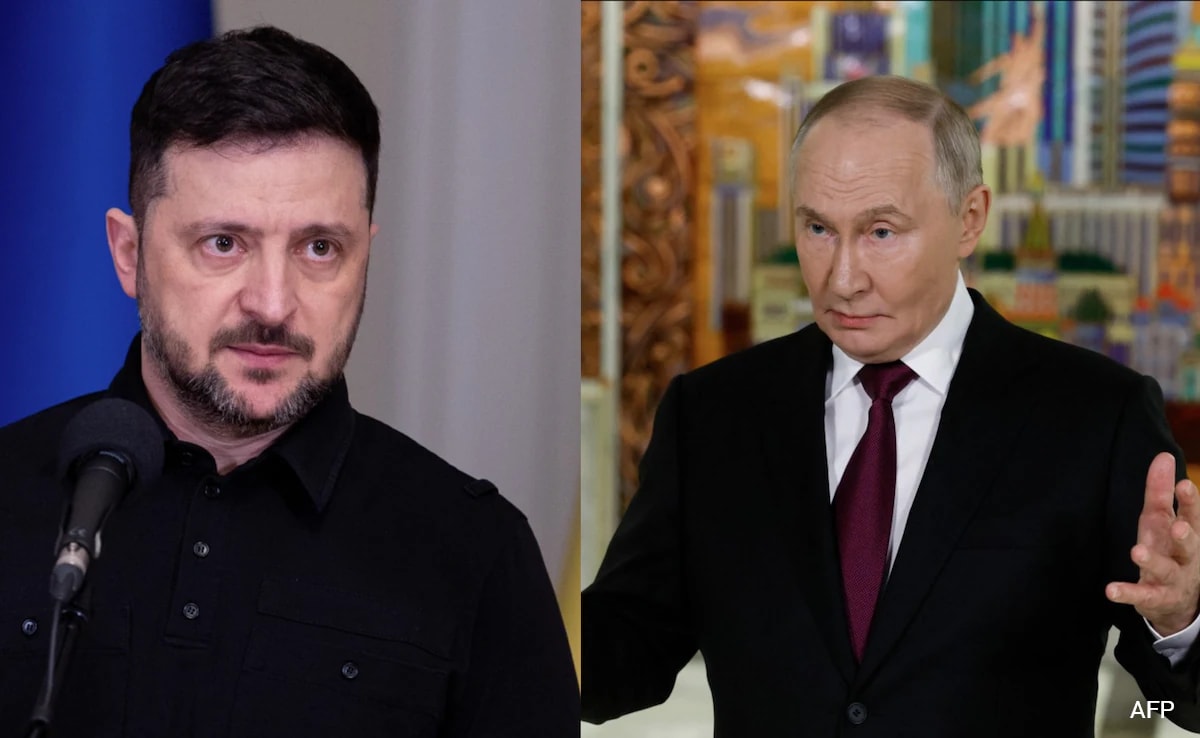
The Strategic Shift
President Volodymyr Zelenskyy floated a partial cessation of hostilities targeting energy infrastructure and long-range aerial assaults, effectively reviving diplomatic maneuvers through a transactional lens. This proposal arrived not from a position of unchecked strength, but through the grueling arithmetic of attrition. Winter approaches. The electrical grid remains brittle. Western munitions deliveries arrive with frustrating irregularity.
By offering a mutual freeze on strikes directed at critical power grids and logistical nodes, Kyiv is testing Moscow's willingness to engage in localized risk reduction. Yet, the Kremlin views humanitarian gestures through an operational prism. Every pause in bombardment is calculated for its military utility.
Behind closed doors in European foreign ministries, diplomats recognize the subtext. A partial ceasefire on infrastructure does not stop the infantry grind in the Donbas. It merely shifts the theater of competition back to pure manpower and artillery volume, an arena where Russian demographic scale poses an enduring structural advantage for Moscow.
The Infrastructure Vulnerability Matrix
Energy systems form the central nervous system of modern industrial states. When high-explosive drones and cruise missiles systematically target substations, transformers, and generation facilities, the state buckles long before the frontline collapses.
- Substation Redundancy: Ukrainian engineers have spent months decentralizing power distribution, relying on modular mobile units rather than monolithic Soviet-era mega-plants.
- Air Defense Allocation: Protecting every municipal grid requires dispersing Patriot and NASAMS batteries, leaving frontline brigades dangerously exposed to glide-bomb attacks.
- Economic Strain: Industrial output drops exponentially when rolling blackouts cripple manufacturing and metal processing plants.
A mutual prohibition on targeting power plants offers Kyiv immediate relief from civilian suffering, yet it risks freezing a territorial status quo that heavily favors occupying forces. Moscow retains roughly one-fifth of Ukrainian sovereign territory. Freezing the aerial campaign without a corresponding freeze on territorial conquest leaves the underlying territorial grievance unresolved, turning a temporary truce into a permanent partition of convenience for the Kremlin.
Historical Parallels of Partial Truces
Attempts to partition military conflicts into distinct, negotiable categories rarely succeed without comprehensive political settlements. The Minsk agreements of the previous decade offered a template of phased implementation, and every single phase collapsed under the weight of mutual distrust.
When combatants agree to halt one specific instrument of violence while continuing others, the remaining vectors of war intensify. If long-range missiles are grounded, artillery barrages escalate. If drones are parked, infantry assaults increase. War is a fluid economic system of violence; suppressing one channel merely inflates the volume in another.
Washington watches these diplomatic trial balloons with calculated skepticism. American defense officials understand that President Vladimir Putin operates on a timeline dictated by Western political cycles rather than seasonal weather patterns. Moscow waits for fatigue to erode coalition support. A partial ceasefire that allows the Russian military industrial complex to catch its breath without incurring reciprocal strategic costs serves Russian doctrine far more than Ukrainian security.
The Economic Cost of Attrition
Financial endurance underwrites military capacity. Sanctions have altered Russian trade routes, rerouting energy flows toward Asian markets through maritime shadow fleets and overland pipelines. While Western financial restrictions have choked off access to advanced semiconductors, domestic substitution and parallel imports through third-party states have kept the Russian war machine functional.
"A ceasefire built on mutual fatigue rarely survives the first tactical advantage seized by either side."
Ukraine faces an equally daunting fiscal horizon. Rebuilding shattered infrastructure requires hundreds of billions of dollars, sums that cannot be sustainably drawn from domestic tax revenues while a third of the economy remains displaced or destroyed. Every day the conflict persists, the dependency on multilateral donor institutions deepens. A localized halt to aerial bombardment would temporarily lower reconstruction outlays, giving international financial institutions breathing room to disburse development aid without watching it immediately disintegrate into concrete rubble.
The Diplomatic Impasse
True peace negotiations require overlapping zones of vital interest. Currently, the inverse is true. Moscow demands total capitulation disguised as neutralization, while Kyiv insists on territorial restoration backed by binding security guarantees that mirror Article 5 protection.
Proposing a cessation of airstrikes acts as a diplomatic litmus test. It forces the Kremlin to either publicly reject a humanitarian stabilization measure—thus alienating neutral capitals in the Global South that preach non-alignment—or accept a framework that implicitly recognizes Ukrainian state resilience.
Moscow's response will dictate the trajectory of the conflict through the coming year. If the proposal is dismissed out of hand, the artillery will roar louder, and the remaining transformers will burn. If it is entertained, it will mark the beginning of a cold, pragmatic calculus where survival supersedes total victory on both sides of the trenches.