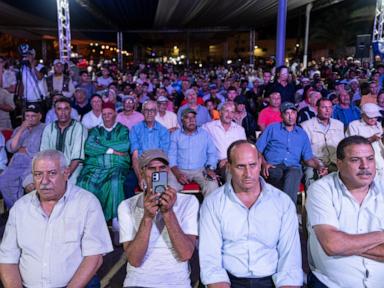
Moroccans are heading to the polls to elect a new House of Representatives in a vote shadowed by widespread youth disillusionment, persistent economic strain, and recurring migration surges toward the Spanish enclave of Ceuta. While international coverage often frames the election through the lens of border enforcement and European migration agreements, the actual fault lines run much deeper inside the country's domestic economy and political architecture.
The surface narrative is easy to grasp. Young people, largely from Generation Z, have taken to the streets and social media platforms to protest unemployment, inflation, and the rising cost of basic goods. At the same time, mass attempts to swim or climb into Ceuta—a tiny Spanish territory on the northern tip of Africa—have repeatedly tested security forces on both sides of the Mediterranean. Yet treating these events as isolated crises misses the structural reality of how power, patronage, and demographics collide in modern Morocco.
The Architecture of a Managed Democracy
To understand what a parliamentary election in Morocco actually changes, you have to look at where real authority sits. Morocco operates as a constitutional monarchy, though the balance of power heavily favors the palace. Under the 2011 constitution, drafted in the wake of the February 20 Movement during the Arab Spring, the king must appoint the head of government from the party that wins the most seats in the House of Representatives.
That reform was widely praised abroad. On the ground, its impact has been more constrained.
The monarchy retains direct control over sovereign ministries, foreign policy, defense, religious affairs, and the overarching strategic direction of major economic investments. Parliament debates legislation, approves budgets, and oversees public administration, yet its room to maneuver narrows whenever policy touches core palace priorities.
Voters know this. Turnout in Moroccan legislative elections has historically struggled to cross the fifty percent threshold, and participation among citizens under thirty often lags well behind national averages. When young Moroccans look at the ballot box, many see a rotating cast of established parties competing to manage policies they did not design.
Why Gen Z Took to the Streets
The frustration driving recent youth mobilization is rooted in arithmetic rather than ideology. Morocco possesses a young population, and every year hundreds of thousands of new entrants arrive in a labor market unable to absorb them. Official statistics consistently show urban youth unemployment hovering at levels roughly triple the national rate, and even those numbers obscure the reality of underemployment and informal work.
A university degree no longer guarantees a stable livelihood. For decades, an implicit social contract held that higher education led to public sector jobs and middle-class security. Fiscal tightening and public sector hiring freezes dismantled that pathway long ago, while the private sector has failed to expand fast enough to replace it.
Inflation compounded the squeeze. Droughts spanning multiple consecutive years hammered the agricultural sector, which still employs a massive share of the rural workforce and contributes heavily to domestic food supply. As prices for cooking oil, produce, and fuel climbed, household budgets snapped.
Unlike the organized labor unions or Islamist movements that drove earlier waves of dissent, Gen Z protesters operate through decentralized digital networks. Viral videos on TikTok, encrypted messaging groups, and localized flash demonstrations have replaced formal party structures. These young activists rarely rally behind a single charismatic leader or a unified ideological manifesto. Instead, they demand immediate, tangible fixes—lower living costs, transparent public hiring, decent healthcare, and accountability for local officials.
The Ceuta Pressure Valve
When domestic avenues for advancement feel sealed shut, the border becomes an irresistible magnet. Ceuta and its sister enclave Melilla represent the only land borders between the European Union and mainland Africa, separated from Moroccan territory by fortified fences and choppy coastal waters.
Every major surge toward Ceuta follows a recognizable pattern. Rumors circulate online—sometimes amplified by smugglers, sometimes by pure desperation—that border controls have relaxed or that a specific night offers an opening. Within hours, hundreds or thousands of young men, along with growing numbers of teenagers and families, converge on the northern coast near Fnideq.
Spanish and Moroccan security forces inevitably clash with the crowds, resulting in arrests, injuries, and mass deportations back into the Moroccan interior. European politicians react with alarm, demanding tighter policing, while human rights organizations criticize the use of force and the lack of legal processing for asylum seekers.
What gets lost in the diplomatic noise is the economic devastation of the northern border region itself. For decades, the informal cross-border trade—where thousands of Moroccan "porter" women carried untaxed European goods on their backs from Ceuta into Morocco—sustained entire towns. When Rabat permanently shut down that contraband corridor to protect domestic tax revenues and formal commerce, it wiped out the primary livelihood of the region overnight without putting an equivalent replacement industry in place.
The young men swimming around the border jetties in wetsuits are not merely chasing a distant European dream. Many are fleeing an immediate local vacuum left behind when the border economy closed.
Parties, Coalitions, and the Credibility Gap
Inside the parliamentary race, the major political formations face an uphill battle to convince a skeptical electorate that their platforms matter. The ruling coalition, led by technocratic and business-aligned parties, points to long-term infrastructure investments, renewable energy projects, and preparations for co-hosting the 2030 FIFA World Cup as proof of national momentum.
Critics argue those mega-projects widen the gap between two Moroccos. One Morocco features high-speed rail lines, gleaming ports like Tanger Med, and international tourist resorts. The other Morocco struggles with underfunded rural clinics, overcrowded public schools, and towns starved of basic industrial investment.
Opposition parties, including the diminished Islamist Justice and Development Party (PJD) and various left-wing factions, attempt to channel public anger over the cost of living and perceived conflicts of interest between big business and government ministers. Yet their credibility suffers from their own past stints in office, where they faced the exact same structural constraints and delivered similar compromises.
Because Morocco uses an electoral quotient system calculated on registered voters rather than valid votes cast, single-party majorities are virtually impossible. The system intentionally fractures the parliament, ensuring that any government must be built through complex post-election coalition bargaining. While this prevents any single political force from monopolizing legislative power, it also blurs accountability. When policies fail, every party in the coalition blames its partners.
The Geopolitical Balancing Act
Externally, Rabat enters this election cycle from a position of considerable diplomatic leverage. European governments rely heavily on Moroccan intelligence and border patrols to manage irregular migration flows across the Western Mediterranean and Atlantic routes. Whenever diplomatic friction arises between Rabat and Madrid or Brussels, enforcement rhythms at the border inevitably become a focal point of scrutiny.
At the same time, Morocco has deepened ties with Gulf states, expanded its economic footprint across West Africa, and secured critical international backing for its autonomy plan regarding the disputed Western Sahara territory. These diplomatic wins play well domestically, tapping into strong currents of national pride.
National pride, however, does not pay the rent in Casablanca or put groceries on the table in Oujda. The central tension of this parliamentary vote lies right there—between a state projecting confidence and modernization on the global stage, and a generation of young citizens who feel locked out of the prosperity those policies promise.
What the Ballot Box Can and Cannot Resolve
Regardless of which coalition emerges with the mathematical edge to form the next cabinet, the incoming prime minister will inherit an unforgiving inbox. Water scarcity threatens agriculture and urban supply alike, requiring billions in desalination plants and pipeline infrastructure. Public healthcare and education reforms demand sustained funding that strains the national budget.
Most urgently, the state must rebuild trust with a youth demographic that increasingly views formal politics as theater. If the new parliament treats voter apathy and street protests as mere public relations problems or security threats, the cycle of unrest and desperate border crossings will repeat itself. Real stability requires opening genuine economic pathways for young people who currently see more hope in the cold waters off Ceuta than in the halls of Rabat.