The coffee hadn't even finished dripping when the silence began. It wasn't the kind of silence you find in a quiet house at dawn. It was the digital vacuum of a severed connection. Across time zones, from Menlo Park to London to Singapore, thousands of people reached for their phones, performed the muscle-memory swipe to open internal messaging apps, and found nothing but a blank login screen.
Access denied.
The cold mechanics of a mass layoff are often described in percentages. Ten percent. One in ten. At Meta, that equates to roughly 8,000 human beings. But a percentage is a bloodless thing. It doesn't capture the specific weight of a laptop that suddenly becomes a high-end paperweight. It doesn't describe the frantic refreshing of a personal Gmail account, waiting for the "Notice of Impact" that turns a career into a memory.
This is the second time the axe has swung with such force at the social media giant in recent memory. We used to think of these tech campuses as fortress cities, protected by bottomless venture capital and the sheer gravity of billions of users. Now, they feel more like glass houses in a hailstorm.
Consider a hypothetical engineer named Sarah. She wasn't a slacker. She spent three years building the algorithms that keep your feed from becoming a cesspool of spam. She survived the first wave of cuts. She bought a house based on the stability of a "Big Tech" salary. On Tuesday, she was a "Metamate." On Wednesday, she was an "affected employee." The transition took less time than it takes to load a high-definition video.
The numbers tell a story of a business pivot gone sideways. Meta’s leadership spent billions chasing a digital horizon—the metaverse—while the ground beneath their feet shifted. Inflation climbed. Advertisers pulled back. The "Year of Efficiency" became a mantra that felt more like a warning.
Efficiency is a tidy word. It sounds like a tuned engine or a clean desk. In reality, efficiency looks like empty desks in an open-plan office and a lingering sense of paranoia among those who remain. When a company cuts 10% of its workforce, the remaining 90% don't just pick up the slack. They carry the ghost of the missing. They wonder if they are next. They stop taking risks.
Mark Zuckerberg took responsibility, as CEOs often do when the spreadsheets require a sacrifice. He spoke of a changing world and the need to be leaner. But the shift isn't just about a company getting smaller; it’s about the end of an era of tech exceptionalism. The days of free sushi, infinite growth, and job security that felt like tenure are over. Silicon Valley has rejoined the rest of the world, where the bottom line is written in red ink as often as black.
The ripple effect moves outward. 8,000 people suddenly looking for work in a market saturated with talent from similar cuts at Google, Amazon, and Microsoft creates a frantic game of musical chairs. The music has stopped, and there aren't enough seats.
Beneath the corporate jargon of "headcount reduction" and "reorganization" lies a deeper psychological fracture. For a decade, these companies didn't just provide jobs; they provided identities. They convinced their employees that they were changing the world, one line of code at a time. When you are fired by an automated email, that sense of mission evaporates. You realize you weren't an architect of the future. You were an entry on a ledger.
The stock market often reacts to these announcements with a cold, upward tick. Investors see "cost savings." They see "streamlined operations." They see a path back to profitability. They don't see the panicked text messages to spouses. They don't see the children who will have to move schools because the mortgage is no longer sustainable.
There is a specific kind of grief that comes with a high-profile layoff. It is public. It is discussed in the New York Times and analyzed on CNBC. Your personal failure—though it isn't a failure of performance, but of timing—is a data point for the global economy.
We are watching the correction of a massive over-expansion. During the pandemic, tech companies hired as if the physical world would never return. They bet on a permanent digital shift that only partially materialized. Now, the bill has come due. The 8,000 people leaving Meta are the ones paying it.
The offices will eventually feel full again, or perhaps they won't, as the push for remote work continues to collide with "return to office" mandates. The code will still be written. The ads will still be served. But the culture has been fundamentally altered. The "move fast and break things" philosophy has hit a wall, and it turns out the things being broken were people's livelihoods.
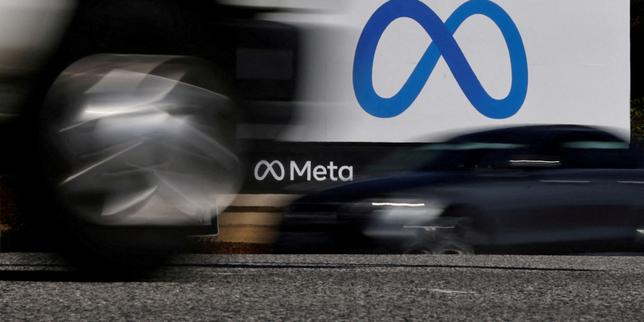
As the sun sets on the Silicon Valley campus tonight, the blue lights of the iconic "thumb" sign might still glow, but for 8,000 people, that light has been extinguished. They are navigating a new reality, one where the digital world they helped build offers no safety net for the physical one they actually live in.
The notification finally arrives on a personal phone. It isn't a "like" or a "share." It is a PDF document outlining a severance package and a list of next steps. The journey from innovator to statistic is complete.
Somewhere in a quiet apartment, a former employee closes their laptop, walks to the window, and looks at a world that suddenly feels much larger, much colder, and far less connected than the one they were promised.