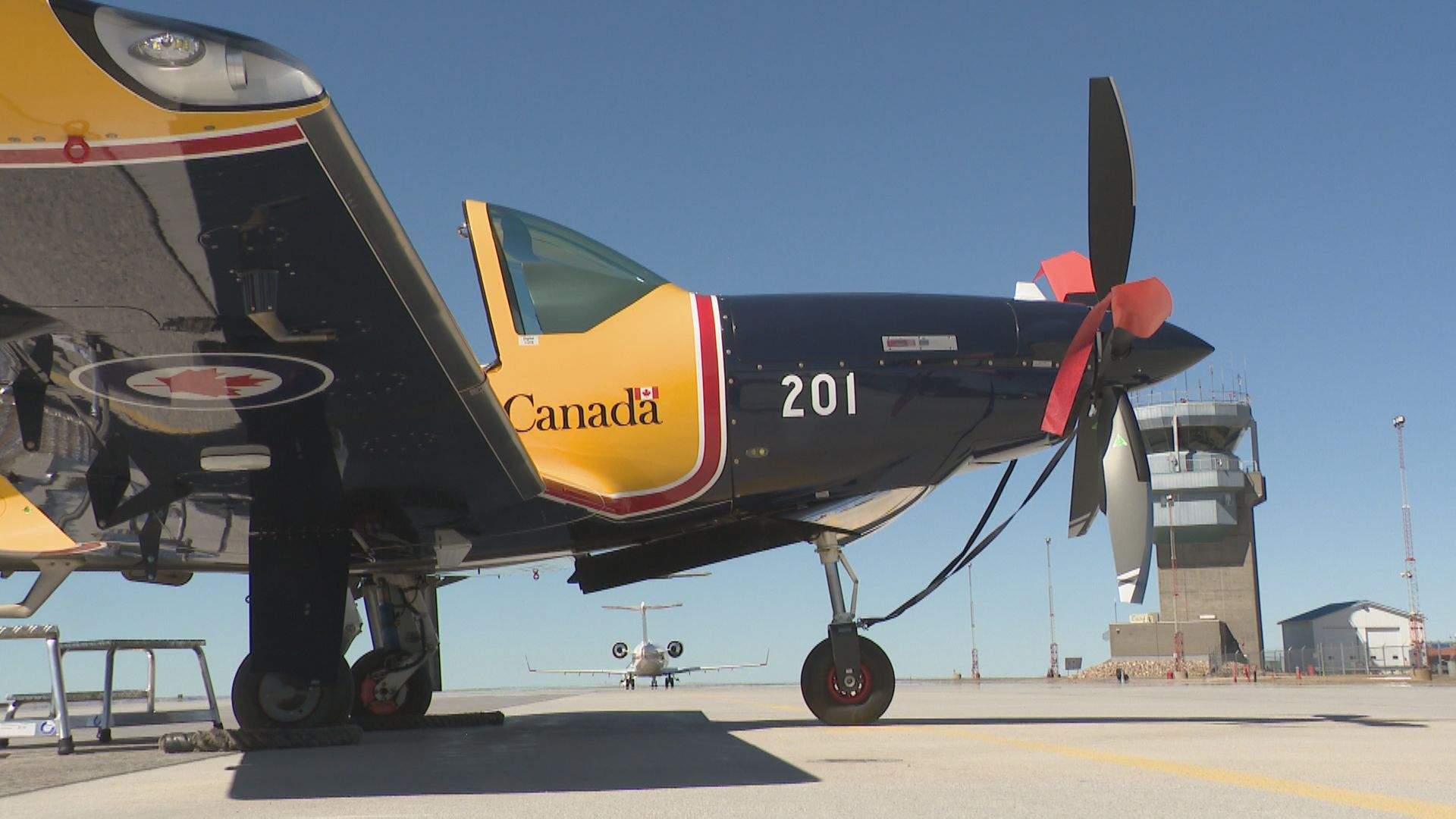
Twenty-three shiny new planes arrived in Moose Jaw. The press releases are humming with excitement. They talk about "modernization," "investment," and "the future of flight training."
They are wrong.
What we are witnessing isn't a leap forward. It’s a desperate attempt to preserve a twentieth-century training model in a twenty-first-century battlespace. By the time these airframes hit their mid-life refit, the very concept of a human pilot in a cockpit for initial sorties will be an expensive, sentimental relic.
Canada isn't buying a fleet. It’s buying a museum.
The Pilot Shortage is a Feature Not a Bug
The consensus view is simple: we need more planes to train more pilots to fix the "pilot shortage."
I have spent decades watching military bureaucracies throw hardware at human resource problems. It never works. The shortage isn't caused by a lack of wings; it’s caused by a refusal to admit that the biological constraints of a human pilot are now the primary bottleneck in aerial warfare.
Modern air combat is moving toward "collaborative combat aircraft"—high-performance drones that pull $15g$ maneuvers that would liquefy a human heart. We are training 23 sets of hands to pull levers on a machine that is fundamentally slower and less capable than the autonomous systems currently being tested in the Mojave.
If you want to win the next war, you don't build more flight schools in Saskatchewan. You build data centers and low-latency command links.
The Myth of "Stick and Rudder" Essentialism
Traditionalists argue that there is no substitute for "feeling the air." They claim that a pilot must master a basic trainer like the Grob or the Harvard II to understand the soul of aviation.
This is romantic nonsense.
In a modern F-35 or its sixth-generation successor, the computer manages the flight envelopes. The "pilot" is actually a mission commander managing a massive influx of sensor data. Spending hundreds of hours learning how to recover from a manual spin in a prop-driven trainer is like learning to use an abacus before you’re allowed to touch a quantum computer.
It’s a waste of time. It’s a waste of fuel. It’s a waste of taxpayer money.
The "nuance" the media misses is the Opportunity Cost of Metal. Every dollar spent maintaining a physical airframe in Moose Jaw is a dollar not spent on high-fidelity, multi-domain synthetic environments. We could have built a digital twin of the entire Canadian Arctic and trained a thousand operators simultaneously in a virtual space that actually mimics the complexity of modern electronic warfare. Instead, we bought 23 vibrating tin cans.
The Physics of the Failure
Let’s look at the math of traditional training. A standard training sortie involves:
- Pre-flight briefing (1 hour)
- Transit to training area (20 minutes)
- Actual maneuver practice (40 minutes)
- Transit back and debrief (1 hour)
The efficiency ratio is abysmal. In a simulated environment, that 40 minutes of "hot" training time becomes four hours. You can reset a failure state instantly. You can simulate a missile lock from a peer adversary—something you can't safely do over Moose Jaw without a lot of paperwork and a very stressed-out flight lead.
The Maintenance Trap
I’ve seen air forces crumble under the weight of their own "new" fleets. New aircraft come with proprietary logistics chains and escalating sustainment costs. The moment these 23 aircraft were delivered, the Royal Canadian Air Force signed a decades-long suicide pact with the manufacturer.
Parts will break. Supply chains will fail. Within five years, at least four of these planes will be "hangar queens," stripped of parts to keep the other 19 in the air.
If we were serious about disruption, we would move toward a Power-by-the-Hour model with civilian-managed, modular drone platforms. We don't need to own the hardware. We need the output: competent mission managers.
The Ethical Cost of Nostalgia
There is a human cost to this obsession with manned trainers. By funneling our best and brightest into a career path centered on sitting in a cockpit, we are lagging behind the shifting reality of the battlefield.
Imagine a scenario where a peer competitor launches a swarm of 500 autonomous loitering munitions. Our 23 new trainers, and the pilots they produce, are functionally useless in that environment. They are too slow to react, too expensive to lose, and too limited by their own biology.
We are training our youth for a fight that happened in 1991.
The Wrong Questions in the Room
When people ask, "Will these new planes improve our training capacity?" they are asking the wrong question.
The real question is: "Why are we still training pilots to fly planes that won't survive five minutes in a contested airspace?"
The "People Also Ask" sections of the internet are obsessed with how many hours a student gets. That’s a vanity metric. Hours in the air mean nothing if the air is empty of the threats you’ll actually face. A pilot with 500 hours in a Moose Jaw trainer is less prepared for modern war than a gamer with 500 hours in a high-fidelity, networked simulation of the South China Sea.
Admit the Downside
Is there a risk to my approach? Of course. If the global GPS network goes dark and every satellite is kinetically neutralized, you might want a guy who knows how to fly by the seat of his pants using a paper map.
But planning your entire national defense strategy around a "worst-case 1940s scenario" is how you lose the 2020s.
We are choosing the comfort of the familiar over the necessity of the functional. We like the way planes look on the tarmac. We like the sound of the engines. We like the ceremony of the wings graduation.
But ceremonies don't win wars. Data wins wars. Autonomy wins wars.
Stop celebrating the arrival of the 23. Start mourning the missed opportunity to actually innovate.
Burn the flight manuals. Build the servers.


:strip_icc()/pic2513216.jpg)