The afternoon sun hit the glass of the old roof panels just right, turning the courtyard into a shimmering mirror of blue silicon.
Elena remembers when they went up. It was twenty-five years ago. The neighborhood association had pooled their savings, drunk on the promise of a clean tomorrow, watching the installers bolt the sleek metal frames into place with reverent care. It felt like a minor rebellion against the smoke stacks on the horizon. Every kilowatt hour ticked backward on the meter like a small victory.
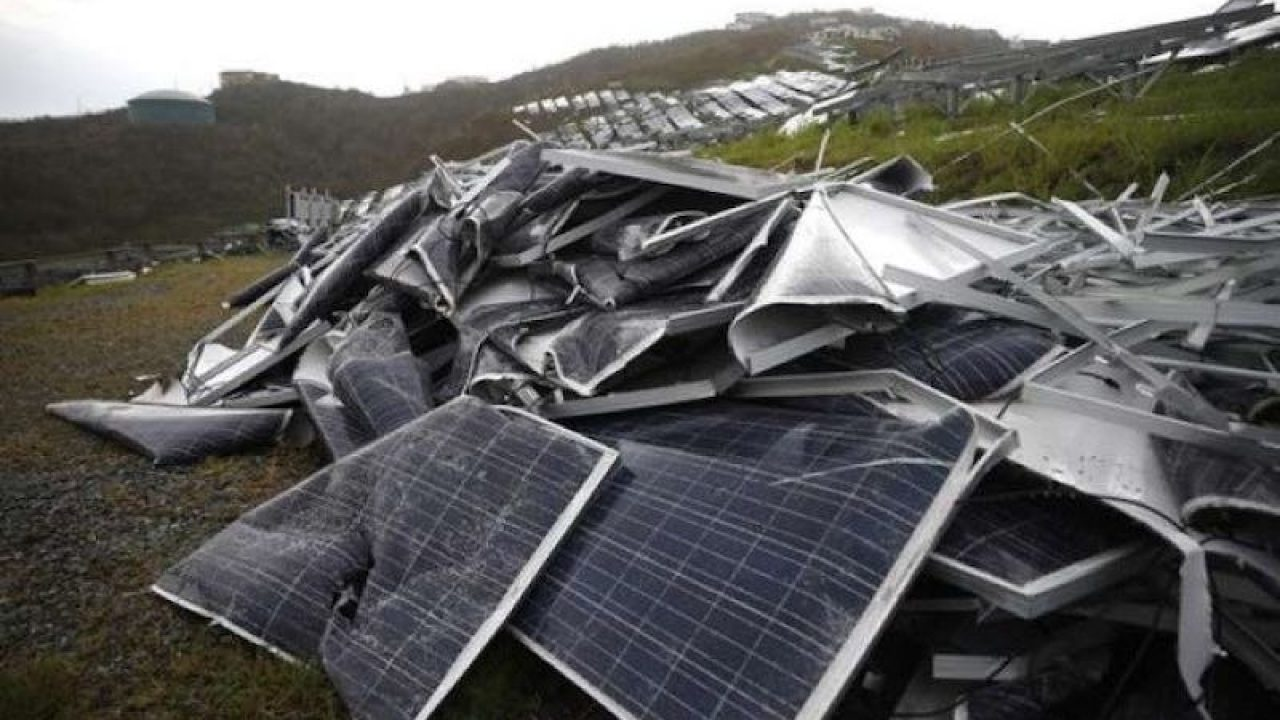
Now, half of those panels are dead.
They do not shatter dramatically. They just fade. Microscopic fractures spiderweb across the surface, invisible to a casual glance, quietly choking off the flow of electrons until the voltage drops to zero. To the utility company, they are obsolete assets. To the local landfill, they are rejected bulk waste, too heavy, too strange, too full of toxic ghosts to throw in with the household trash.
So they sit.
Consider what happens next on a global scale. By the year 2060, the world is on track to accumulate a staggering 402 million tonnes of discarded solar panels.
Read that number again. Four hundred and two million tonnes.
It is a monument built out of the very technology we invented to save ourselves. We traded the chimney for the wafer, traded smoke for glass, and assumed that because the fuel was free, the debris would be weightless. We were wrong.
The Anatomy of a Ghost
To understand the scale of the coming waste, you have to look inside the thing itself. A solar panel is not just a pane of glass. It is a tightly laminated sandwich of tempered glass, EVA plastic backing, copper ribbons, silver paste, aluminum frames, and a wafer-thin slice of pure silicon laced with toxic heavy metals like lead and cadmium.
It is designed to survive thirty years of torrential rain, blistering heat, hail, and wind. It is engineered to endure. That durability, which makes it a marvel of engineering, turns out to be a nightmare for disposal.
You cannot simply crush it. You cannot burn it without releasing noxious fumes into the atmosphere. You cannot bury it without risking the slow, silent poisoning of the water table underneath our feet.
Elena tried to get rid of her neighborhood's dead arrays last autumn. She made the phone calls. She filled out the forms. She learned quickly that the infrastructure of arrival is massive, while the infrastructure of departure is practically non-existent.
Most recycling facilities today are crude. They take the aluminum frames off, strip away the copper wires, and then smash the rest into gravel-sized aggregate to be used as road fill or cheap construction material.
That is not recycling. That is burial by another name. It is downcycling, a polite term for throwing away the most valuable and dangerous parts of the puzzle because it is too expensive to separate them.
The silver is lost. The high-purity silicon is pulverized into dust. The lead seeps deeper into the narrative of our transition.
The Economics of Extraction
Why do we crush instead of cure? Follow the money.
Virgin materials are cheap. Extracting raw quartz, refining it into solar-grade silicon, and stamping out new frames often costs less than the labor-intensive, chemically complex process of un-gluing a twenty-year-old panel.
The economics are broken. We built a market that incentivizes birth and punishes afterlife.
When Elena spoke to a local waste management coordinator, the man laughed bitterly. He pointed out his window to a massive stack of broken glass panes.
"People think green energy means zero footprint," he said, wiping grease from his hands. "It just means the footprint moves somewhere else. Out of sight. Out of mind. Until the bill comes due."
The bill is coming due in 2060. By then, the volume of discarded photovoltaic waste will rival the e-waste mountains of discarded smartphones and discarded televisions, but with a structural twist: solar panels are massive. They cover roofs, coat hillsides, and occupy square miles of desert floor. When they die, they die in acreage.
If we treat them as trash, we drown in them. If we treat them as a mine, we unlock a treasure chest.
The Chemistry of Redemption
There is another way. It is happening in cramped, soot-stained laboratories in Europe and quiet industrial parks in Asia, far from the polished marketing decks of tech conglomerates.
It starts with thermal pyrolysis. Imagine baking the panel at exact, controlled temperatures until the binding plastic melts away, releasing its grip on the glass without scorching the inner layers.
Then comes chemical leaching. Using specialized solvents to dissolve the solder and lift away the silver and copper without destroying the underlying silicon wafer.
The numbers are startling when done right. Advanced recycling can recover over ninety-five percent of the materials inside a panel. The glass can go back into making new glass. The silicon can be remelted and doped back into high-efficiency wafers. The silver can be melted down into bullion and fed right back into the manufacturing line.
It is a closed loop. It turns an end-of-life crisis into a domestic supply chain of precious metals.
Yet, right now, this kind of high-recovery recycling accounts for a fraction of a percent of global photovoltaic waste. The rest is dumped, broken down mechanically, or shipped across oceans to developing nations with laxer environmental laws, exporting our clean conscience to someone else's backyard.
The Choice Ahead
We are standing at a peculiar crossroads in human history. We managed to solve the generation problem. We figured out how to harvest the light of a star and turn it into the current that powers our homes.
Now comes the harder part. The stewardship problem.
It is easy to fall in love with the new. Clean tech marketing thrives on the pristine, the futuristic, the gleaming installation ceremony with politicians cutting ribbons under a cloudless sky. Nobody wants to cut a ribbon for a recycling plant. Nobody wants to talk about the graveyard of the transition.
Back in her courtyard, Elena looks up at the dead panels. They are cool to the touch in the evening air. They gave her twenty-five years of quiet power. They kept the lights on when the grid flickered. They did their job.
The question is whether we are going to do ours.
The 402 million tonnes waiting for us in 2060 are not an inevitability. They are a choice. We can treat them as an unstoppable avalanche of toxic debris, or we can treat them as the raw materials of the next industrial revolution.
The sun will keep rising tomorrow. Whether we catch its light cleanly, from birth to grave and back again, depends entirely on what we decide to do with the shadows we leave behind.