Mainstream foreign policy pundits love a damsel-in-distress story. Right now, their favorite script casts Indian Prime Minister Narendra Modi as a cornered leader, sweating bullets while Washington threatens triple-digit tariffs and Moscow waves discounted crude.
That narrative is pure fiction.
New Delhi is not trapped. India is running the most profitable geopolitical arbitrage play of the decade, using Washington’s tariff threats as a smokescreen while its refiners quietly turn geopolitical friction into cold cash. If you read the standard commentary, you get the impression that every barrel of Urals crude unloaded at Sikka or Vadinar pushes India closer to economic ruin at the hands of the White House. Look at the actual trade flows, refining margins, and legislative waivers, and the "caught in the middle" thesis collapses under its own weight.
The Lazy Consensus You Keep Reading
Every financial broadsheet and cable news panel repeats the same three talking points:
- India’s addiction to cheap Russian crude leaves it vulnerable to American trade retaliation.
- Narendra Modi must eventually pick a side between energy security for 1.4 billion people and access to the lucrative US export market.
- Washington holds all the cards because tariffs on Indian pharmaceuticals, textiles, and engineering goods would cripple New Delhi’s growth.
This analysis mistakes political theater for physical reality. Pundits track truth-social posts and diplomatic readouts instead of tracking shipping manifests, crack spreads, and congressional calendars. Having spent fifteen years watching energy traders and sovereign wealth desks price political risk, I have seen institutions lose millions betting on Washington’s rhetoric while ignoring physical barrel movements. When politicians yell about sanctions, commodities don't disappear—they just change bills of lading and collect a middleman fee along the way.
Why Washington Cannot Actually Pull the Trigger
Let’s look at the mechanics of the US threat. In August 2025, the White House slapped a punitive 25% tariff on Indian goods over Russian oil imports, stacking duties up to 50%. By February 2026, Washington walked that back to 18% after announcements of a bilateral framework and promises of energy diversification. Then came September 2026, when President Donald Trump signed the Lindsey O. Graham Sanctioning Russia and Iran Act of 2026, dangling the threat of tariffs up to 100% on the top five buyers of Russian hydrocarbons.
Sounds terrifying on paper. Now look at what happened in October: the administration quietly issued a 60-day waiver on those very duties.
Why does Washington keep loading the gun and then refusing to fire it? Because global oil math does not care about Capitol Hill press releases.
The 1.8 Million Barrel Reality
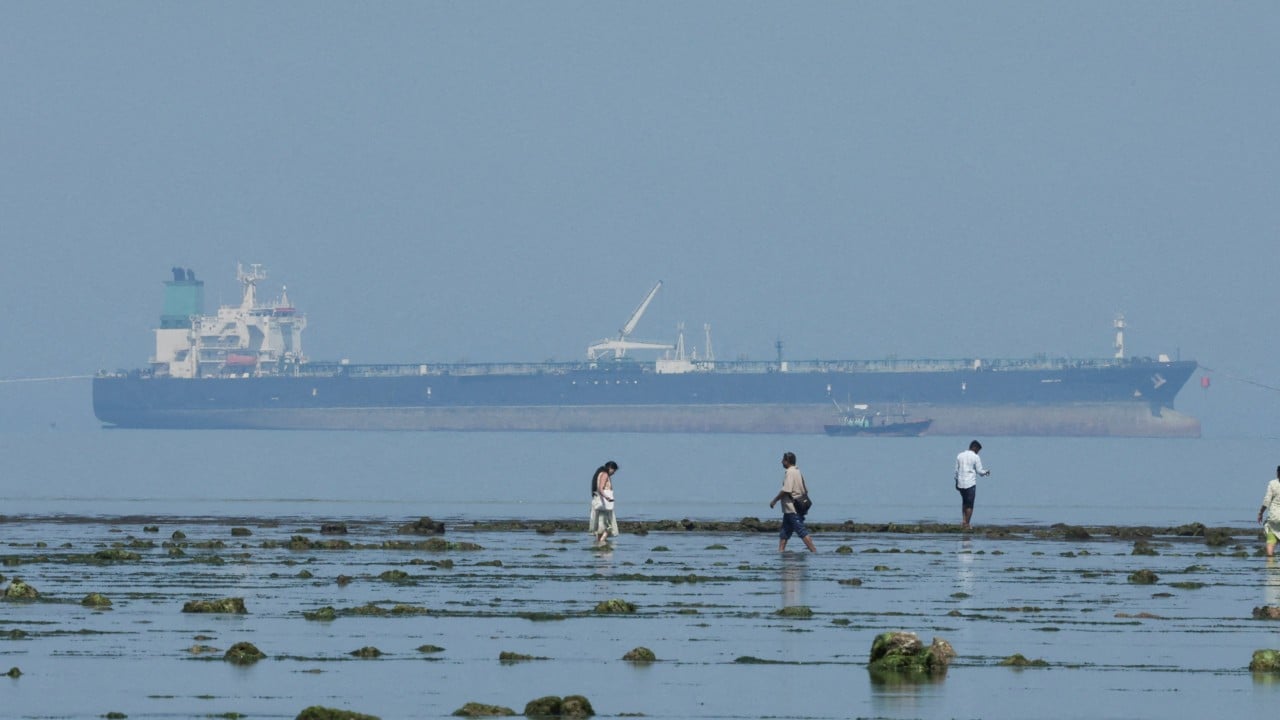
Before February 2022, Russia accounted for roughly 0.2% of India’s crude basket. By mid-2026, Russian shipments were swinging between 1.8 million and 2.8 million barrels per day, representing roughly a third to over half of India’s total intake depending on the month. Even as Persian Gulf flows rebounded to 2.1 million barrels a day following disruptions in the Strait of Hormuz, India still pulled in 1.8 million barrels a day from Russia—with October 2026 imports actually jumping 10% month-on-month.
Think about what happens if the US actually forces India to zero out 1.8 million barrels per day of Russian crude overnight.
- The Replacement Myth: Washington has floated Venezuelan crude and US liquefied natural gas as substitutes. Venezuela does not have 1.8 million barrels of spare heavy-sour export capacity sitting around waiting for Indian tankers, and US shale grades are too light for complex Indian coking refineries configured for medium-sour barrels.
- The Price Shock: When India briefly trimmed Russian intake by roughly 16% earlier in the year, displacing around 700,000 barrels per day into the spot market, Brent crude spiked toward $130 a barrel.
- Domestic US Politics: American voters punish presidents for $5 gasoline faster than they reward them for punishing New Delhi. Following the November 2026 midterm elections, where Democrats captured control of Congress amid voter anger over living costs, the political appetite in Washington for triggering a global crude spike is zero.
Former US Ambassador Eric Garcetti admitted the quiet part out loud back in 2024: Washington wanted somebody to buy Russian oil under the price cap so global prices wouldn't explode. That fundamental constraint hasn't changed. Washington needs India to keep buying Russian barrels so American drivers don't pay the price at the pump, while simultaneously pretending to punish India to appease defense hawks.
What Everyone Gets Wrong About "Indian Energy Needs"
The second half of the competitor’s thesis—that Modi is desperate for Russian oil just to keep the lights on at home—also misses the actual business model.
Yes, discounted Urals crude saved Indian refiners roughly $1 billion a month at peak spreads, insulating domestic consumers from inflation. That is the defensive story. The offensive story is refining arbitrage.
To understand why private giants like Reliance Industries’ Jamnagar complex—which once again became the single biggest importer of seaborne Russian crude between August and October 2026—fight tooth and nail for these cargoes, you have to understand gross refining margins (GRMs) and the crack spread.
- The Feedstock Discount: Complex coastal refineries in Gujarat are engineered with delayed cokers and hydrocrackers capable of processing cheap, high-sulfur, heavy-sour crude that simpler European or American plants cannot touch.
- The Molecular Laundromat: Once Russian crude enters an Indian distillation tower and gets cracked into ultra-low-sulfur diesel, jet fuel, and naphtha, its origin legally transforms under international rules of origin.
- The Western Buyer: Those refined fuels are loaded onto product tankers and sold straight back to Europe and the United States.
When the European Union sanctioned Russian-majority-owned Nayara Energy and banned petroleum products refined from Russian crude in July 2025, it didn't stop the trade—it simply routed higher-margin middle distillates to non-EU buyers while freeing up non-Russian feedstocks for Western-bound cargoes. Meanwhile, total EU-Russia trade still hovered near 67.5 billion euros ($77.9 billion), roughly matching India’s $68.7 billion trade bill with Moscow. New Delhi’s External Affairs Ministry didn't even need clever spin; they simply read Europe’s own customs data back to Brussels.
Dismantling the Questions Investors Keep Asking
If you are allocating capital across emerging markets or energy equities, asking "Will Modi cave to Trump?" is a waste of time. Here is the honest breakdown of what actually drives the numbers.
Will India completely stop buying Russian oil to get a US trade deal?
No. Not now, not next quarter. Indian Commerce Minister Piyush Goyal and US Ambassador Sergio Gor have both signaled that major sticking points on a bilateral trade tranche are nearly settled, with India securing tariff terms lower than regional rivals. Yet New Delhi has refused to sign any final pact that leaves it exposed to unilateral snap tariffs under the Graham Act without counter-tariff protections. Indian officials say one thing in diplomatic readouts about "diversification" and "market conditions," while state-owned and private refiners book Urals cargoes whenever the discount widens past $3 to $4 per barrel.
Does the US have enough tariff leverage to force New Delhi’s hand?
Less than Washington thinks. While the US is India’s largest single-country export destination, India’s economy is overwhelmingly driven by domestic consumption, not export-led manufacturing like Vietnam or China. Furthermore, Washington exempted pharmaceuticals, specific metals, and key industrial inputs from the steepest 2025 tariff stacks because American healthcare systems and manufacturers cannot function without Indian generic active pharmaceutical ingredients. You cannot threaten an economic nuclear strike when half your own medicine cabinet is built in Hyderabad.
Is India risking its long-term alliance with Washington over cheap fuel?
Look at defense procurement data from the Stockholm International Peace Research Institute (SIPRI). India has already slashed its reliance on Russian arms from 76% in 2007–2011 down to 42% in 2021–2025, shifting billions in contracts toward France, Israel, and the United States. New Delhi knows Russia is a declining power increasingly subordinate to Beijing. Buying Moscow’s discounted oil is not an ideological embrace of the Kremlin; it is extracting maximum value from a distressed seller while simultaneously co-producing jet engines and semiconductors with Washington.
Where the Contrarian Thesis Can Break
Intellectual honesty requires naming the exact tripwires that could blow up this strategy. India’s balancing act is masterful, but it is not invincible. Three specific risks could force New Delhi into an ugly retreat:
- Shadow Fleet Seizures and Insurance Blacklists: Washington does not need to tariff Indian textiles to choke Russian oil; the Treasury Department’s Office of Foreign Assets Control (OFAC) can sanction individual tankers, P&I insurance clubs, and UAE-based trading intermediaries. If freight and insurance costs eat up the entire Urals discount, Indian refiners will drop Russian barrels on pure economics without a single diplomatic phone call.
- The Dairy and Agriculture Red Line: In bilateral trade talks, US Trade Representative Jamieson Greer has pushed hard for market access into India’s protected agricultural and dairy sectors. Modi can compromise on industrial tariffs, and he can trim Russian crude at the margins, but opening Indian dairy to subsidized American agribusiness is political suicide for any prime minister in New Delhi. If Washington ties tariff relief strictly to farm access rather than oil, talks will stall indefinitely.
- Middle East Escalation: India’s ability to pivot back toward Persian Gulf grades depends entirely on open transit through the Strait of Hormuz. Any renewed conflict involving Iran that closes Hormuz removes 2 million barrels per day of Gulf supply from Indian ports overnight, leaving New Delhi zero choice but to buy every drop Russia can pump—regardless of what Congress threatens.
Stop Trading the Headlines and Watch the Spreads
If you are trying to position a portfolio, manage a supply chain, or forecast South Asian macro risk, stop reading political op-eds that frame Modi as a helpless bystander. Do these three things instead:
- Track the Urals-Dubai Crude Spread, Not White House Press Briefings. Indian refiners are ruthless commercial animals. When Urals trades at a deep discount to Middle Eastern sour grades, Jamnagar and Paradip will buy it. When Middle East conflict or freight sanctions narrow that spread, Gulf barrels naturally retake market share—just as they did when Gulf imports hit 2.1 million barrels per day.
- Audit Your Supply Chain for Secondary Sanctions Exposure, Not Broad Tariffs. If you source goods from India, broad 100% tariffs are a low-probability tail risk blunted by congressional gridlock and inflation fears. Your real operational risk is banking and logistics friction if your Indian suppliers share ports, insurers, or holding companies with sanctioned Russian energy entities.
- Price India as a Price-Maker, Not a Pawn. Stop modeling India as an emerging market forced to choose between Washington and Moscow. Treat New Delhi as an independent pole that extracts defense tech from the West, cheap commodities from Russia, and capital from both.
Modi isn't sweating over which superpower to appease. He is sitting at the table collecting the spread while Washington and Moscow pay for the privilege.