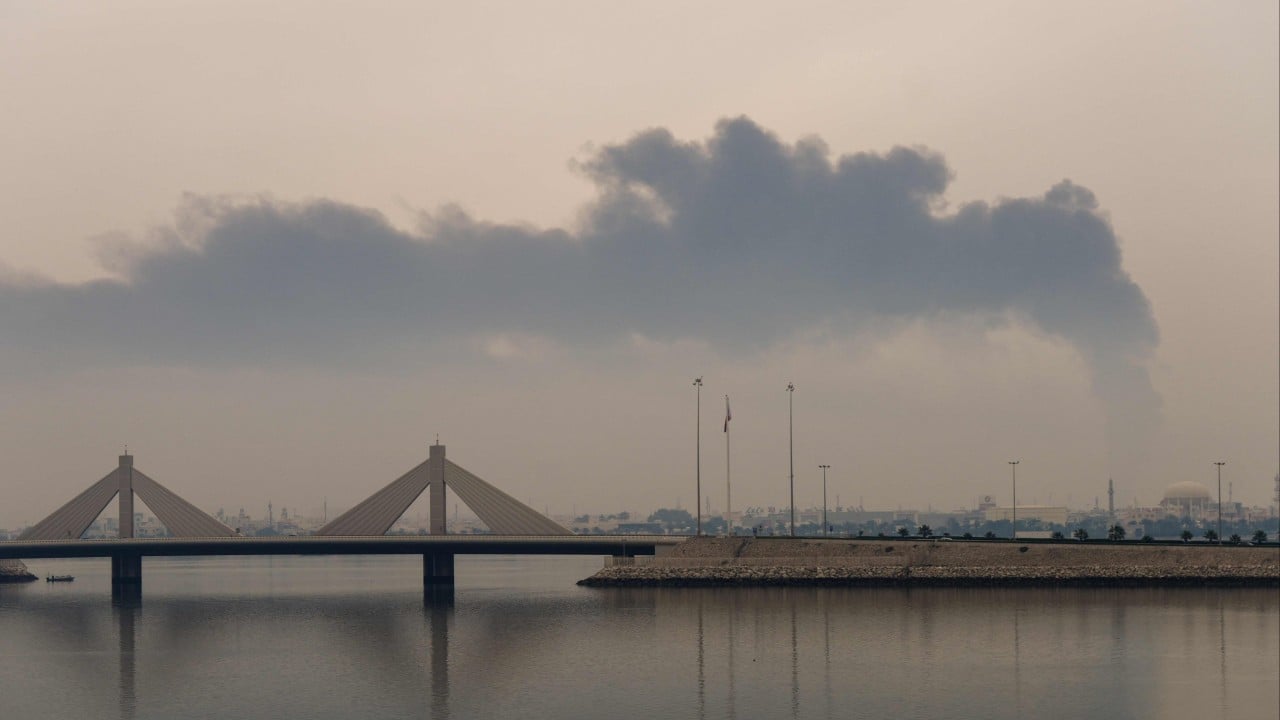
Kuwait International Airport just became the latest billboard for the failure of traditional military-industrial complex logic. A few off-the-shelf drones buzz a multi-billion dollar infrastructure hub, a radar array takes a hit, and the world holds its breath. Reuters and every other legacy outlet will give you the "what" and the "where." They will talk about regional tensions and geopolitical ripples. They will miss the point entirely.
The real story isn't the drone. It’s the $4,000 piece of plastic and copper that just rendered a $500 million defense system functionally obsolete.
We are watching a systemic collapse of the traditional security ROI. If you are looking at this as a "security breach," you are asking the wrong question. The question isn't how they got through. The question is why we are still building glass houses in a world where everyone has a bag of rocks.
The Radar Fallacy
The "lazy consensus" among defense contractors and state officials is that better sensors equal better security. It’s a lie. Radar systems—the very things damaged in the Kuwait incident—are designed to find ghosts from the 1980s. They are built to track high-altitude, high-speed, high-heat signature metallic objects. Think fighter jets and ballistic missiles.
They are not built to find a DJI-style quadcopter flying at 40 knots, hugging the ground, and composed primarily of carbon fiber and plastic.
In my time auditing physical security for high-value logistics hubs, I’ve seen boards of directors authorize $20 million for "integrated sensor suites" that can't distinguish a threat drone from a large migratory bird. We are spending millions to protect against the "prestige threats" of the past while ignoring the "poverty threats" of the present.
When a radar system is "damaged," it isn't just a repair bill. It is a psychological victory for the attacker. They proved that the most expensive eye in the sky is also the most fragile.
The Asymmetry of Cost
Let’s talk about the math that the "experts" won't touch.
- The Attacker's Cost: $2,500 - $15,000. This buys a long-range FPV drone, a basic explosive payload, and a cellular link.
- The Defender's Cost: $2,000,000+ per interceptor missile (if they even have a kinetic solution on-site).
If you are Kuwait, or any sovereign entity, you are playing a game where you lose even when you win. If you shoot down a $5,000 drone with a $2 million Patriot missile, you are hemorrhaging capital. If you don't shoot it down, it hits your radar or a terminal wing, causing $50 million in damage and grounding hundreds of flights.
This is not a security challenge. This is an economic siege.
The industry keeps trying to "solve" the drone problem with more technology. More AI-driven jamming. More high-energy lasers. But every time we add a layer of complexity, we increase the surface area for failure. Kinetic interceptors (shooting things) are too expensive. Electronic warfare (jamming) is a legal nightmare in a civilian airport because it knocks out the very communication systems the pilots need to land safely.
We are stuck in a cycle of buying bigger locks for a door that is made of paper.
The False Security of CAS (Counter-UAS)
People also ask: "Why can't we just jam the signal?"
Brutally honest answer: Because the signal doesn't always exist.
Modern "smart" drones don't need a pilot sitting with a remote within two miles. They use waypoint navigation. They use visual odometry—where the drone "sees" the ground and knows where it is based on pre-loaded satellite maps. It doesn't need GPS. It doesn't need a radio link. It is a flying brick of intelligence that is deaf and blind to your multi-million dollar jammer.
The legacy defense industry is selling "solutions" that rely on the attacker being stupid. In the Kuwait hit, the damage to the radar suggests a level of precision that jammers clearly didn't stop.
Stop Fixing Your Perimeter and Start Fixing Your Resilience
If I were advising the Kuwaiti Civil Aviation Authority—or any airport CEO—I’d tell them to stop buying more radars.
The current "best practice" of building a hard outer shell is a relic of 20th-century thinking. We need to shift toward graceful degradation.
- Modular Infrastructure: Why is a single radar hit enough to cripple a system? Because we build monolithic, centralized hubs. We should be using decentralized, cheap, disposable sensor nodes. If an attacker hits one, there are forty more ready to pick up the slack.
- Passive Detection: Stop screaming into the atmosphere with active radar. Use acoustic and optical sensors. They don't give away their position, and they are significantly harder to "damage" in a way that matters.
- Physical Hardening: It sounds primitive, but a $50,000 steel mesh cage around sensitive components is more effective than a $5 million electronic shield.
The Downside of the Truth
The contrarian approach is messy. It’s not "seamless." It requires admitting that we cannot guarantee 100% safety. It requires telling the public that some drones will get through, and our goal is to make sure they don't matter when they do.
Politicians hate this. They want to stand in front of a shiny new laser and tell the taxpayers they are safe. But that laser won't work in the rain, and it won't work against a swarm of twenty drones.
We are currently subsidizing the obsolescence of our own security. Every time a major news outlet reports on a "radar being damaged" as if it’s a fluke or a tragic accident, they are participating in the delusion. It isn't a fluke. It’s a proof of concept.
The "industry insiders" telling you that we just need one more upgrade to the sensor array are the ones cashing the checks. They are selling you a map of a world that no longer exists.
Stop buying the map. Start looking at the sky.
The drone didn't break the system in Kuwait. It just showed everyone that the system was already broken.