We love a good rescue story. When a 12-meter humpback whale swam into the shallow, low-salinity waters of the Baltic Sea and got stuck on a German sandbank, the internet didn't just watch—it obsessed. Livestreams ran 24/7. Influencers weighed in. Activists broke through police fences. Football fans hung banners in stadiums. We named him Timmy, gave him a secondary nickname of "Hope," and poured over €1.5 million of private and public money into a Hollywood-style extraction.
Then, he died anyway.
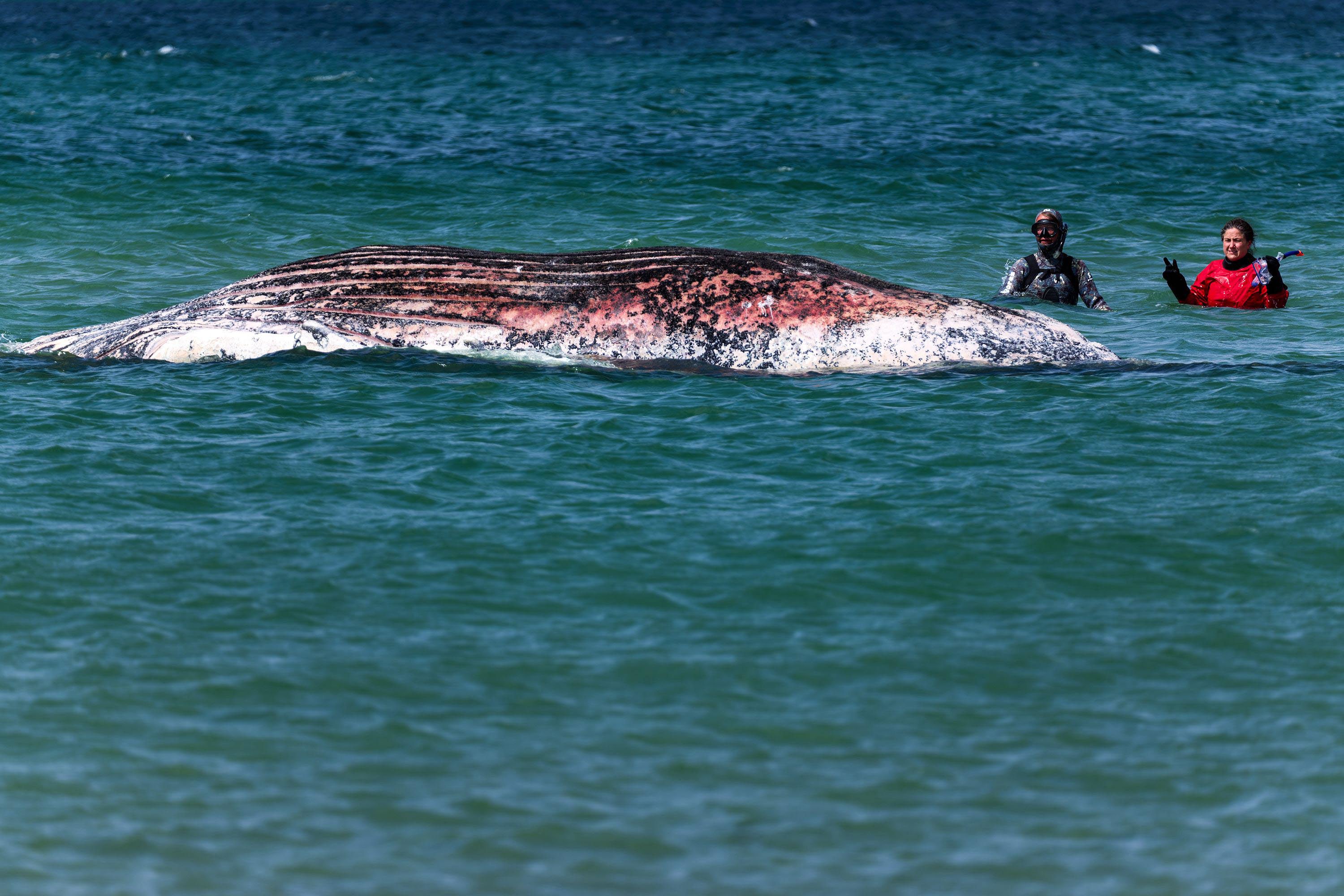
On May 15, 2026, Danish authorities confirmed that a whale carcass found floating near the small island of Anholt in the Kattegat strait was indeed Timmy. A Danish Nature Agency worker rowed out, retrieved a faulty satellite tracking device from the animal's back, and checked the serial numbers. It was him. Just two weeks after a massive, custom-built flooded cargo barge carried him to the North Sea for a dramatic release, Timmy's body was found 70 kilometers south of his release point, being picked apart by seagulls.
The truth is, this wasn't a tragedy because the rescue failed. It was a tragedy because the rescue happened in the first place.
The Biological Reality of a Wrong Turn
Humpback whales don't belong in the Baltic Sea. They thrive in the deep, salty expanse of the Atlantic Ocean. When Timmy—likely a young bull a few years old—navigated through the narrow Skagerrak and Kattegat straits in early 2026, he entered a ecological trap. He was likely chasing a herring run or got disoriented by heavy commercial shipping noise.
Once inside the Baltic, a clock starts ticking for a humpback. The water there has incredibly low salinity. Whales aren't built for fresh or brackish water over extended periods. Weeks in the Baltic caused Timmy to develop severe, blister-like skin blemishes. He was starving, weak, and repeatedly tangled himself in local fishing nets near Wismar and Lübeck Bay.
By late March, when he beach-landed at Timmendorfer Strand—the origin of his name—he was already heavily compromised. German officials used an excavator to shove him back into the water. He just swam into another sandbank near Poel.
Marine biologists from the Oceanographic Museum in Stralsund looked at the data and delivered a harsh, realistic verdict: stop. The International Whaling Commission openly stated his survival chances were negligible. The scientific consensus wasn't cruel; it was based on centuries of marine data. When a massive mammal repeatedly strands itself, it's usually because it is already too sick, injured, or exhausted to swim.
Experts recommended letting the whale die in peace. But the public wasn't having it.
When Emotion Trumps Science
The media frenzy created a massive PR problem for local politicians. Giving up on "Hope" looked bad on camera. Enter Karin Walter-Mommert and Walter Gunz, a wealthy electronics retail co-founder, who stepped up with private financing to bypass the scientific red tape.
They built a massive operation. They floated the 12-ton whale into a water-filled transport barge called the Fortuna B. A tugboat dragged the barge out of Wismar Bay, past the German border, all the way to the deeper waters off Skagen, Denmark. On May 2, 2026, they opened the doors. Rescuers cheered as Timmy blew through his blowhole and swam off. The financiers told the press he was heading "toward the Arctic."
It made for great television. It was also, as Burkard Baschek, director of the Stralsund Museum, warned at the time, "pure animal cruelty."
Imagine being a sick, starving animal, covered in skin sores, and instead of being allowed to drift away quietly, you're trapped in a metal container, subjected to roaring engine vibrations for days, and dropped in open water when your muscles have completely wasted away. Timmy didn't swim to the Arctic. He likely sank and drowned within days, his body drifting south to Anholt.
Even the financiers realized the optics were falling apart before the body was found. Earlier this month, Walter-Mommert and Gunz released a joint statement explicitly distancing themselves from how the ship's crew handled the actual release, trying to deflect blame to the vessel operators because the GPS tracker mysteriously stopped working immediately after launch.
The Opportunity Cost of Public Obsession
The obsession with individual, charismatic animals hurts conservation as a whole. Amy Dickham, a professor of wildlife conservation at the University of Oxford, pointed out the stark reality of the situation. We live in an era of massive wildlife funding shortages. Millions of species are facing extinction due to habitat loss, climate shift, and pollution.
Yet, we spent €1.5 million on a single, dying whale because he had a cute name and a livestream. That same money could have funded local marine protected zones, upgraded sonar systems to prevent ship strikes, or cleaned up miles of ghost fishing nets that entangle thousands of marine animals quietly every year without a social media hashtag.
What Needs to Happen Next
Danish authorities say they have no plans to move Timmy's body or perform a necropsy. The carcass is currently floating in shallow water, and officials are warning the public to stay away.
If you are near the Kattegat region or traveling along the Danish coast, here's what you need to know and do right now:
- Keep your distance: A decomposing whale carcass is a biological hazard. It carries bacteria and diseases that can jump to humans or pets.
- Expect the pop: Do not approach the body in a kayak or small boat. As gases build up inside a dead whale's blubber layers, the carcass can literally explode without warning.
- Support systemic conservation over spectacles: The next time a marine mammal strands locally, don't sign petitions demanding a multi-million dollar relocation. Instead, donate to organizations that fund marine noise reduction research or ghost net removal programs.
We need to learn to accept that nature has limits. Sometimes, the most humane thing we can do for a stranded animal is to turn off the cameras and let it die with dignity, rather than turning its final days into a high-stakes circus.