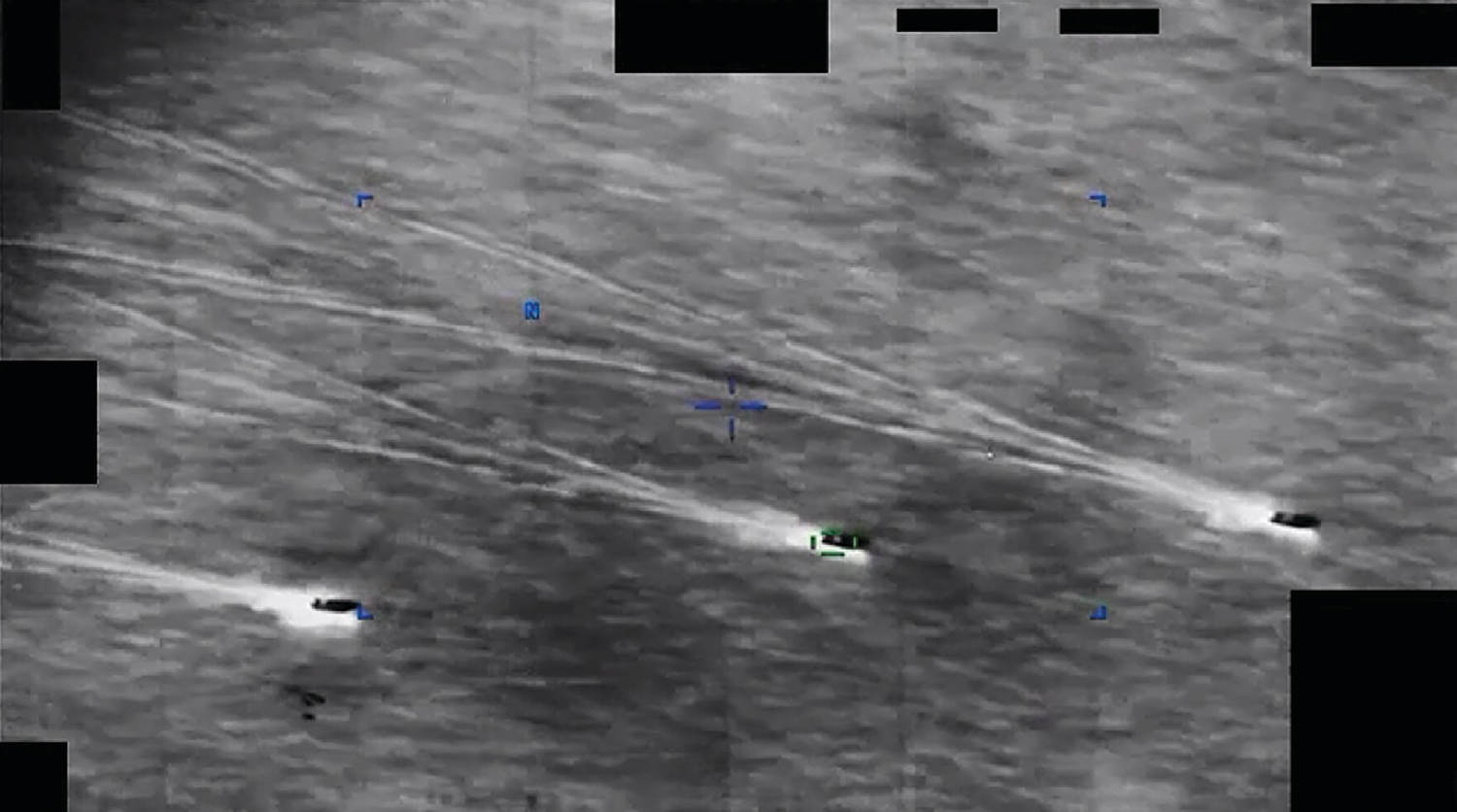
Declassified military logs and aviation safety databases reveal a startling uptick in unexplained aerial phenomena (UAP) encounters reported by military pilots and astronauts. This sudden surge is not evidence of visiting extraterrestrials. Instead, recent declassifications and sensor diagnostic reports indicate that the influx of sightings is primarily driven by radical upgrades to military radar systems and a fundamental shift in how the Pentagon commands personnel to report anomalies. For decades, pilots stayed silent to protect their careers. Today, new tracking technologies are capturing atmospheric clutter that was previously invisible, forcing the aviation sector to confront a messy reality of hardware limitations, electronic warfare, and sovereign airspace intrusions.
For the modern aviator, the sky has become crowded with ghosts. Meanwhile, you can find similar stories here: Why the New Glueball Discovery Changes Physics Forever.
To understand why decorated military pilots are suddenly reporting objects that seem to defy physics, one must look at the hardware overhauls implemented across the United States Armed Forces over the last fifteen years. The turning point was the introduction of Active Electronically Scanned Array (AESA) radar systems to naval fighter fleets.
Prior to these upgrades, older mechanical radar systems filtered out small, slow-moving, or stationary objects to prevent cockpit screens from becoming cluttered with birds, weather formations, and safe civilian drones. The system worked on a philosophy of exclusion. If an object did not match the expected cross-section or speed of an enemy aircraft, the software effectively erased it from the pilot's view. To explore the complete picture, check out the recent article by Ars Technica.
When the Navy integrated AESA radar, the resolution of the skies changed overnight. These advanced arrays send out multiple frequencies simultaneously, tracking thousands of data points with immense precision. Suddenly, the filters were gone. Pilots who had flown the same training tracks for a decade began seeing track files for objects hovering at altitudes where civilian drones cannot operate, or drifting against the wind at speeds that baffled traditional aerodynamics.
The technology did its job too well. It revealed a vast ecosystem of aerial debris, weather anomalies, and low-observable surveillance craft that had been there all along, completely invisible to legacy systems.
The Threat of Electronic Spoofing and Spectral Illusions
Not every blip on a pilot’s glass is a physical object. In the contested spaces of modern electronic warfare, seeing is no longer believing.
State adversaries have spent billions developing cognitive electronic warfare systems designed specifically to exploit the vulnerabilities of AESA arrays. By projecting false radar returns that mimic impossible flight characteristics—such as instantaneous acceleration from a dead stop to Mach 5—adversaries can test the boundaries of Western air defense responses.
These are digital illusions. When a pilot receives a hard radar lock on an object but looks out the canopy and sees nothing but empty ocean, the immediate assumption might lean toward the exotic or unexplainable. The gritty reality is often a highly sophisticated radar-jamming technique known as Digital Radio Frequency Memory (DRFM). This technology intercepts the radar signal from an incoming fighter jet, alters its characteristics, and sends it back, tricking the fighter's computer into displaying a physical object where none exists.
[Adversary EW Transmitter] ───(Altered Signal)───> [Fighter Jet AESA Radar] ───> Displays Fake Target
Human perception complicates this technical vulnerability. When a pilot is told by their sensor operator that an object is sitting at 20,000 feet, their eyes naturally strain to find a visual confirmation. At high altitudes, without a fixed reference point like a cloud layer or terrain, the human brain struggles with scale and distance. A weather balloon five miles away can easily be misidentified as a small, fast-moving craft hovering just yards from the wingtip.
Breaking the Culture of Silence in the Cockpit
For generations, reporting an anomaly in the sky was a swift guarantee of a grounded flight status and a mandatory psychological evaluation. Commercial airlines and military wings shared a silent pact: if you see something you cannot explain, you keep it to yourself.
That code of silence shattered with the establishment of the All-domain Anomaly Resolution Office (AARO) and specific reporting mandates inserted into National Defense Authorization Acts. The military flipped the incentive structure. Failing to report an anomalous radar track or visual encounter is now considered a dereliction of intelligence-gathering duties.
This cultural shift unlocked decades of repressed reports. Commercial aviators, emboldened by the military's policy change, began submitting formal logs to the Federal Aviation Administration and the National Aviation Reporting System on Anomalous Phenomena (NARCAP). The data shows these encounters are heavily concentrated around high-security military operating areas, nuclear power infrastructure, and naval training ranges.
The concentration of sightings near sensitive installations points away from deep-space visitors and directly toward terrestrial espionage. Quadcopters, loitering munitions, and radar-reflecting balloons are cheap, expendable, and highly effective tools for foreign intelligence agencies looking to map the radar frequencies and response times of advanced carrier strike groups. By masking these surveillance platforms in the guise of erratic, low-observable anomalies, adversaries exploit the natural hesitation of military bureaucracies to report things that do not fit standard threat profiles.
The Astronaut Dilemma and Orbital Debris
The phenomenon extends beyond the upper atmosphere into low Earth orbit. Astronauts and space station logs have long noted unexpected flashes, drifting points of light, and unexpected radar returns.
Space is far from empty. Decades of orbital launches have left a halo of high-velocity junk orbiting the planet. A flake of paint or a frozen fleck of coolant from a defunct Soviet-era satellite traveling at 17,500 miles per hour creates a violent, blinding streak when it catches the sun against the blackness of space. To an observer inside a spacecraft, without the context of atmospheric resistance, these objects appear to move with intentional, intelligent motion.
Furthermore, the deployment of massive commercial satellite constellations has fundamentally altered the visual landscape of orbital flight. Trains of highly reflective satellites passing through the upper atmosphere reflect sunlight long after the ground below has gone dark. For an astronaut looking out a cupola, or a commercial pilot flying a trans-oceanic route at 40,000 feet, these sudden, synchronized lines of light present an unprecedented visual puzzle that legacy training manuals never prepared them to interpret.
Sensor Fusion and the Path to Clarity
The solution to the UAP mystery lies not in more eyewitness testimony, but in rigorous sensor cross-examination. Modern military platforms rely on sensor fusion, a process where the central computer stitches together data from radar, infrared cameras, and electronic warfare suites into a single, unified picture.
When an anomaly appears on a single sensor, it is a technical curiosity. When it registers across multiple disconnected systems simultaneously, it becomes an intelligence priority. Most declassified cases that retain an aura of mystery do so precisely because they lack corroborating data. A dramatic video from a Forward-Looking Infrared (FLIR) camera means very little if the aircraft's radar showed no return, or if the electronic warfare suite detected a clear signature of digital spoofing.
The aviation industry is moving toward automated anomaly detection systems that filter out known sensor glitches and atmospheric phenomena in real-time. Until these systems are fully deployed, the skies will remain filled with misidentified tech, electronic phantoms, and the unintended consequences of our own rapidly advancing surveillance hardware. Aircrews must continue to log every anomaly, not because the unknown is inherently hostile, but because an unmapped blind spot in our radar grid is the greatest vulnerability of all.


