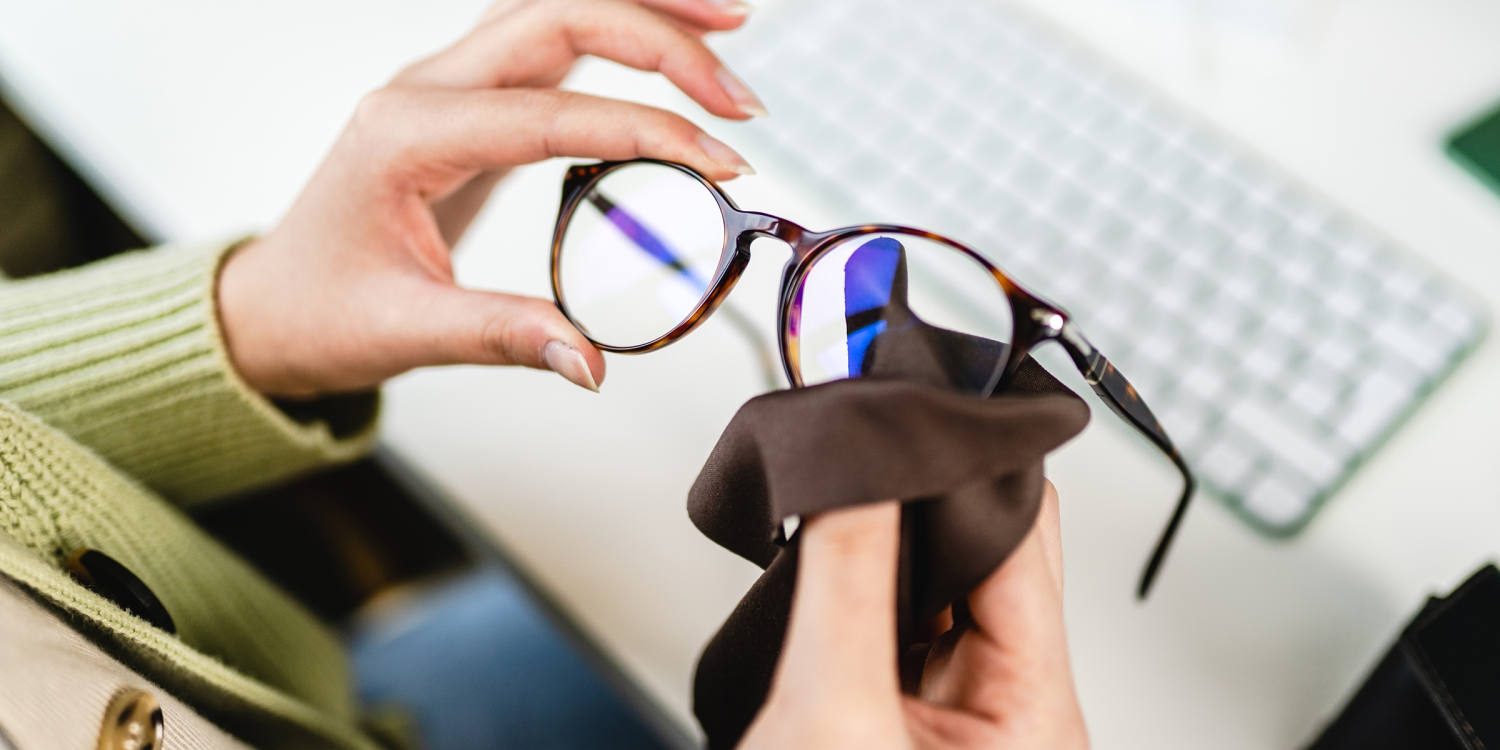
Every day, millions of people ruin their expensive prescription eyewear before they even leave the house. They do it under the guise of maintenance. To clean eyeglasses properly and preserve their costly specialized coatings, you must stop using clothing, dish soap with additives, and window cleaners, and switch exclusively to a single drop of basic dish liquid, lukewarm water, and a clean microfiber cloth.
The optical industry has a quiet financial interest in your ignorance. Modern lenses are masterpieces of chemical engineering, but the way we treat them is barbaric. We wipe them on cotton t-shirts infused with microscopic grit. We spray them with harsh household chemicals. We use breath condensation as a lubricant.
Each of these habits triggers a slow, irreversible degradation of the very technology you paid hundreds of dollars to acquire.
The Chemistry of Modern Lenses
To understand why your glasses are constantly blurry, you have to understand what they are actually made of. The days of actual glass lenses are largely gone, reserved for niche industrial needs or specific high-powered prescriptions. Today, you are almost certainly wearing a matrix of advanced plastics.
CR-39, a plastic polymer developed in the 1940s, remains a baseline standard. If you paid more for thinner, lighter lenses, you are likely looking through polycarbonate or high-index plastics. These materials are incredibly impact-resistant, which keeps your eyes safe from flying debris. However, they are inherently soft. They scratch if you so much as look at them wrong.
To fix this vulnerability, manufacturers apply a complex stack of microscopic coatings.
- The Hard Coat: A lacquer layer designed to mimic the scratch resistance of real glass.
- The Anti-Reflective Layer: A series of microscopic mineral oxides that cancel out internal reflections.
- The Hydrophobic Layer: A slick top coat designed to repel water and facial oils.
These layers are bound together through vacuum deposition. They are incredibly thin, often measured in nanometers. When you rub a dry shirt sleeve across that surface, you aren't just wiping away smudges. You are dragging ambient dust particles across a delicate chemical stack. It acts exactly like fine-grit sandpaper.
The Fraud of the Quick Wipe
We have all done it. A smudge appears in the center of your vision, so you grab the hem of your shirt and scrub. It feels natural. It feels efficient.
It is a disaster for the lens.
Clothing fibers collect microscopic debris throughout the day. Silica dust, pollen, and tiny bits of grit lodge themselves in the weave of your cotton or polyester garments. When you press that fabric into the lens, you trap those abrasive particles between the cloth and the anti-reflective coating.
Initially, the damage is invisible. You won't see a giant gouge across your field of vision. Instead, you create thousands of sub-microscopic micro-scratches. Over six to twelve months, these tiny tracks accumulate.
The result is a permanent, cloudy haze. You might think your vision has worsened or that the lenses are just "getting old." In reality, you have systematically destroyed the anti-reflective stack, causing light to scatter erratically before it ever reaches your pupil.
The Household Chemical Trap
When the shirt hem fails, people turn to the cabinet under the sink. This is where the damage accelerates from gradual wear to catastrophic chemical stripping.
Window cleaners are formulated to strip grease and grime from heavy silicon glass. They frequently contain ammonia, alcohol, or acids. While these chemicals leave a streak-free shine on a kitchen window, they are violently incompatible with the thin-film coatings on modern optical plastics. Ammonia eats away at the hydrophobic and anti-reflective layers, causing them to peel or crack at the edges.
Industry Warning: Once an anti-reflective coating begins to craze or peel, it cannot be repaired. The lenses must be entirely replaced.
Dish soaps can be equally problematic. While a pure, basic dish liquid is excellent for cutting facial oils, modern consumer formulas are packed with extras. Citrus extracts, moisturizing lotions, and heavy fragrances leave a microscopic film on the lens surface. This film creates a magnet for skin oils, ensuring that your glasses smudge even faster the next time you touch them.
The Definitive Restorative Protocol
Cleaning your eyewear properly requires stripping away the accumulated oils without introducing mechanical friction or chemical degradation. The process takes less than two minutes, but it requires discipline.
Step 1: The Thermal Baseline
Rinse your glasses under a gentle stream of lukewarm water. The temperature is critical here. Hot water can cause the plastic lens material and the metallic oxide coatings to expand at different rates. This thermal shock leads to "crazing," a network of tiny cracks that ruins the optical clarity. The water must feel neutral to the touch. This initial rinse flushes away the loose, abrasive grit that causes scratches during the wiping phase.
Step 2: The Emulsification
Apply a single, tiny drop of a basic, lotion-free dish soap to your fingertips. Work it into a light lather between your thumbs and index fingers. Gently rub this lather across both sides of the lenses, paying special attention to the nose pads and the hinges where facial oils and dead skin cells accumulate. This step chemically breaks down the sebum and sweat that regular water cannot budge.
Step 3: The Purge
Rinse the glasses thoroughly under the same lukewarm water stream. Ensure all soap residue is completely gone. At this stage, if your hydrophobic coating is still intact, the water should sheet off the lenses almost entirely, leaving only a few stray droplets.
Step 4: The Mechanical Finish
Dry the frame and lenses using a clean, dedicated microfiber cloth. Do not use paper towels. Paper towels are made from wood pulp, which contains coarse fibers that can scratch soft plastics. Do not use a bath towel that has been washed with fabric softener. Fabric softeners leave a waxy residue that smears across the lens, destroying clarity.
The Microfiber Blind Spot
Even those who use the correct cloth often fail to maintain the cloth itself. Microfiber works because its fibers are split, creating a massive surface area that traps oil and dust like a magnet.
That magnet keeps working when the cloth is sitting on your desk or tossing around in your bag.
If you leave your cleaning cloth exposed to the open air, it accumulates the same ambient dust you are trying to avoid. Wiping your lenses with a dirty microfiber cloth is no better than using a shirt sleeve.
To fix this, keep your cloths in a sealed protective case when they are not in use. Wash them at least once a week. When you wash them, skip the laundry detergent with additives and never use a dryer sheet. Hand-wash them with a few drops of the same lotion-free dish soap you use on your lenses, rinse them thoroughly, and let them air dry.
The Economics of Eyewear Longevity
Independent opticians know this reality well, though major corporate chains rarely emphasize it at the cash register. The replacement cycle for prescription lenses is heavily driven by user-inflicted damage rather than actual changes in visual acuity.
High-end digital lenses with premium coatings can easily cost several hundred dollars. Extending their lifespan from twelve months to three or four years represents a significant financial return on a very simple habit change.
The industry relies on a cycle of continuous consumption. By treating your eyewear like the delicate optical instrument it is, you break that cycle. Stop rubbing your glasses on your clothes. Stop spraying them with kitchen cleaners. Treat them with water, basic soap, and clean microfiber, or prepare to keep paying the price for your impatience.