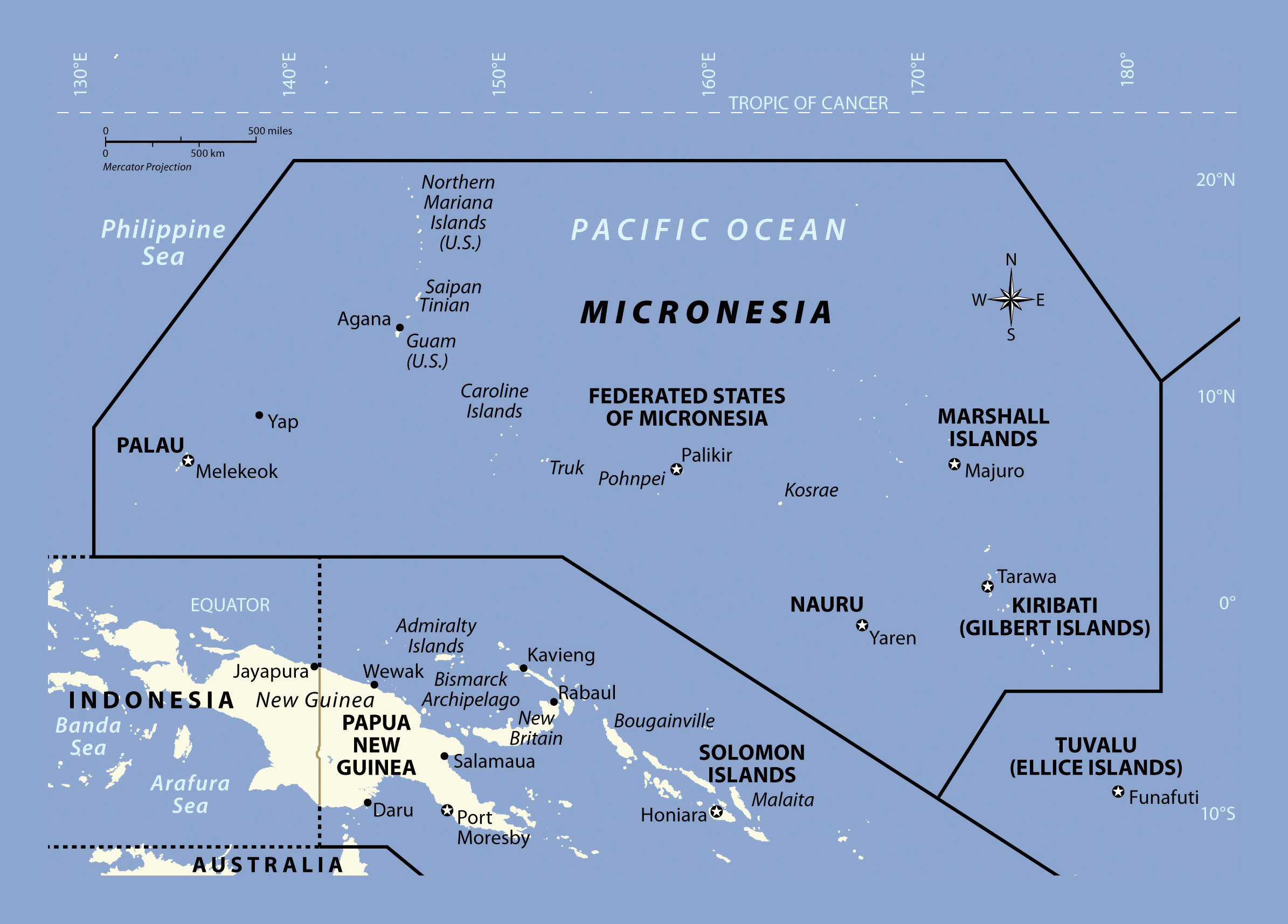
The Republic of Palau functions as a laboratory for the fragility of the post-colonial microstate. When global energy markets experience supply-side shocks, the impact is not distributed linearly. Instead, it aggregates at the furthest nodes of the global supply chain, where low-volume procurement and extreme geographic isolation convert price volatility into systemic paralysis. The recent declaration of a state of emergency in Palau—precipitated by a failure to meet fuel procurement costs—serves as a case study in the structural obsolescence of heavy fuel oil (HFO) dependency in the Pacific.
The Trilemma of Small Island Energy Systems
The crisis in Palau is not merely an issue of rising Brent Crude prices; it is a failure of three interlocking variables that define small island developing states (SIDS). This trilemma consists of:
- Scale Disadvantage: Small populations (approximately 18,000 in Palau) cannot generate the economies of scale required to negotiate favorable long-term supply contracts. They operate primarily on the spot market or through regional aggregators, leaving them exposed to immediate price swings.
- Logistical Friction: The "last mile" of energy delivery in the Pacific involves multi-modal transport over thousands of miles. This adds a fixed premium to every liter of fuel, regardless of the underlying commodity price.
- Revenue Mismatch: National utilities often collect revenue in local or pegged currencies while purchasing fuel in USD. When energy costs spike, the gap between the utility’s "cost to serve" and the consumer's "ability to pay" expands faster than legislative bodies can adjust tariffs.
The Mechanism of the Palau Fuel Shock
The immediate trigger for the emergency was the inability of the Palau Public Utilities Corporation (PPUC) to settle outstanding debts with fuel suppliers. This solvency crisis is driven by the Lagged Tariff Mechanism. In most developed markets, fuel adjustment clauses allow for near-real-time pass-through of costs. In Palau, the political and social cost of 30% to 50% overnight increases in electricity bills creates a policy bottleneck.
The government’s response—declaring an emergency to unlock supplemental funding—is a short-term liquidity injection into a leaky vessel. By subsidizing the cost of diesel-generated power, the state is effectively transferring wealth from national reserves to global oil majors to maintain a status quo that is fundamentally unhedged against the next market cycle.
The Cost Function of Diesel Dependency
To quantify the inefficiency of the current model, one must look at the Levelized Cost of Energy (LCOE). In a diesel-heavy grid, the LCOE is dominated by variable costs (fuel and maintenance) rather than capital expenditure.
- Fuel sensitivity: 70% to 80% of the total cost of generation is tied directly to the price of imported oil.
- Maintenance overhead: Remote environments accelerate the degradation of internal combustion engines due to salt-spray corrosion and high humidity, shortening the replacement cycle of critical infrastructure.
- Transmission loss: Small, aging grids often suffer from high technical losses, meaning a significant portion of the expensive imported energy never reaches a revenue-generating endpoint.
This creates a Debt-Deflation Spiral. As the utility raises prices to cover fuel costs, the largest consumers (resorts and commercial enterprises) invest in their own behind-the-meter solutions or reduce consumption, leaving the utility with a smaller customer base over which to spread the same high fixed costs.
Structural Vulnerabilities in the Supply Chain
The Bloomberg report highlights the "distance from Iran" as a metaphor for global interconnectedness, but the reality is more localized. Palau’s vulnerability is rooted in its specific procurement architecture.
Unlike larger nations that can store months of strategic reserves, Palau operates on a "just-in-time" delivery model with limited tankage. This creates a Storage Constraint Bottleneck. When a shipment is delayed or a price spike coincides with a low-reserve period, the nation has zero cushion. The lack of storage capacity prevents the PPUC from "buying the dip" during periods of market oversupply, forcing them to be permanent price-takers.
The Renewable Transition as a Security Imperative
The shift toward solar and battery storage in Micronesia is frequently framed as an environmental goal. From a data-driven perspective, it is a strategic decoupling from geopolitical risk. The capital expenditure (CAPEX) for a solar-plus-storage microgrid is high, but the operational expenditure (OPEX) is near zero.
Converting a grid to renewables changes the cost structure of a nation from a variable, uncontrollable expense to a fixed, predictable debt service.
The Components of Grid Decoupling
- Solar Photovoltaic (PV) Integration: Palau has high solar irradiance, but the challenge lies in land scarcity. Floating solar (FPV) on lagoons or distributed rooftop arrays are the only viable paths to scale.
- BESS (Battery Energy Storage Systems): Because the grid is small, it lacks the inertia of large continental systems. Large-scale battery deployment is required not just for energy shifting, but for frequency regulation to prevent blackouts when cloud cover suddenly drops PV output.
- Demand-Side Management: Implementing smart metering and time-of-use pricing would allow Palau to shift heavy loads (like industrial refrigeration or desalination) to peak solar hours, reducing the need for expensive battery capacity.
The Geopolitical Dimension of Energy Solvency
The fuel crisis in Palau does not happen in a vacuum. It occurs within the context of the Compact of Free Association (COFA) with the United States and increasing diplomatic competition in the Pacific.
When a Pacific nation cannot pay its fuel bills, it creates an opening for "checkbook diplomacy." External actors can offer to clear utility debts or provide "gifted" fuel shipments in exchange for maritime access or diplomatic recognition. Consequently, energy security in the Pacific is synonymous with political autonomy. If Palau cannot solve its LCOE problem, it remains perpetually vulnerable to being leveraged by the highest bidder in times of economic distress.
The Breakdown of the Current Emergency Response
The current state of emergency is a tactical maneuver, not a strategic one. It allows for:
- Direct Treasury Transfers: Bypassing standard budgetary debates to pay fuel suppliers.
- Rationing Protocols: Preparing the public for rolling blackouts to preserve remaining fuel stocks.
- Emergency Loan Requests: Appealing to international lenders (ADB, World Bank) for bridge financing.
These actions treat the symptoms of the price shock but ignore the underlying pathology: an 18,000-person economy cannot sustain a 19th-century energy model in a 21st-century commodity market.
The Strategic Path Forward
To exit the cycle of fuel-induced emergencies, Palau must pivot from a procurement-based energy strategy to an asset-based strategy. This requires a three-stage execution:
Stage 1: Aggregated Procurement
Until the grid is fully transitioned, Palau must join a regional Pacific fuel buying pool. By aggregating demand with neighboring states like the Federated States of Micronesia and the Marshall Islands, they can move from spot-market pricing to more stable, volume-based contracts. This reduces the "small actor" penalty in negotiations with suppliers like Mobil or Shell.
Stage 2: CAPEX Mobilization via Green Bonds
The barrier to renewable transition is not technology, but the cost of capital. Palau should leverage its unique ecological status to issue blue or green bonds specifically earmarked for utility-scale storage. Transitioning 50% of the base load to solar would eliminate approximately $15 million in annual fuel imports at current prices, providing a clear revenue stream for debt servicing.
Stage 3: Regulatory Reform of the PPUC
The utility must be decoupled from political interference. Tariff structures should be automated based on a rolling average of fuel costs combined with a "Transition Levy" that funds renewable infrastructure. This ensures that even when fuel is cheap, the nation is actively investing in the hardware that will make fuel irrelevant.
The survival of the Micronesian state depends on its ability to transform geography from a liability into an asset. The same isolation that makes fuel expensive makes local, decentralized energy generation the only logical path to sovereignty. The state of emergency is a warning that the window for a managed transition is closing; the alternative is a permanent state of energy insecurity dictated by markets thousands of miles away.
Palau must move to finalize the 100-megawatt solar initiatives currently in the pipeline and aggressively pursue undersea cable projects for regional grid interconnections where possible. The goal is a zero-diesel baseline for daytime operations by 2030, reducing the national exposure to global oil volatility by a minimum of 60%. Failure to execute this shift will result in a recurring cycle of insolvency that threatens the very existence of the nation's middle class and its standing as a stable regional partner.