Maps are supposed to be quiet things. They sit folded in glove compartments or glow softly on dashboard screens, offering certainty in a chaotic world. You look at a blue expanse between two landmasses, read the label, and trust that the ground beneath your feet—or the keel beneath your hull—belongs to a predictable order.
Then, on a Tuesday morning in Washington, a social media post turns twenty-one miles of salt water into a punchline.
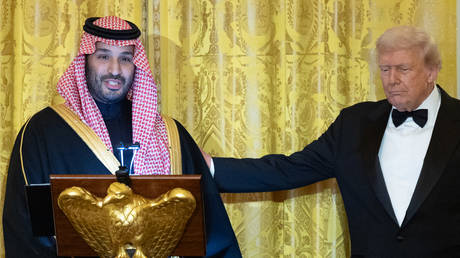
When Donald Trump posted an altered satellite image renaming the Strait of Hormuz the "Trump Strait," he did it right after rejecting a proposed ceasefire deal with Iran, a sequence first detailed by the Wall Street Journal. On a phone screen in Ohio or London, the image looks like standard political theater. It is brash, internet-native, and designed to elicit either a laugh or an outrage-fueled share. It feels weightless.
Two hundred miles off the coast of Oman, aboard a three-hundred-meter liquefied natural gas tanker, nothing feels weightless.
To understand what happens when geopolitical trolling meets the world’s most fragile maritime chokepoint, you have to step off the timeline and onto the bridge of a ship. Let us build a composite character to stand watch with us—call him Mateo, a thirty-eight-year-old chief mate from Manila who has spent half his adult life hauling energy across the Persian Gulf.
Mateo does not follow American cable news. He follows barometric pressure, radar sweeps, and the chatter on VHF Channel 16. Yet a single digital image posted thousands of miles away changes the temperature in his wheelhouse instantly.
The Geography of a Narrow Throat
Consider the physical reality of the water Trump jokingly claimed on a map. At its narrowest point, the Strait of Hormuz pinches down to roughly twenty-one nautical miles wide. The actual shipping lanes—the deep-water channels where supertankers loaded with crude oil can safely pass without running aground—are only two miles wide in each direction, separated by a two-mile buffer zone.
Two miles. That is the width of a modest suburban airport runway.
Through that narrow slot passes roughly one-fifth of the world’s total petroleum consumption, alongside a massive share of global liquefied natural gas. Every single day, millions of barrels of energy thread that needle, bound for refineries in Rotterdam, power grids in Tokyo, and chemical plants in Houston. There is no easy detour. Pipelines across Saudi Arabia and the United Arab Emirates exist, certainly, yet they can absorb only a fraction of the volume that moves by sea.
I remember standing on the docks in Fujairah a few years ago during an earlier spike in Gulf tensions, watching the hulls ride low in the water as sailors checked their rigging twice before heading north. The air smelled of heavy bunker fuel and hot iron. Nobody on that pier talked about ideology or election cycles. They talked about insurance premiums, sonar ghosts, and how fast a small fiberglass skiff packed with explosives can cross two miles of flat water at night.
When diplomatic off-ramps vanish—like a rejected ceasefire proposal—the mariners are the first to feel the air pressure drop.
Why Trolling Works as a Weapon
It is tempting to dismiss the "Trump Strait" image as mere bravado, a digital throwback to schoolyard taunts. That would be a mistake. In modern statecraft, mockery is rarely accidental; it is an instrument of psychological pressure.
By rejecting a ceasefire and immediately slapping his own name onto Iran’s most prized strategic asset, Trump executed a specific kind of asymmetric signaling. Historically, superpowers projected deterrence by moving aircraft carrier strike groups into view. Carriers are slow, expensive, and unmistakable. A doctored map costs nothing, travels at the speed of fiber-optic light, and forces the adversary into a lose-lose bind.
Think of it like a high-stakes poker game where one player refuses to look at his cards, throws a novelty chip onto the pot, and laughs. If the opposing player takes the joke seriously and lunges across the table, he looks erratic and insecure. If he ignores it, he risks looking weak in front of his own domestic audience.
For the leadership in Tehran, whose revolutionary identity is deeply bound to sovereignty over the Persian Gulf, watching an American leader casually rebrand the Strait of Hormuz is an acute humiliation. Hardliners in the Islamic Revolutionary Guard Corps do not read such posts as harmless memes. They read them as proof that Washington has no interest in de-escalation, and that restraint will only invite further mockery.
The Invisible Tax on Your Kitchen Table
You might wonder why a spat over a digital label between Washington and Tehran should matter to a family buying groceries in Denver or paying an electric bill in Berlin. We tend to think of global shipping as an invisible, self-healing machine. You click "buy," or you pull up to a gas pump, and the supply chain simply delivers.
It does not work that way. Global energy markets run on psychology long before a single drop of oil is spilled.
Let us trace the chain reaction of a single tense week in the Gulf, using a hypothetical freight broker—call her Claire, working out of a glass office in Singapore—to see how the math unfolds.
Claire’s job is to match cargoes of crude oil with available tankers. When news breaks that ceasefire talks have collapsed and rhetoric is escalating, Claire does not wait for a missile strike to change her spreadsheets. Neither do the maritime underwriters in London.
- The War-Risk Spike: Within hours of heightened hostility, insurance syndicates reclassify the Persian Gulf as an elevated war-risk zone. The cost to insure a single supertanker for a seven-day transit can jump from tens of thousands of dollars to hundreds of thousands overnight.
- The Speed Shift: Captains like Mateo receive orders from their fleet managers to alter their transit profiles. Instead of steaming steadily at fourteen knots, vessels bunch up in holding areas outside the Gulf of Oman, waiting for naval escorts or daylight windows. Delays ripple across port schedules from Busan to Galveston.
- The Futures Premium: Commodity traders in New York and London price in the probability of disruption. Even if every single ship makes it through untouched, the mere threat that Iran might mine the two-mile shipping lane adds a "fear premium" of several dollars per barrel to global oil benchmarks.
By the time that cost finishes moving through refineries, trucking fleets, and plastics manufacturers, it shows up quietly on the receipt at your local supermarket. You never see a line item labeled Geopolitical Escalation Surcharge, yet you pay it all the same.
The Illusion of Control
There is a comforting myth that both Washington and Tehran cling to during moments like this: the belief that escalation can be precisely calibrated. Leaders assume they can turn the heat up to seven, extract a concession, and turn it back down to three before the pot boils over.
History suggests otherwise.
Look back at the Tanker War of the 1980s, when Iraq and Iran traded strikes on commercial shipping across these exact waters. What began as targeted harassment spiraled into hundreds of damaged vessels, spiked global energy prices, and eventually pulled the United States Navy into direct combat, culminating in the tragic 1988 shootdown of Iran Air Flight 655 by the USS Vincennes—a catastrophic mistake born of frayed nerves, ambiguous radar tracks, and split-second panic in a crowded corridor.
Geography has not widened since 1988. If anything, the margins for error have shrunk.
Today, the Strait of Hormuz is saturated with drone swarms, fast-attack craft, coastal anti-ship missile batteries, electronic jamming, and commercial vessels trying to navigate while their GPS signals are routinely spoofed. In that kind of electromagnetic fog, a captain cannot always trust his instruments. A young radar operator on a frigate has less than ninety seconds to decide whether an approaching blip is a lost fishing dhow or a remote-controlled explosive boat.
Humor does not translate across VHF radio static. When political leaders treat a tinderbox like a comedy stage, the people holding the fire extinguishers are left guessing whether the match is real.
What the Map Leaves Out
I admit that watching this unfold leaves me uneasy, partly because there is no clean, satisfying formula to predict where it stops. Anyone who tells you with certainty that this standoff will fizzle out into another round of quiet backchannel talks is guessing. Anyone who promises that war is inevitable is guessing too.
What we do know is that words and images carry physical mass in places where trust has already eroded to zero.
When a ceasefire deal dies on the table, diplomats lose their script. In the vacuum that follows, spectacle rushes in to take its place. A viral photo renaming a body of water wins the news cycle for twenty-four hours. It rallies supporters, enrages critics, and projects an image of effortless dominance to anyone scrolling past on a bright screen.
Out on the water, however, the sea remains indifferent to who owns the hashtag.
Tonight, around midnight local time, Mateo will step out onto the starboard wing of his bridge as his tanker approaches the narrowest bend of the channel. The air will be warm and thick with salt. To his port side, the dark, rugged mountains of Iran’s Hormozgan province will rise like jagged teeth against the stars. To his starboard, the lights of Oman’s Musandam peninsula will flicker across the swells.
He will check his compass, listen to the low, steady thrum of the diesel engines beneath his boots, and watch a pair of unlit speedboats idling just outside the two-mile boundary line, their wakes glowing faintly in the dark water.