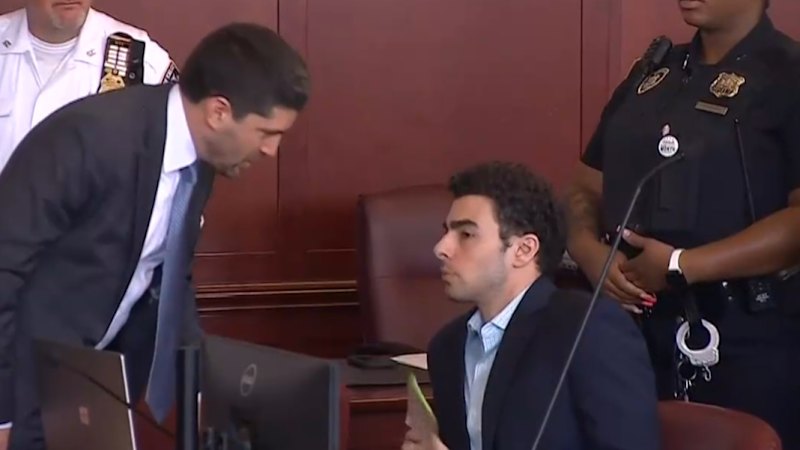
The viability of a high-profile criminal prosecution depends less on public sentiment and far more on the cold physics of constitutional procedure. In the state prosecution of Luigi Mangione for the December 2024 killing of UnitedHealthcare CEO Brian Thompson, this reality was laid bare on May 18, 2026. New York Supreme Court Judge Gregory Carro issued a bifurcated evidentiary ruling that serves as a pristine case study in Fourth Amendment jurisprudence. The ruling drew a sharp, tactical line between an improper warrantless search conducted at the point of detention and a valid administrative inventory search conducted later at the police precinct.
By analyzing the mechanics of this decision, we can map the exact legal friction points that will dictate the trajectory of the state trial scheduled for September 8, 2026. This analysis breaks down the structural elements of the ruling, the divergence between state and federal evidentiary thresholds, and the operational reality facing both legal teams.
The Dual-Phase Search Framework
To evaluate the strength of the prosecution’s remaining case, one must conceptualize the police interaction at the Altoona, Pennsylvania McDonald's on December 9, 2024, not as a singular event, but as a two-phase operational sequence governed by distinct legal doctrines.
[Phase 1: McDonald's Table] ───► Immediacy Test Failed ───► Core Baggage Suppressed
                                                                │
[Phase 2: Precinct Station] ───► Inventory Protocol ────► Gun & Diary Admitted
Phase 1: The Grabbable Area Disconnection
The defense sought the wholesale suppression of all physical items recovered from Mangione’s backpack, alleging a warrantless search violated protections against unreasonable searches and seizures. The prosecution countered by invoking the "search incident to a lawful arrest" exception, arguing officers were following urgent safety protocols.
Judge Carro rejected the prosecution’s justification for the initial search conducted inside the restaurant. Under New York law—which the court ruled applicable to the admissibility of evidence within a New York forum—a search incident to arrest requires that the container be within the immediate control or the "grabbable area" of the suspect to prevent the destruction of evidence or the retrieval of a weapon.
Because responding officers had already separated the backpack from Mangione and moved it outside his physical reach while surrounded by multiple officers, the immediate safety justification evaporated. The law demands strict adherence to this spatial proximity. The breakdown of this phase resulted in the suppression of several high-value evidentiary items:
- A loaded firearm magazine
- A cellular device
- A passport and wallet
- A localized computer chip
The suppression of the cellular device and computer chip creates an immediate digital bottleneck for state prosecutors. It restricts their ability to present direct, localized digital forensics—such as real-time cell-tower pings or device-side location logs—harvested directly from the scene of the arrest without relying on secondary network provider backups.
Phase 2: The Saving Grace of Administrative Routine
The structural turning point of the ruling rests on the legal doctrine of the "inventory search exception." While the initial intrusion at the restaurant table was deemed an improper warrantless search, the subsequent, exhaustive examination of the backpack at the Altoona police station was upheld as a valid administrative inventory.
The legal mechanism here is distinct: an inventory search is not an investigative tool designed to discover evidence of a crime. Instead, it is a routine, administrative procedure intended to safeguard an arrestee's property, protect the police against claims of theft, and ensure precinct security. Because the Altoona Police Department possessed an established, standardized protocol for logging the contents of seized property, and because officers paused their initial search at the restaurant once their identity suspicions were confirmed, the inventory process was deemed untainted by the prior illegal search.
This procedural distinction insulated the two most critical pieces of evidence in the prosecution's arsenal:
- The Alleged Murder Weapon: A 3D-printed pistol matching the ballistic profile of the firearm used in the Manhattan shooting.
- The Handwritten Diary: A notebook containing explicit, actionable text detailing a desire to target a health insurance executive.
By separating the flawed execution of the physical field search from the mandatory administrative routine of the precinct, the court preserved the prosecution’s core mechanism for establishing both means and motive.
Inter-Jurisdictional Divergence and Tactical Asymmetry
The state court's exclusion of the mobile device and passport contrasts sharply with parallel proceedings in the federal judicial system. Mangione faces a separate federal trial, centered on interstate stalking charges, scheduled for October 13, 2026.
In January 2026, the federal district court ruled the entire contents of the backpack admissible under federal evidentiary standards. This creates a stark tactical asymmetry between the state and federal prosecutions.
| Variable / Evidence | New York State Court Status (Trial: Sept 8, 2026) | Federal District Court Status (Trial: Oct 13, 2026) |
|---|---|---|
| 3D-Printed Firearm | Admissible (Via Precinct Inventory Exception) | Admissible (Full Bag Search Upheld) |
| Handwritten Notebook | Admissible (Via Precinct Inventory Exception) | Admissible (Full Bag Search Upheld) |
| Cellular Phone & Chip | Suppressed (Fruit of Warrantless Search) | Admissible (Full Bag Search Upheld) |
| Passport & Wallet | Suppressed (Fruit of Warrantless Search) | Admissible (Full Bag Search Upheld) |
| Pre-Miranda Statements | Suppressed (Targeted Interrogation Responses) | Admissible (Spontaneous Expressions Permitted) |
This structural divergence stems from differing interpretations of officer safety exceptions and the execution of warrantless searches. Federal courts historically grant broader latitude to law enforcement officers executing an arrest based on a high-profile nationwide manhunt, recognizing a generalized public safety exception. New York state jurisprudence enforces a more rigid spatial and temporal limitation on warrantless container searches.
The practical impact is clear: state prosecutors must build their narrative using a leaner evidentiary footprint. They are legally barred from introducing the physical passport or the phone found at the restaurant table to prove flight or digital coordination. However, because the federal case remains intact with a complete evidentiary slate, the defense faces a compounding resource drain, forced to fight two distinct legal battles with asymmetrical rules of engagement.
The Miranda Boundary: Spontaneous vs. Elicited Statements
Beyond physical evidence, the suppression hearing dissected the admissibility of verbal statements made by Mangione immediately following his detention. The court applied a rigorous constitutional filter, isolating spontaneous utterances from responses generated via custodial interrogation.
Under established Fifth Amendment doctrine, Miranda warnings are triggered the moment a suspect is subjected to custodial interrogation. Custody was clearly established in this case; Judge Carro noted that once more than eight officers arrived and surrounded Mangione at the restaurant, no reasonable person would believe they were free to leave.
The court's division of his statements highlights the strict boundaries of police questioning:
- The Inadmissible Interrogations: Officers asked Mangione why he had provided a false identity and questioned him directly regarding the fraudulent documentation in his possession. Because these questions occurred post-custody but pre-Miranda, and were explicitly designed to elicit incriminating information, the responses were suppressed.
- The Admissible Utterances: Spontaneous statements made by the defendant that were not prompted by direct police questioning remain fully admissible. This includes subsequent public declarations, such as Mangione’s statements to assembled media during his initial transport, where he challenged the accuracy and validity of the public narrative surrounding the healthcare industry.
This creates a clear operational boundary for the trial. The prosecution cannot use Mangione's initial, defensive falsehoods regarding his name as direct evidence of a consciousness of guilt. Instead, they must rely on his unprompted, politically charged commentary to construct their portrait of intent and ideological alignment.
Strategic Trajectory and the Prosecution's Path
The dismissal of the top two state charges—first-degree murder and second-degree murder as terrorism crimes—by Judge Carro in September 2025 significantly altered the risk profile of this litigation. With the federal death penalty option also invalidated by U.S. District Judge Margaret M. Garnett in January 2026 due to the statutory classification of stalking, the state's case focuses squarely on a charge of second-degree murder under New York Penal Law § 125.25.
Despite the loss of the physical cellphone and immediate field-seized items, the state’s prosecution architecture retains its foundational structural pillars.
[Precinct Gun Admissibility] + [Ballistic Match Data] ──► Means
[Precinct Diary Admissibility] + [Spontaneous Text] ────► Motive
[Eyewitness / Surveillance Sequence] ───────────────────► Opportunity
The preservation of the 3D-printed firearm and the handwritten notebook containing specific operational objectives gives the state a direct path to proving intent and execution. The defense will likely pivot to challenging the chain of custody between the initial flawed search and the precinct inventory, attempting to argue the inventory search was a pretextual attempt to cure an unconstitutional field error.
The final strategic play for the prosecution will rely on a classic circumstantial and forensic overlap. They will use the permitted precinct-inventoried items to establish a precise match with the physical evidence recovered from the Manhattan crime scene, bypassing the suppressed digital assets entirely. The trial will not turn on the contents of the defendant’s pockets at the McDonald's table, but on the administrative regularity of the police lockers in Altoona, Pennsylvania.