The legal repercussions facing three activists—including Anamika Ragu, a 24-year-old of Indian origin—for a February 2024 pro-Palestine demonstration in Singapore serve as a definitive case study in the city-state’s zero-tolerance approach to public assembly. While international media often frames such events through the lens of human rights or individual activism, a structural analysis reveals a calculated application of the Public Order Act (POA). This mechanism functions as a regulatory barrier designed to decouple domestic social stability from volatile geopolitical externalities. The fines imposed on these individuals are not merely punitive; they represent a calibration of the state’s deterrent threshold against unauthorized collective action.
The Structural Hierarchy of Public Order
Singapore’s governance model prioritizes communal harmony over individual expressive liberties. This is codified through a rigid legal hierarchy that classifies public demonstrations not by their content, but by their procedural compliance. The February "Letters to the President" march, involving approximately 70 participants moving toward the Istana, triggered a specific enforcement protocol due to three structural violations:
- The Licensing Deficit: Under the Public Order Act, any assembly or procession held in a public place requires a permit. By bypassing the Singapore Police Force (SPF) permit application process, the organizers moved from the category of "protected expression" into "unlawful assembly."
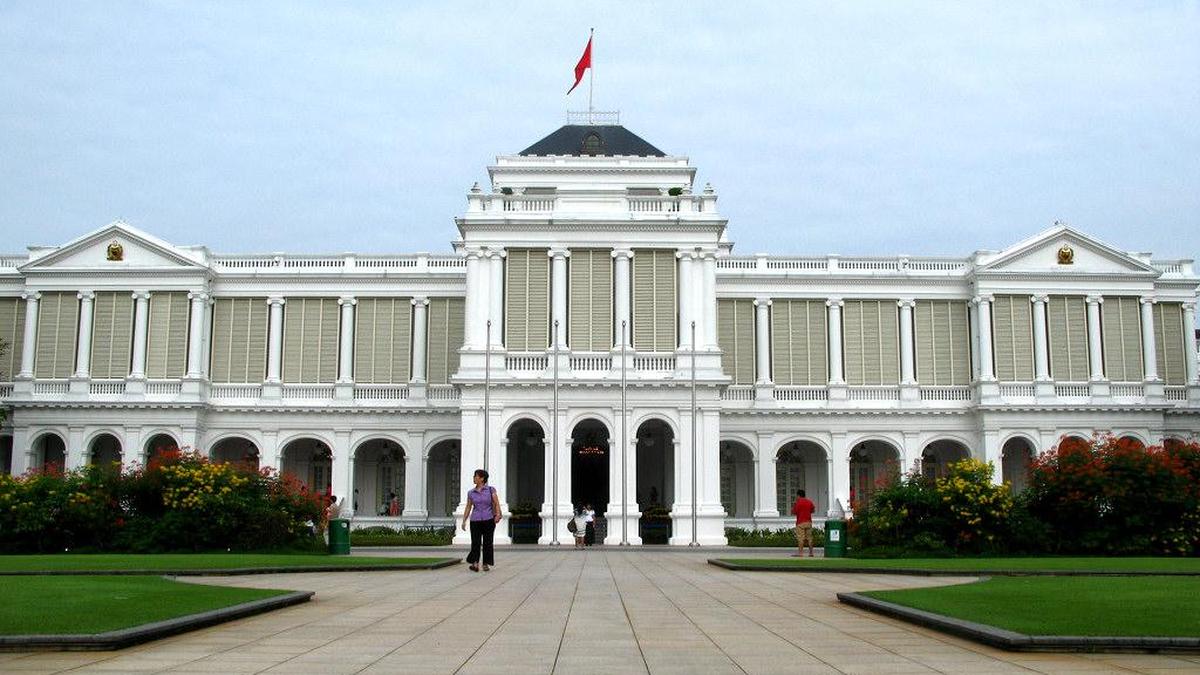
- Geographic Constraints: Singapore restricts most forms of public protest to a singular designated zone: Speakers’ Corner at Hong Lim Park. By choosing a route toward the Istana, the official residence and office of the President, the activists breached a high-security perimeter, escalating the legal severity from a simple administrative lapse to a security-sensitive infraction.
- The Nexus of Foreign Interference: The Singaporean government views protests related to foreign conflicts (in this case, the Israel-Hamas war) as a threat to domestic racial and religious cohesion. The state’s logic holds that allowing local demonstrations on global flashpoints risks importing external polarizations into a multi-ethnic society.
Quantifying the Deterrence Model
The fines issued—SGD 6,000 for Anamika Ragu and SGD 10,000 for other key organizers—are precisely calibrated within the statutory limits of the POA. For a first-time offense under Section 16(2)(a) of the Act, individuals can face fines up to SGD 3,000, while organizers face significantly higher ceilings. The state utilizes a Tiered Liability Framework to assign responsibility:
- Organizers: Those who conceptualized, publicized, and led the march (e.g., Anamika Ragu, Mossadakiah Zakaria, and Sharleez Zulikha) bear the highest legal and financial burden. This reflects the state's intent to decapitate the leadership of unauthorized movements.
- Participants: While 70 people participated, the prosecution targeted the "architects" of the event. This selective enforcement optimizes state resources while maintaining a credible threat against future logistical coordinators.
- The Probationary Variable: In Ragu’s case, the court considered her age and lack of prior criminal record. However, the imposition of a substantial fine rather than a mere warning signals that "youthful idealism" is not a valid defense against the breach of public order statutes.
The Strategic Friction of "Letters to the President"
The choice of a "letter-walking" event—where participants walk to deliver petitions—is a tactical attempt to circumvent the legal definition of a "procession." From an activist strategy perspective, this is an attempt to use a mundane civic action (delivering mail) as a proxy for a protest. However, the SPF’s analytical framework uses a Functional Test of Intent:
If the primary purpose of the gathering is to demonstrate support for or opposition to the views or actions of any person, group, or government, it is classified as an assembly. The presence of placards, coordinated movement, and social media mobilization served as the evidentiary basis to categorize the walk as a prohibited procession. The state’s refusal to accept the "letter-delivery" veneer demonstrates a sophisticated legal filter that prioritizes the effect of the gathering over the description provided by the participants.
Socio-Political Risks and the Buffer State Logic
The prosecution of these activists must be viewed through the lens of Social Friction Mitigation. Singapore’s Ministry of Home Affairs (MHA) operates on the principle that the public square is a finite resource where the "cost" of a protest is measured in potential communal tension.
The Israel-Palestine conflict is a high-sensitivity issue in Singapore, given its significant Muslim minority and its longstanding diplomatic and military ties with Israel. Allowing pro-Palestine marches would, by necessity of fairness, require the state to allow pro-Israel counter-marches. This creates a "feedback loop of agitation" that the state considers an unacceptable risk to the social fabric. By enforcing the POA strictly in this instance, the government is reinforcing a Neutrality Buffer, ensuring that the streets of Singapore do not become a proxy battlefield for foreign ideological disputes.
Comparative Enforcement Metrics
When compared to other jurisdictions, Singapore’s approach lacks the "proportionality test" often used in European or North American courts. In those systems, a court might weigh the degree of public disruption against the right to assembly. In the Singaporean judicial system, the breach of the permit requirement is a Strict Liability Offense. Once the fact of the unauthorized assembly is established, the focus shifts entirely to sentencing within the statutory range.
The data suggests that this approach has been highly effective at minimizing unauthorized public dissent. Since the 2013 Little India Riot, the state has tightened the application of the POA, resulting in:
- A decrease in "spontaneous" unauthorized gatherings.
- A centralization of dissent within highly regulated digital spaces or the Speakers' Corner.
- The professionalization of activism, where organizers must now weigh the SGD 10,000 "cost of entry" for unauthorized action against the visibility gained.
Operational Limitations of Legal Deterrence
While the state has successfully penalized the organizers, this strategy faces two emerging bottlenecks:
- The Martyrdom Effect: High-profile prosecutions of young, articulate activists can inadvertently increase the salience of the cause. The financial penalty is often crowdsourced, neutralizing the economic impact on the individual while generating a second wave of media coverage for the original protest objective.
- The Digital Spillover: As physical assembly becomes cost-prohibitive due to legal risk, activism migrates to encrypted platforms and decentralized digital campaigns. These are harder for the state to regulate under the current POA framework, necessitating a shift toward the Protection from Online Falsehoods and Manipulation Act (POFMA) and the Foreign Interference (Countermeasures) Act (FICA).
The conviction of Anamika Ragu and her associates confirms that the Singaporean state views the integrity of its public order laws as more vital than the optics of prosecuting peaceful activists. For organizations or individuals looking to engage in advocacy within Singapore, the only viable path is the total exhaustion of formal administrative channels. Any attempt to use "tactical ambiguity" to bypass the Public Order Act will be met with a clinical, high-cost legal response.
The strategic takeaway for observers is clear: Singapore’s stability is maintained through a "Permit or Penalize" binary. Future activists must calculate whether the communicative value of an unauthorized march exceeds the certainty of a criminal record and the exhaustion of financial capital through state-mandated fines. The state has indicated it will not adjust its sensitivity threshold, regardless of the humanitarian nature of the cause or the profile of the participants.