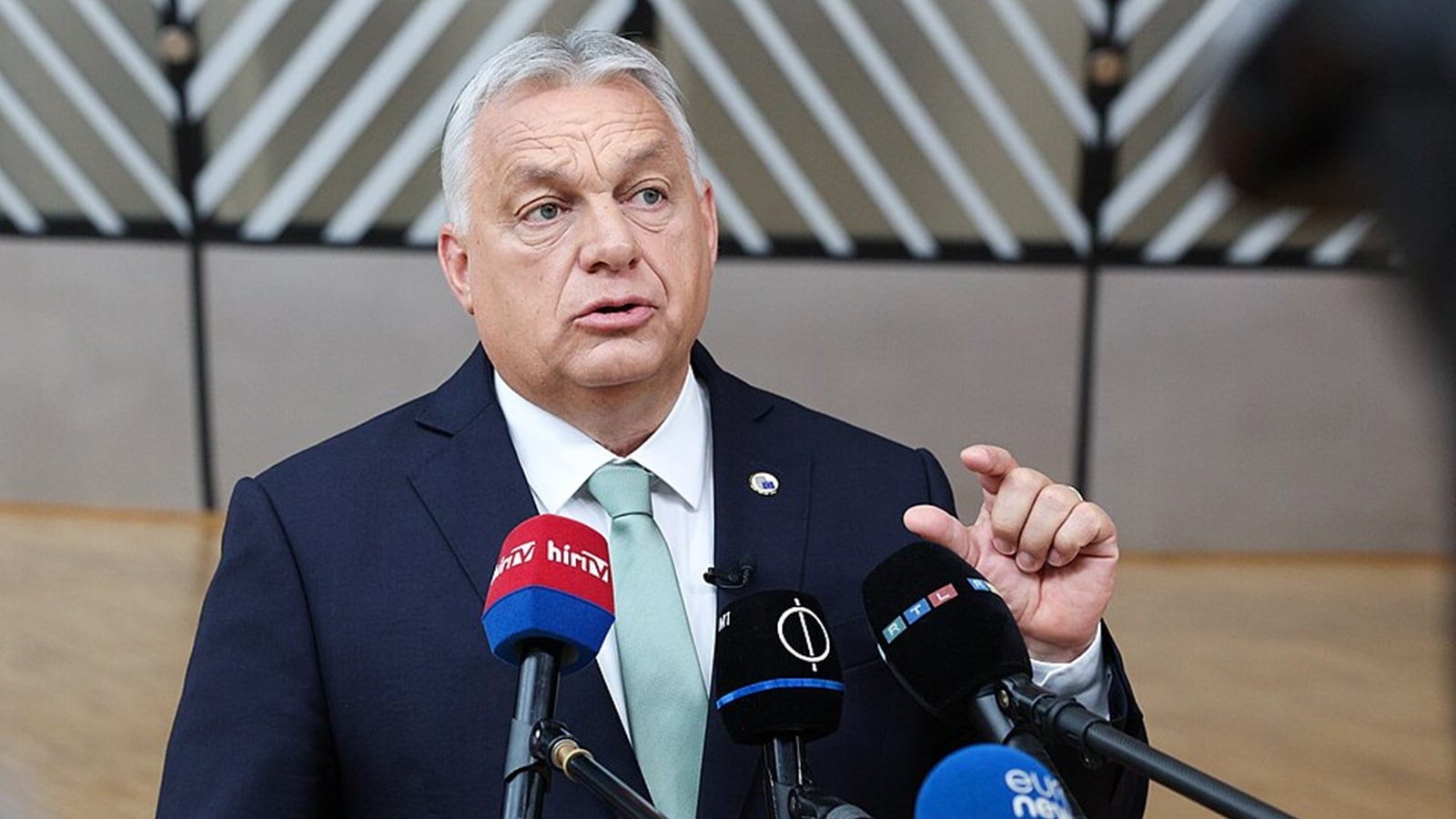
The delay of the €35 billion EU loan to Ukraine, backed by immobilized Russian sovereign assets, is not a byproduct of bureaucratic friction but a calculated exercise in geopolitical arbitrage by the Hungarian administration. While the G7 aimed to provide Kyiv with a non-dilutive, long-term fiscal cushion, Viktor Orbán has identified a specific legislative bottleneck within the European Council to maximize domestic political equity. The friction point centers on the renewal cycle of EU sanctions against Russia. By refusing to extend the renewal period from six months to 36 months, Hungary maintains a high-frequency veto opportunity, effectively turning a technicality of international law into a persistent instrument of leverage.
The Architecture of the G7 Extraordinary Revenue Acceleration (ERA) Loans
To understand why the Hungarian veto is effective, one must first deconstruct the financial plumbing of the proposed $50 billion G7 package. The "Extraordinary Revenue Acceleration" (ERA) mechanism relies on the future flow of interest generated by roughly €210 billion in Russian Central Bank assets held in the EU, primarily within Euroclear.
The economic viability of this loan depends on the Continuity of Immobilization. If the underlying assets are unfrozen, the "windfall" profits vanish, leaving the G7 guarantors—specifically the United States—liable for the principal. The U.S. Treasury has requested "ironclad" assurances that these assets will remain frozen until Russia pays reparations. Under current EU law, these sanctions require unanimous renewal every six months. Hungary's refusal to shift to a 36-month window creates a "rollover risk" that is unpalatable to U.S. risk assessors, thereby stalling the American portion of the contribution and forcing the EU to bear a disproportionate share of the initial €35 billion tranche.
The Three Pillars of Hungarian Leverage
Orbán’s strategy operates across three distinct dimensions of power:
- The Veto as a Tradable Commodity: The Hungarian government uses its position in the European Council to trade "non-obstruction" for the release of suspended EU Cohesion and Recovery funds. Currently, billions in EU funding for Hungary remain frozen due to rule-of-law concerns. The Ukraine loan becomes the primary bargaining chip in a broader "conditionality" negotiation.
- Domestic Electoral Positioning: By positioning Hungary as the "party of peace" or the "skeptic of Western escalation," Orbán consolidates his domestic base. The optics of delaying aid to Ukraine resonate with a specific Hungarian electorate that views the conflict through the lens of historical grievances regarding ethnic Hungarians in the Zakarpattia region.
- Transatlantic Alignment Hedging: There is a clear temporal strategy at play. By delaying a definitive EU-wide agreement until after the U.S. Presidential election, Budapest maintains flexibility. An administration change in Washington could shift the U.S. stance on Ukraine funding entirely, potentially vindicating Orbán’s obstruction and elevating his status as a key intermediary between a "Peace-First" White House and a "Defense-First" Brussels.
The Cost Function of Delayed Fiscal Support
The implications for Ukraine’s Ministry of Finance are measurable and severe. The delay in finalizing the €35 billion EU portion creates a liquidity gap that forces Kyiv into higher-cost internal borrowing or inflationary monetary practices.
- Cost of Uncertainty: Without a guaranteed multi-year funding stream, Ukraine cannot engage in long-term defense procurement contracts. Defense manufacturers require multi-year commitments to scale production lines; spot-market purchasing is significantly more expensive.
- The IMF Correlation: The G7 loan is a critical component of Ukraine’s broader IMF program requirements. If the loan remains stuck in legislative limbo, the "financing assurances" required by the IMF are undermined, potentially triggering a review of future disbursements.
- Asset Volatility: The interest generated by Russian assets is subject to market fluctuations. Every month the deal is delayed, the "accrued windfall" is spent on immediate survival rather than being leveraged as collateral for a larger, front-loaded lump sum that could change the kinetic reality on the ground.
Structural Failures in the EU Unanimity Principle
This impasse highlights a systemic vulnerability in the EU’s Common Foreign and Security Policy (CFSP). The requirement for unanimity allows a single member state with a GDP representing less than 1% of the Union's total to dictate the security architecture of the continent.
The European Commission’s attempt to bypass Hungary by structuring the €35 billion as an expansion of existing Macro-Financial Assistance (MFA) requires only a qualified majority. However, this does not solve the U.S. Participation Problem. Without the 36-month sanctions renewal, the U.S. is unlikely to contribute its $20 billion share. Consequently, the EU is forced into a "Solo-MFA" path, which increases the fiscal risk for EU member states and exhausts the headroom in the EU budget.
The Strategic Counter-Play: Decoupling and Differentiation
To break the deadlock, the European Council must move toward a "Coalition of the Willing" financial model or utilize Article 7 proceedings with greater clinical precision.
- Mechanism Decoupling: The EU could move forward with its €35 billion tranche regardless of the U.S. position, accepting the increased risk as a "security premium." This signals to Budapest that its veto has a diminishing marginal return.
- Bilateral Guarantee Structures: Member states could provide individual guarantees for the loan, bypassing the EU budget and the need for a unanimous Council vote. While administratively complex, it removes the "single point of failure" that Hungary currently exploits.
- The Rule-of-Law Linkage: The Commission must maintain a rigid stance on the €19 billion in frozen Hungarian funds. If Budapest realizes that obstructing Ukraine aid will not lead to the release of its own funds, the incentive structure for the veto collapses.
The current stalemate is a testament to the fact that in modern geopolitics, technical renewal periods are as potent as battalions. Hungary has correctly identified that the U.S. Treasury's risk aversion is the true target, not the EU's desire to help. By keeping the sanctions on a six-month "kill switch," Orbán ensures that he remains the most relevant actor in the room every 180 days.
The strategic play for the EU is to finalize the MFA framework via qualified majority immediately. This forces Hungary to choose between being a silent partner in a deal that happens anyway or continuing a public opposition that yields no tangible financial concessions. Moving to a "Qualified Majority" for sanctions renewals is the necessary long-term structural reform, but in the immediate term, the EU must be prepared to underwrite the U.S. share of the risk to neutralize Hungarian leverage.
Would you like me to model the specific impact on Ukraine's debt-to-GDP ratio if the U.S. contribution to this loan facility is permanently canceled?