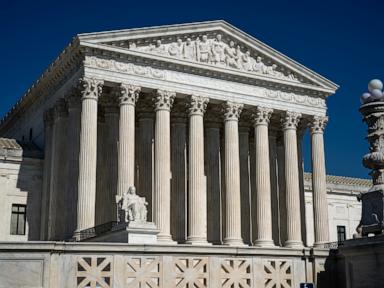
The constitutional viability of a state-level capital conviction relies entirely on the procedural integrity of the jury selection process. When a trial court fast-tracks its evaluation of state-issued peremptory challenges, it creates a systemic vulnerability that invalidates the underlying judgment. The United States Supreme Court's 5-4 decision in Pitchford v. Cain establishes that structural breakdowns during jury selection—specifically the truncation of the defense's opportunity to demonstrate pretext—constitute reversible constitutional error under the established framework of Batson v. Kentucky.
The case originates from a 2004 armed robbery of a grocery store in Grenada, Mississippi, resulting in the death of the store owner, Reuben Britt. The co-defendant, Eric Bullins, who fired the fatal shots, was 16 years old and legally ineligible for the death penalty. Terry Pitchford, aged 18 at the time, was prosecuted for capital murder. The structural breakdown occurred during the empaneling of the jury, where a stark statistical disparity emerged: the state's prosecution team executed peremptory challenges to eliminate 80% of the available Black jurors, resulting in an final panel composed of 11 White jurors and one Black juror in a jurisdiction where the Black population exceeds 37%.
The Three-Stage Batson Framework and the Step Three Bottleneck
To evaluate claims of racially motivated jury exclusion, courts rely on the three-stage operational loop mandated by Batson v. Kentucky (1986). The Pitchford decision highlights a critical operational bottleneck at the final stage of this sequence.
+------------------------------------+
|  Step 1: Prima Facie Case          |
|  Defense establishes an inference   |
|  of racial discrimination.         |
+-----------------+------------------+
                  |
                  v
+------------------------------------+
|  Step 2: State Response            |
|  Prosecution offers explicit,      |
|  "race-neutral" justifications.    |
+-----------------+------------------+
                  |
                  v
+------------------------------------+
|  Step 3: Judicial Adjudication     |
|  Court evaluates pretext via       |
|  adversarial rebuttal.             |
|  ** SYSTEM BREAKDOWN POINT ** |
+------------------------------------+
Step 1: The Prima Facie Threshold
The objecting party must establish a prima facie case of purposeful discrimination based on the totality of relevant facts. In Pitchford, the defense cleared this quantitative hurdle by demonstrating that District Attorney Doug Evans utilized peremptory strikes against four out of five prospective Black jurors.
Step 2: The Facial Neutrality Requirement
The burden shifts to the state to articulate a race-neutral explanation for each disputed strike. These justifications need not be persuasive or even plausible; they must merely be facially devoid of racial classification. The prosecution in Pitchford presented four discrete operational justifications:
- One prospective juror arrived 15 minutes late from a scheduled court recess.
- Two prospective jurors possessed siblings with prior convictions for violent offenses.
- The fourth prospective juror shared demographic traits with the defendant (young, unmarried, and a father).
Step 3: The Pretext Inquiry and Judicial Failure Modes
The final stage requires the trial judge to determine whether the opponent of the strike has carried the ultimate burden of proving purposeful discrimination. This stage demands an adversarial truth-testing mechanism. The trial court must permit defense counsel to present a rebuttal to demonstrate that the state’s facially neutral reasons are pretextual.
The core breakdown in Pitchford occurred precisely at this junction. Judge Joseph Loper accepted the prosecution's stated reasons immediately, failing to afford defense counsel a sufficient window to execute a comparative juror analysis or challenge the consistency of the state's logic. Writing for the majority, Justice Brett Kavanaugh observed that whether due to confusion, oversight, or an overly hurried timeline, the standard procedure for resolving Batson claims at step three never occurred.
Statistical Disparity and Historical Proclivity as Predictive Indicators
A rigorous review of the trial record reveals that the state's selection pattern was not an isolated variance but part of a documented institutional practice. The primary prosecutor, Doug Evans, possessed a track record of systematically reducing minority representation on capital juries—a variable that federal courts weighed heavily when assessing the probability of purposeful discrimination in this instance.
In 2019, the Supreme Court overturned the conviction of Curtis Flowers in Flowers v. Mississippi, a capital case prosecuted by the identical DA office under the supervision of Evans, who had tried Flowers six times and relentlessly struck Black jurors. Judge Loper had also presided over the final two trials in that sequence. The historical data points to a persistent strategy of demographic engineering within the jury selection pool.
During the Pitchford selection phase, after accounting for excusals for cause and hardships, the remaining qualified venire consisted of 36 White individuals and five Black individuals. The prosecution exercised seven peremptory challenges in total: three against White prospects and four against Black prospects.
While the absolute numbers are small, the relative ratios demonstrate a highly disproportionate impact. The prosecution struck 80% of the available Black pool compared to just 8.3% of the available White pool. This represents a nearly ten-fold increase in the probability of a Black juror being struck by the state relative to a White counterpart.
| Juror Pool Metrics | White Venire Members | Black Venire Members |
|---|---|---|
| Qualified Pool Size | 36 | 5 |
| Peremptory Strikes Applied | 3 | 4 |
| Strike Rate % Within Group | 8.33% | 80.00% |
| Final Representation on Panel | 11 | 1 |
The Jurisdictional Fault Line: Federal Review vs. State Deference
The 5-4 split in the Supreme Court highlights a fundamental tension regarding the standard of review applied to state court records under the Antiterrorism and Effective Death Penalty Act (AEDPA). The statutory framework dictates that federal courts must exhibit extreme deference to state court factual findings unless those findings are objectively unreasonable.
The Majority's Operational Analysis
The majority opinion, anchored by Justice Kavanaugh and joined by Chief Justice John Roberts along with Justices Elena Kagan, Sonia Sotomayor, and Ketanji Brown Jackson, focused on procedural deprivation. The majority determined that the Mississippi Supreme Court acted unreasonably when it concluded that Pitchford’s defense team had waived their right to a full Step Three Batson hearing. The record demonstrated that the defense repeatedly attempted to preserve their objections, but were cut off by a trial court eager to advance to the case's merits. When a trial court fails to provide the structural space for an adversarial rebuttal, its subsequent factual findings regarding a prosecutor's intent lose their claim to federal deference.
The Dissenting Legal Position
Conversely, the dissent, authored by Justice Neil Gorsuch and joined by Justices Clarence Thomas, Samuel Alito, and Amy Coney Barrett, prioritized the rigorous standard of review mandated by AEDPA. Justice Gorsuch argued that to secure federal habeas corpus relief, a state prisoner must demonstrate that the state court's ruling was so lacking in justification that there was an error well understood and comprehended in existing law beyond any possibility for fair-minded disagreement.
The dissent’s position rests on the assertion that the trial record was ambiguous rather than definitive, meaning a fair-minded judge could conclude that the defense had been given sufficient opportunity but simply failed to articulate a winning counter-argument at the moment the strikes were made. From this analytical viewpoint, federal intervention disrupts state judicial sovereignty on an insufficient factual foundation.
Strategic Implications for Capital Defense and Prosecution
The ruling in Pitchford v. Cain does not alter the substantive criteria of what constitutes a valid peremptory strike; instead, it enforces a strict operational blueprint for the record-building process that trial courts must follow.
For defense counsel, the tactical imperative is the continuous, explicit preservation of objections at the precise moment a trial judge attempts to consolidate or accelerate the Batson stages. Counsel must demand a distinct, uninterrupted window on the record to perform comparative juror analyses—demonstrating, for example, that the state accepted White jurors who possessed the same traits (such as minor traffic records or family members with convictions) used to disqualify Black jurors.
For prosecution teams, the ruling increases the risk of relying on highly subjective or generalized race-neutral justifications. If a prosecutor cites a factor like "youth" or "courtroom demeanor," the trial record must reflect that this standard was applied uniformly across all demographic groups within the venire. Failure to document this internal consistency leaves the resulting verdict exposed to structural invalidation upon federal collateral review.
The state of Mississippi now faces an operational choice: it must either negotiate a non-capital plea resolution or allocate significant institutional resources to conduct a entirely new trial two decades after the original offense. This outcome demonstrates how a trial court's failure to execute a clean, three-step procedural check during jury selection can compromise a conviction long after the fact.