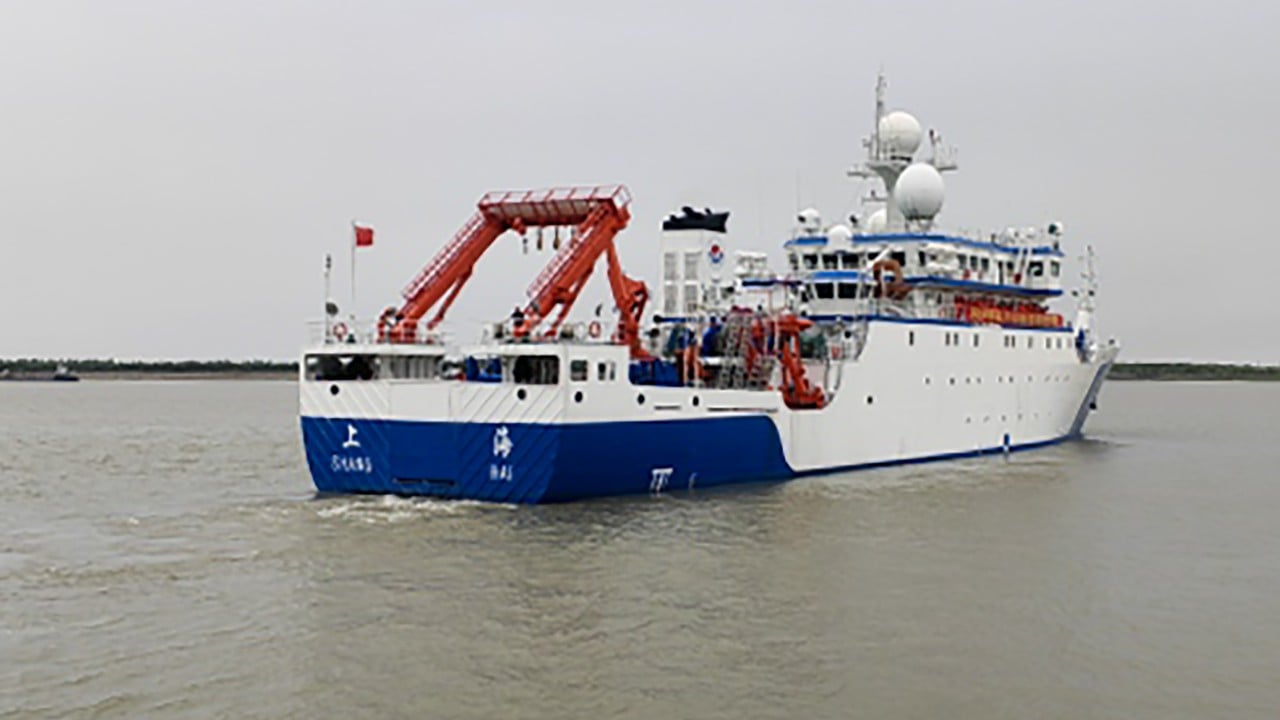
China has officially launched sea trials for the world's first autonomous, intelligent squid-jigging vessel, marking a major shift from manual labor to automated deep-sea extraction. This development is not just about upgrading fishing fleets; it represents a strategic push to dominate international waters through advanced automation. By replacing human crews with robotic arms and algorithmic data processing, Beijing is addressing critical labor shortages while positioning itself to out-fish competitors in contested maritime zones.
The Automation of the High Seas
Deep-sea squid fishing is brutal work. Crews spend months at sea under blinding floodlights, manually hauling aggressive, slippery cephalopods from the black waters of the Pacific and Atlantic oceans. It is dangerous, grueling, and increasingly difficult to staff.
The new vessel, developed by Chinese state-affiliated research institutions and shipbuilders, aims to eliminate the human element from the primary catching process. Instead of lines operated by exhausted deckhands, this ship utilizes a networked array of automated jigging machines. These machines are not passive reels. They are connected to localized sensors that measure wave action, water temperature, and tension on the lines, adjusting their retrieval speed in real time to maximize the catch rate without snapping the gear.
This is a massive leap from traditional automated reels, which operate on rigid, pre-programmed timers. The new system uses machine learning models trained on decades of historical catch data to predict where squid schools are moving vertically in the water column. The ship's central computer coordinates the deployment of thousands of specialized lures, synchronizing the automated lines to prevent tangles and optimize efficiency.
The Economic Reality Behind the Robots
Beijing is pouring capital into this technology because the economics of the distant-water fishing fleet are approaching a breaking point. Rising domestic wages in China mean fewer workers are willing to endure the isolation and hazards of multi-year fishing voyages. At the same time, international scrutiny over labor practices aboard these vessels has intensified, with frequent reports of human rights abuses and forced labor dogging the industry.
Robots do not strike. They do not require food, medical care, or rest cycles. By shrinking the required crew size by an estimated 60% to 80%, the operators of these smart vessels can drastically reduce operational overhead. The remaining crew members are shifted from physical laborers to technical supervisors, responsible for maintaining the hydraulic systems, electrical arrays, and data feeds that keep the automated jigs running.
Furthermore, the integration of on-board processing automation means the squid are sorted, flash-frozen, and packaged by machinery minutes after leaving the water. This preserves product quality far better than manual handling, allowing the catch to command premium prices in global seafood markets. It is a cold, calculated restructuring of maritime industry designed to maintain China's dominance as the world's primary seafood supplier.
Geopolitical Waves and Sovereignty Monopolies
The deployment of autonomous fishing fleets carries heavy geopolitical weight. China operates the world's largest distant-water fishing fleet, numbering in the thousands of vessels. These ships often act as a de facto maritime militia, asserting Beijing's presence in disputed regions like the South China Sea and near the exclusive economic zones of South American nations.
An automated fleet can stay at sea much longer than a human-crewed one. Supported by refrigerated cargo ships that collect the catch at sea, these robotic trawlers can theoretically operate continuously for a year or more, stopping only for mechanical maintenance. This permanent physical presence in international waters allows a nation to establish a continuous footprint in key maritime corridors.
+------------------------------------+------------------------------------+
| Traditional Fleet Limits           | Automated Fleet Capabilities       |
+------------------------------------+------------------------------------+
| Limited by human endurance (months)| Limited only by fuel & maintenance |
| High vulnerability to labor laws   | Minimal exposure to labor scrutiny |
| Inconsistent catch quality         | Standardized, rapid processing     |
+------------------------------------+------------------------------------+
This constant presence creates a major challenge for international fisheries management. Regional Fisheries Management Organizations rely on catch reporting and onboard observers to prevent overfishing. When a vessel is heavily automated and monitored remotely via satellite, traditional oversight mechanisms become obsolete. The data regarding how much is caught, and where, is transmitted directly back to private servers in Shanghai or Zhoushan, leaving international regulators completely in the dark.
The Ecological Toll of Algorithmic Efficiency
The ocean is not a bottomless resource, though industrial fishing tech often treats it like one. Squid are a vital component of the marine food web, serving as a primary food source for apex predators like tuna, sharks, and marine mammals. Because squid have short lifespans and their populations fluctuate wildly based on climate variables, they are highly vulnerable to localized population collapses.
An algorithm designed solely to maximize catch efficiency does not factor in ecological balance unless forced to do so by code. When automated vessels use predictive modeling to hunt down schools with pinpoint accuracy, they eliminate the natural refuges that squid find in vast, unpredictable oceans. The technology effectively strips away the margin of error that allowed these species to survive previous eras of industrial fishing.
If these sea trials prove successful, the technology will inevitably be scaled across the entire Chinese distant-water fleet. Competitors in Japan, South Korea, and Taiwan will be forced to automate their own fleets to keep pace economically, triggering a technological arms race on the high seas where the ultimate loser is the marine ecosystem itself.
Cracking the Data Black Box
The true test of this automated shift lies in how the data is handled. Modern smart vessels collect oceanographic data constantly, tracking salinity, thermoclines, and current shifts to improve their fishing algorithms. This information is highly valuable, not just for catching squid, but for naval applications, including submarine warfare and sonar optimization.
The dual-use nature of this maritime technology is the unspoken reality behind state-funded fishing innovations. A fleet of autonomous fishing vessels mapping the ocean floor and water columns under the guise of commercial fishing provides a continuous stream of hydrographic data to domestic databases. This merges commercial extraction with national strategic intelligence gathering.
As the sea trials conclude, international maritime bodies face a choice. They can either update international maritime law to govern autonomous extraction vessels, or watch as the high seas become an unregulatable zone of robotic harvesting, governed entirely by the nations with the most advanced algorithms.



