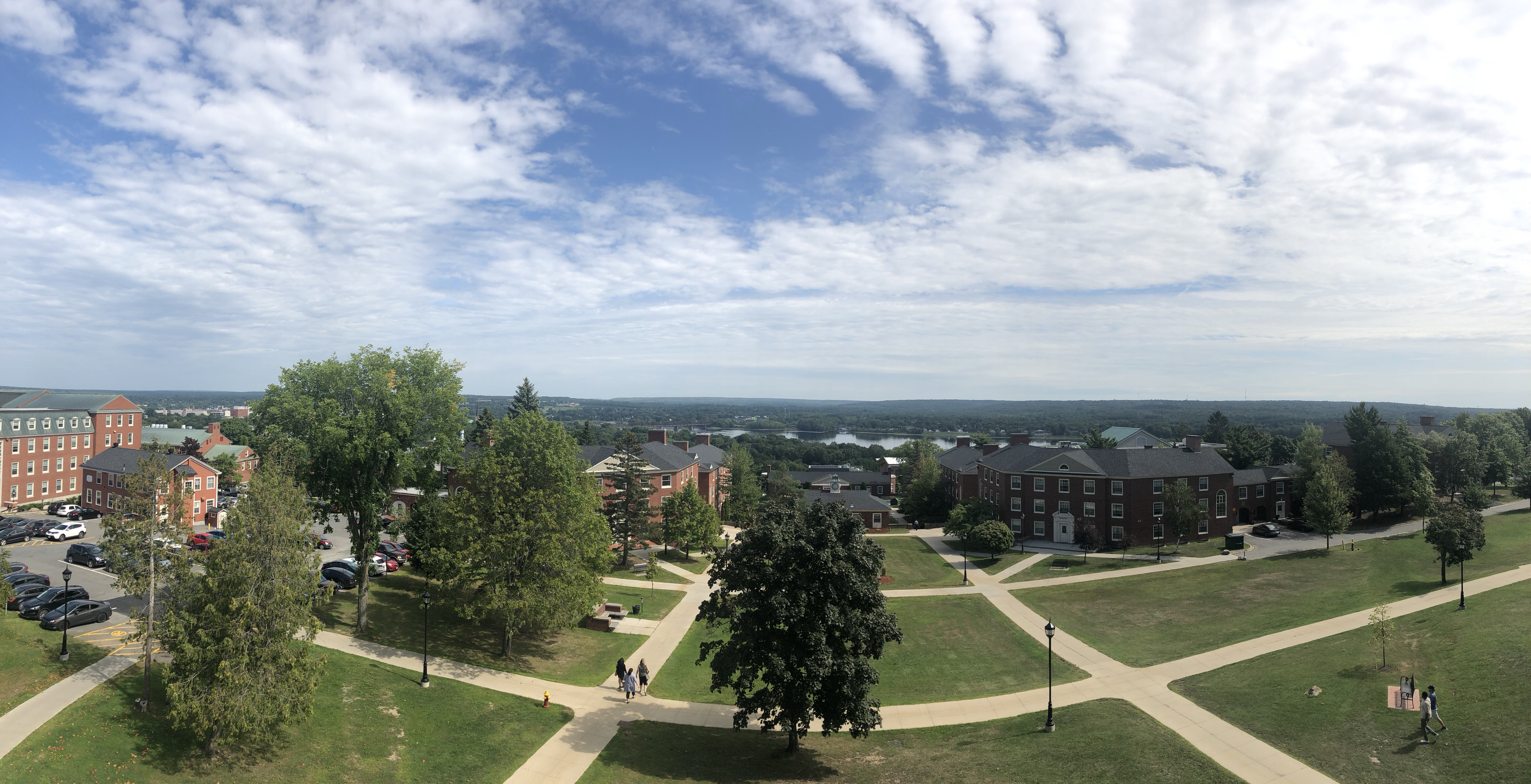
The air in May always smells like damp asphalt and cheap champagne.
Walk across any university campus in New Brunswick during graduation week, and you will hear the same sound. It is a collective, anxious exhale. Hundreds of twenty-somethings stand in rented black gowns, gripping rolled-up pieces of paper that cost them four years of sleep and tens of thousands of dollars. They smile for their parents' iPhones. They pose beside brick walls and historic statues. Discover more on a related issue: this related article.
But look closer at their eyes. You will see a calculation running in the background. It is a brutal, silent math equation.
Rent here is $1,600. The starting salary in Fredericton is $45,000. Toronto offers $65,000. If I stay, am I choosing community, or am I choosing poverty? Further reporting by Reuters highlights comparable perspectives on the subject.
For decades, Atlantic Canada has played a tragic role in the national narrative. It functions as an intellectual nursery. The province pours resources into primary schools, community colleges, and world-class universities like Mount Allison and UNB. Then, the moment the investment is ready to yield returns, the brightest minds pack their lives into cardboard boxes and board flights heading west.
It is a slow-motion evacuation.
The Human Cost of a Statistical Leak
Consider a young woman named Maya. She is not a real person, but she represents a very real, measurable demographic currently sitting in New Brunswick apartments surrounded by packing tape.
Maya grew up in Moncton. She loves the salt air. She knows the exact corner of the coffee shop where the floorboards creak, and she wants nothing more than to build a life twenty minutes away from her aging parents. She just graduated with a degree in data analytics.
Last week, Maya received two job offers.
The first is from a local logistics firm. They offered her a modest salary, three weeks of vacation, and the chance to help grow a homegrown Maritime business. The second offer came from a financial tech giant based in Calgary. The Alberta offer includes a signing bonus that would instantly wipe out her student loan interest, a remote-work hybrid model, and a career trajectory that looks like a vertical line.
Maya does not want to move to Calgary. She hates the dry winters. She does not know a soul west of Ontario.
Yet, as she sits at her kitchen table, looking at her bank account balance, the decision feels less like a choice and more like an eviction notice. If she stays, she falls behind. If she leaves, she abandons her home.
When we talk about provincial retention rates, we usually talk in percentages. Policymakers look at charts showing a 3% dip or a 5% gain in youth demographics. They treat human beings like water flowing through a pipe, wondering how to patch the leak.
But this is what the leak actually looks like. It looks like a tearful goodbye at the Greater Moncton Roméo LeBlanc International Airport. It looks like an empty bedroom in a house that suddenly feels too large for two parents who are realizing their grandchildren will grow up two time zones away.
The Great Retention Illusion
For a brief window, the narrative shifted.
During the chaotic middle years of the 2020s, New Brunswick experienced an unprecedented population boom. The world went remote. Suddenly, professionals from Toronto and Vancouver realized they could sell a two-bedroom condo, buy a literal mansion in Saint John, and work from a deck overlooking the Bay of Fundy. The province’s population surged past 800,000 people.
Local politicians celebrated. Headlines proclaimed that the historic brain drain was finally over.
It was an illusion.
The influx of affluent, out-of-province buyers drove the local housing market into a frenzy. Apartments that used to rent for three figures skyrocketed. Bidding wars became the norm in neighborhoods that hadn't seen a bidding war since the nineteenth century.
Now, the dust has settled, and the dark irony of that boom is staring us in the face. The very migration that was supposed to save New Brunswick has made it nearly impossible for the province's own graduates to afford to stay.
Imagine graduating into an economy where wages are still pegged to historical Maritime averages, but the cost of a one-bedroom apartment is pegged to the expectations of an Ontario transplant. The math simply stops working.
The province is trying. Government initiatives offer tax credits for stayed graduates. There are programs designed to connect local businesses with student interns, hoping that an early taste of the local workforce will anchor them to the soil.
But these programs are often band-aids on a severed artery. A $2,000 tax credit cannot compete with a $20,000 salary differential. Youth retention is not a marketing problem. It is an economic reality.
What Happens When the Young Leave
There is a quiet haunting that happens to a place when its young people vanish.
It does not happen overnight. It is a gradual graying of the landscape. First, the indie music venues close down because the crowd dries up. Then, the trendy taco spots and craft breweries notice fewer patrons on a Thursday night. Eventually, the shift reaches the foundational institutions.
Who will staff the hospitals? Who will pay the provincial income taxes that fund the roads, the senior care homes, and the schools?
New Brunswick currently faces one of the oldest average demographics in North America. The strain on the healthcare system is already a matter of daily national news. When a graduate leaves, they are not just taking their personal talent with them; they are taking a lifetime of future tax revenue, civic engagement, and generational renewal.
They are taking the future itself.
The standard argument from economic purists is simple: let the market decide. If Ontario or Alberta offers better opportunities, that is where the labor should go. Efficiency dictates that talent flows to capital.
But human lives are not efficient. Communities are not spreadsheets.
When you strip a region of its youth, you strip it of its experimental energy. You lose the messy, chaotic, beautiful innovations that only happen when twenty-four-year-olds have the space and security to fail. You lose the garage bands, the risky tech startups, the progressive grassroots movements, and the cultural friction that keeps a society from calcifying.
The Unspoken Truth of the Diaspora
There is a secret that every Maritime expat carries.
Go to a bar in downtown Toronto or a backyard barbecue in Fort McMurray on a long weekend. Find the people who moved away from New Brunswick fifteen, ten, or five years ago. Listen to them talk.
They will talk about the ocean. They will talk about the slow pace of life, the kindness of strangers, and the way the air smells after a thunderstorm in the Saint John River valley. They hold onto their accents like a protective shield.
They did not leave because they wanted to. They left because they felt they had no choice.
This is the true tragedy of the Maritime diaspora. It is a community built on a foundation of homesickness. These graduates are not global citizens seeking adventure; they are economic exiles who spent their twenties looking backward over their shoulders.
The challenge for New Brunswick is to transform itself from a place people love to remember into a place where people can afford to live.
To do that, the conversation must change. It cannot just be about creating "jobs." A job that pays $18 an hour while gas sits at two dollars a liter is not an opportunity; it is a trap. The province needs to foster an environment where local industries are compelled to compete on a national scale, offering compensation packages that reflect the modern cost of living.
Simultaneously, the housing crisis must be treated like the existential threat it is. If a graduate cannot find a safe, affordable place to sleep within a thirty-minute radius of their workplace, they will look elsewhere. Every single time.
The sun is setting over the Saint John River, casting long, orange shadows across the water. Down by the dock, a group of recent graduates are laughing, clinking glasses, and taking one last group photo before the realities of adulthood scatter them across the map.
Two of them have already booked one-way tickets to Vancouver. One is moving to Halifax. Only one is staying, having accepted a position at a local firm, terrified that he is making a mistake that will cost him his career momentum.
They embrace. They promise to stay in touch. They swear that nothing will change.
But they know the truth. The geography of their friendship is about to fracture. As the laughter fades, the quiet weight of the choice settles over them. It is the same weight that has pressed down on every generation of New Brunswick youth for a century.
The province watches them go, holding its breath, waiting to see how many will ever come back.