The heat in the dense forests of the Democratic Republic of Congo does not just sit on your skin. It weighs on you. It carries the smell of damp earth, woodsmoke, and, lately, an invisible terror that makes neighbors look at each other through eyes widened by suspicion.
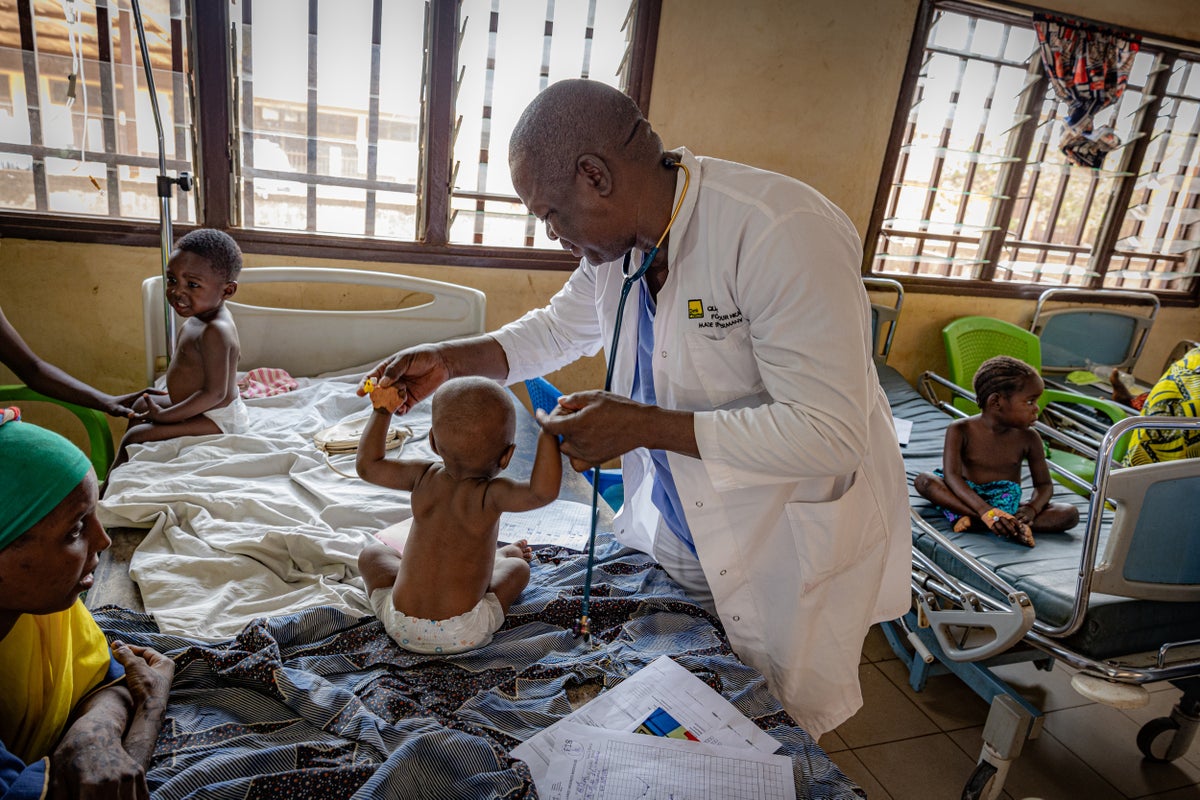
When you sit in a field hospital clinic, the first thing you notice is the silence. It is an unnatural, heavy quiet. You expect screaming or weeping, but a body fighting a viral hemorrhagic fever has no energy left for noise. The energy is entirely consumed by an internal war.
Thirty days. That is how long it took for a single spark to become a wildfire.
The spreadsheets at the capital call it 550 cases and 100 deaths. They process these numbers on glossy screens in air-conditioned rooms. But statistics are a defense mechanism. They are a way to look at a horror movie through a mirror so you do not have to face the monster directly.
Let us look at it directly.
The Weight of One Hundred Empty Chairs
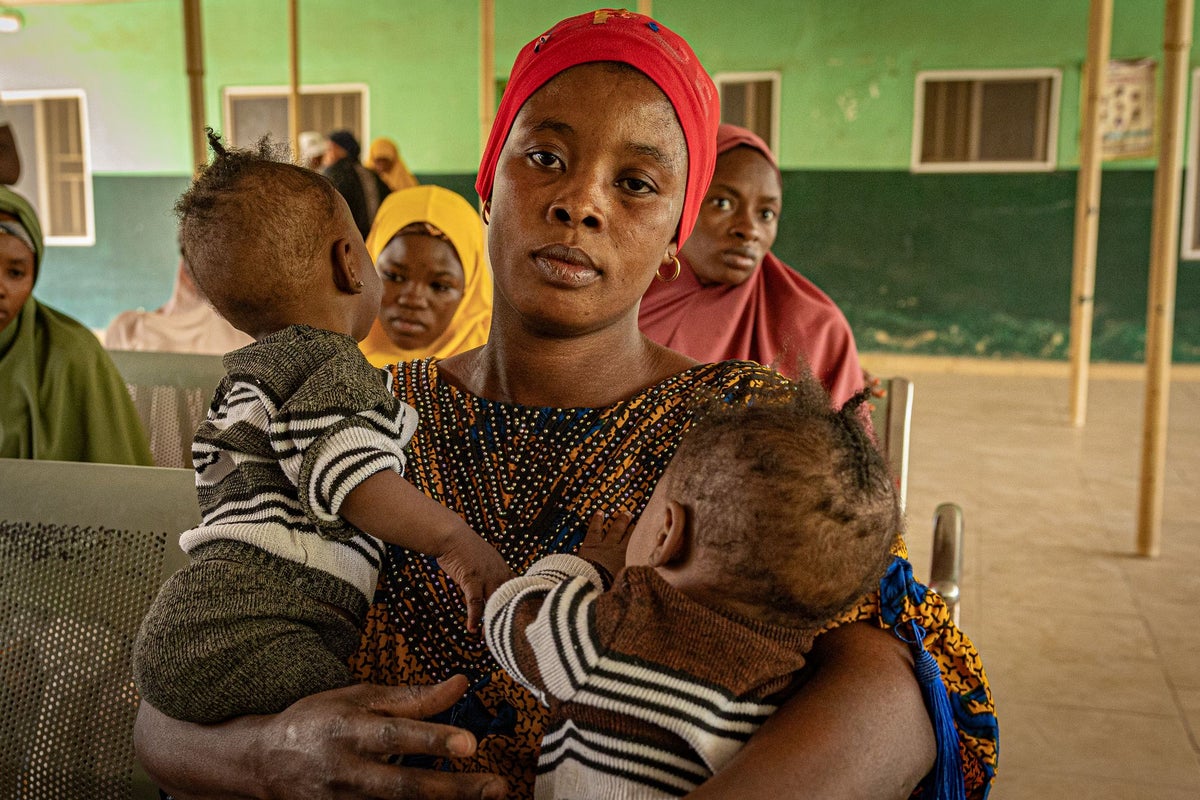
To understand 100 deaths in four weeks, we have to look past the double-zero. Consider a hypothetical woman named Alphonsine. She is not a statistic; she represents the frontline of this crisis.
Alphonsine lives in a village three hours outside the primary outbreak zone. She runs a small stall selling cassava and soap. When her nephew came home from the gold mines with a burning forehead and a dry throat, she did not think of global health emergencies. She thought of malaria. She wiped his brow with a damp cloth. She held his hand when the shivering started.
When the blood began to pool beneath his skin, it was already too late for him. And because she loved him, it was already too late for her.
This virus does not hunt through the air like the flu. It requires intimacy. It preys on human kindness. It uses our deepest, most beautiful instincts—the urge to comfort a crying child, to wash the body of a deceased parent, to hold a dying friend—and turns them into delivery systems.
When that nephew died, the village gathered. Traditional burial practices here are beautiful, communal, and deeply respectful. They involve washing the body. They involve final embraces. In the span of a single afternoon, the virus found five new homes.
Multiply Alphonsine by a hundred. That is what a month of this outbreak actually looks like. It is a hundred families missing the person who cooks the meals, the teenager who fetches the water, or the elder who holds the memory of the village.
The Terrifying Velocity of Five Hundred and Fifty
The dry reports state that there are 550 confirmed and probable cases. To the untrained eye, a baseline comparison might suggest a low percentage. One hundred out of 550 is roughly an 18% mortality rate. In the history of Ebola outbreaks, where mortality often climbs past 50% or even 80%, some might view this as a mild strain.
That is a lethal miscalculation.
The danger right now is not just how deadly the virus is, but how fast it moves. An 18% mortality rate with massive, unchecked transmission will kill vastly more people than an 80% mortality rate that burns itself out in an isolated hamlet.
When 550 cases appear in 30 days, the infrastructure of a rural health zone collapses.
Think of a small regional hospital. It might have forty beds, two doctors, and a handful of nurses who have not been paid regularly in six months. Suddenly, dozens of people arrive every morning. They are vomiting. They have severe diarrhea. They are terrified.
The hospital stops being a place of healing. It becomes an incubator.
Medical staff face an agonizing choice. If they wear the heavy, suffocating layers of personal protective equipment (PPE), they can only work for an hour or two before the tropical heat causes heat stroke. If they do not wear it, or if the supply chains fail and the gear runs out, they become the next victims.
When a doctor dies, the loss is not subtracted from the population by one. It is multiplied. Every patient that doctor would have treated over the next thirty years is now left exposed. The math of a hot zone is always exponential, never linear.
The Friction of the Forest
Why is it so hard to stop?
Western commentators often look at these outbreaks and wonder why people do not simply follow the protocols. They wonder why patients run away from isolation centers or why families hide their sick.
The answer is trust. Or rather, the complete absence of it.
If you have spent your entire life in a region plagued by militia violence, neglected by distant politicians, and stripped of resources by foreign mining corporations, you learn to survive by doubting outsiders. Then, a white truck arrives. People step out wearing white biohazard suits that make them look like giant, faceless insects. They take your brother. They put him behind a plastic plastic sheet. They tell you that you cannot touch him.
If your brother dies behind that plastic sheet, they do not give you the body. They bury him in a lime-soaked body bag in an unmarked grave.
To a grieving family, this does not look like healthcare. It looks like state-sanctioned kidnapping.
The real battle against Ebola is not fought with experimental antivirals or cutting-edge vaccines, though those are vital pieces of armor. The real battle is fought in the dust, sitting on low wooden stools, listening to village chiefs. It is fought by convincing a grieving mother that the men in the white suits are not monsters.
The moment a community decides to hide its sick is the moment the virus wins. With 550 cases scattered across difficult terrain, we are on the razor's edge of that reality right now. The paths connecting these villages are not paved roads; they are muddy tracks cut through dense jungle. Samples must be transported on the backs of motorbikes over rivers and through territory controlled by armed rebel groups just to reach a laboratory that can confirm the diagnosis.
By the time the lab result comes back positive, the patient has often been dead for three days, and their contacts have vanished into the forest.
The Price of Distance
It is easy to read about the Congo from a distance and feel a detached sort of pity. We swipe past the headline on our phones while waiting for a morning coffee. It feels like an alien world, an old story that belongs to a specific, troubled geography.
But the forest is no longer distant.
The gold mined near the epicenter of this outbreak ends up in the smartphones we use to read the news. The timber clears land for global supply chains. People move. They take motorbikes to regional hubs. They take trucks to major cities like Goma or Kisangani. From there, they are an international flight away from anywhere.
The virus does not care about borders, passports, or economic status. It only cares about finding the next warm body.
Right now, the international response is a scramble of funding pledges and logistical meetings. But while the bureaucracy moves at the speed of committees, the biological reality moves at the speed of a handshake. A month has passed. One hundred people who were laughing, farming, and loving four weeks ago are now gone. Five hundred and fifty more are trapped in a lottery where the prize is survival.
The forest is quiet today, but it is the quiet of a breath held in fear. The next thirty days will determine whether this outbreak is remembered as a tragic local crisis or the beginning of a continental catastrophe. The choice does not belong to the virus. It belongs to how quickly we choose to see the human faces behind the numbers.