The gymnasium floor smells of disinfectant, sweat, and cheap floor wax. It is a specific scent, recognizable to anyone who has ever spent a Tuesday night sitting on cold bleachers, watching teenagers circle each other with cautious, predatory grace. To an outsider, wrestling is a solitary punishment. A sport of weight cuts, bruised ribs, and silent suffering on a two-inch circle of foam. You win alone. You lose alone.
Until you break.
Then you find out what the circle was actually built for.
In Regina, a city where winter winds bite with a personal vendetta, the local wrestling community recently learned that one of their own was facing an opponent no single takedown could solve. Cancer does not care about your record. It does not respect a double-leg sweep or a defensive sprawl. It just arrives, uninvited and heavy, turning life into a match where the clock is running out and the referee's hand is hovering dangerously close to the mat.
When the news filtered through the local clubs, there were no dramatic speeches. There rarely are in this sport. Wrestlers are conditioned to absorb impact, to pick themselves up off the canvas before the breath has fully returned to their lungs. But even the toughest coaches need a corner team.
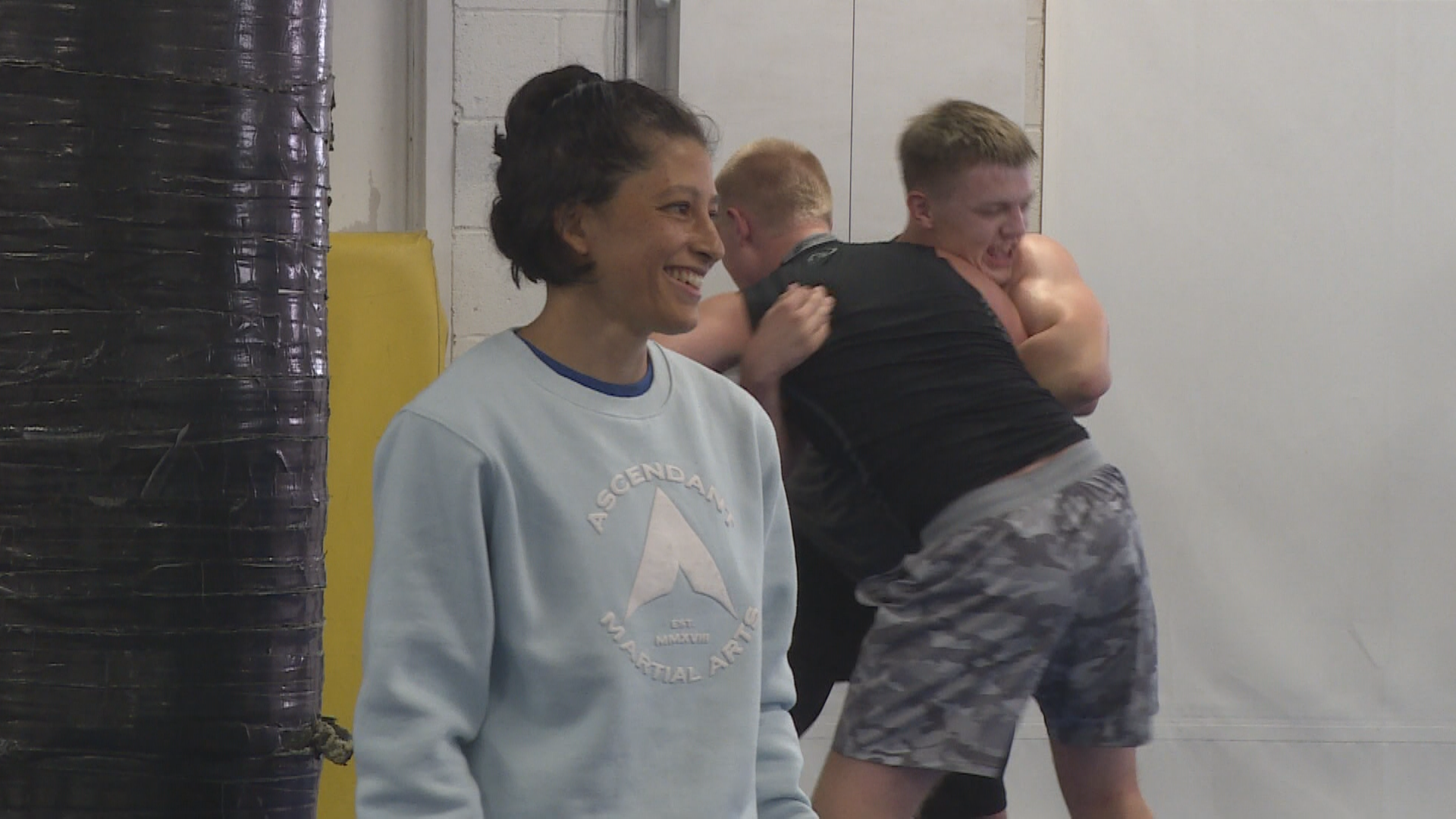
Consider what happens next in a community like this. When a coach—someone who has spent decades donating freezing Saturdays to driving teenagers to tournaments, buying extra headgear out of their own pocket, and teaching kids how to lose with dignity—finds themselves pinned by illness, the response is immediate and absolute.
The mat does not forget its own.
Fundraisers were quietly organized. Banners were signed. Messages of fierce, stubborn hope began to circulate through group chats that usually only debated tournament schedules and hotel bookings. Parents who had once argued over match lineups were suddenly sharing car rides to benefit events. Former wrestlers, now grown with families of their own, stepped out of the woodwork to buy tickets, donate gear, and remind everyone that the lessons learned under the bright gym lights extend far beyond a three-minute period.
This is the invisible architecture of sports. We measure athletics in medals, trophies, and conference titles. We track statistics like cold accountants. But the true currency of amateur sports is loyalty. It is the invisible thread that connects a terrified twelve-year-old stepping onto the mat for the first time to the weathered coach standing at the edge, voice hoarse from screaming instructions.
When that coach falls, the kids they trained become the shield.
It is easy to become cynical about modern communities. We live in an era where neighbors are often strangers and digital connections replace the friction of real life. Yet, in the damp air of a high school gymnasium, something ancient and durable still operates. People who have very little to spare opened their wallets. People who are naturally stoic shed tears. They did it because they understood a fundamental truth of the sport: nobody wins a championship by themselves. You always need someone to lift you up when your shoulders are touching the canvas.
The fight is far from over. The opponent in this match is relentless. But as the Regina wrestling community rallies around their coach, sending wave after wave of quiet, ferocious support, a message is being sent that echoes far beyond the borders of any gymnasium.
You can take away the matches. You can take away the season. But you can never break the corner team.