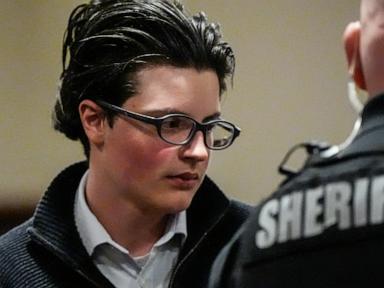
Media coverage of high-profile juvenile crime follows a predictable, exhausted script. A tragedy occurs, cameras swarm the courthouse steps, and legal commentators dissect every procedural motion as if they were analyzing play-by-play footage of a football game. When news breaks that a defendant—like the teen accused in the Apalachee High School shooting—is heading toward a plea deal, news outlets treat it as a routine administrative step. They call it a resolution. They framed it as a closing chapter.
They are lying to you, or at best, missing the point entirely. Read more on a related subject: this related article.
Plea bargains in catastrophic youth violence cases are not victories for justice. They are non-disclosure agreements signed under color of law. They are calculated mechanisms designed to shield institutions, law enforcement agencies, and school districts from civil liability, public scrutiny, and formal discovery.
When a case resolves through a guilty plea, the public loses the one mechanism built to uncover how the system actually broke down: a full public trial with cross-examined evidence. Further journalism by BBC News delves into similar perspectives on this issue.
The Illusion of Resolution
The legal establishment loves plea deals because they preserve the myth of system efficiency. Prosecutors secure a conviction without risking a trial verdict. Defense attorneys mitigate maximum exposure for their client. Judges clear their dockets. Headline writers get a neat headline declaring the matter settled.
Everyone wins except the public, the victims, and anyone interested in preventing the next tragedy.
Consider what actually happens when a case goes to trial versus when it dies in a plea bargain. A trial forces every record into the open. Subpoenas pull internal memos, missed warning signs, ignored threat assessments, and police response logs directly into open court under oath. Witnesses are subjected to rigorous cross-examination by attorneys who have every incentive to expose negligence.
A plea deal destroys that entire apparatus.
The court accepts a statement of facts—usually a brief, sanitized summary drafted by prosecutors to establish the bare legal elements of the crime—and the prison gates lock shut. The public receives a convictions ledger entry, but zero insight into the structural rot that allowed the collapse to happen in the first place.
How Discovery Disappears
Ask any trial attorney who has spent decades inside a courtroom: the most dangerous room in a courthouse isn't the courtroom itself—it's the discovery library.
When a violent act occurs inside a public institution, dozens of fail-safes have already broken down. School resource officers missed clear behavioral triggers. Threat assessment teams failed to communicate across county lines. Social service agencies closed files prematurely. Gun sellers or family members ignored red flags.
In a civil lawsuit or a contested trial, discovery lays these failures bare:
- Internal emails showing administrators brushed off warnings to avoid bad PR.
- Law enforcement radio transcripts revealing tactical delays or communication failures.
- Mental health records revealing systemic gaps in crisis intervention networks.
When a plea agreement is struck, the criminal trial stops dead. The underlying discovery remains sealed under protective orders or buried in court archives, inaccessible to independent investigators, academic researchers, and policy reformers.
We are left with a dangerous trade-off: trading the truth for an early guilty verdict.
The Trial Paradox in Mass Violence Cases
Legal purists often argue that trials are designed strictly to determine guilt or innocence, not to conduct public policy inquests. They claim that forcing a community to endure a graphic trial inflicts unnecessary trauma on victims' families and wastes tax dollars on an outcome that was never in doubt.
That argument is emotionally compelling and intellectually bankrupt.
Avoiding trauma by hiding institutional failure is a short-sighted bargain. Trauma isn't healed by secrecy; it is compounded when the public is left guessing whether the people in charge did their jobs.
Imagine a scenario where an commercial airline crashes due to a mechanical error, and the FAA simply settles out of court, seals the maintenance records, and refuses to publish a crash report to spare the families distress. We would recognize that instantly as corporate protectionism disguised as compassion. Yet when a school safety architecture collapses, we accept the exact same excuse from the state.
Without the blunt force of a public trial, institutional memory resets the moment the prison sentence begins. The administrators keep their posts. The police department's policy manuals remain unexamined. The social service agency carries on with business as usual.
The Myth of the Solitary Actor
Every time a youth commits an act of extreme violence, the system rushes to frame the perpetrator as a solitary anomaly—an isolated bad actor who operated entirely outside the bounds of predictable human behavior.
This framing is convenient. If the defendant is a rogue element, then no institutional system failed. No supervisor was negligent. No policy was flawed. The entire burden of blame shifts neatly onto a single shoulders.
Plea deals reinforce this solitary actor narrative. A plea hearing requires only that the individual defendant admit to their specific criminal acts. It does not require the state to explain why its preventive safety nets dissolved. It does not force school administrators to explain why previous interventions failed. It does not force law enforcement to justify their timeline.
By accepting a plea, the justice system treats a systemic disaster as a basic transactional crime.
What True Accountability Requires
If we genuinely care about preventing future tragedies rather than merely processing paperwork, the legal approach to high-profile public violence needs an overhaul.
First, courts must condition high-stakes plea agreements on public disclosure. If a defendant agrees to plead guilty to avoid a trial, that plea must come with a mandatory condition: the full, unredacted release of all investigative discovery, threat assessment logs, and institutional communications related to the event, subject only to necessary privacy redactions for minor victims.
Second, states should mandate independent, court-appointed review commissions for any act of public violence that ends in a plea bargain. If the courtroom won't vet the institutional response, an empowered body with full subpoena power must.
Third, media organizations must stop treating plea deals as the closing act of a story. A plea deal isn't the end of an investigation; it is often the exact point where the cover-up becomes permanent.
We have spent decades accepting a court system that prioritizes swift closures over deep truth. We process the perpetrator, lock the door, sweep the wreckage under the rug, and express shock when the same structural failures produce the exact same outcome in another town six months later.
Until we demand that plea deals reveal truth rather than conceal responsibility, we are simply waiting for the next headline.