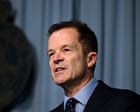
One-third of the New South Wales Liberal lower house party room just walked out the door before a single ballot has been cast. When former opposition leader Mark Speakman stood up in the Legislative Assembly on Thursday night, 19 November 2026, to announce he wouldn't recontest his safe seat of Cronulla in March, he wasn't just closing out a 16-year parliamentary career. He became the eighth out of 24 sitting Liberal MPs to quit ahead of the 13 March 2027 state election.
Current opposition leader Kellie Sloane quickly told reporters she's "pretty sure" the bleeding has stopped. Honestly, that sounds less like strategic certainty and more like crossing your fingers during a hailstorm. Speakman didn't go quietly into retirement—he used his farewell speech to issue a blunt warning that the Liberal Party faces an "existential threat" if it tries to survive by morphing into "One Nation lite" or "Labor lite".
If you're trying to figure out whether the NSW Coalition is genuinely rebuilding or quietly imploding four months out from polling day, you have to look past the polite party-room applause and examine the electoral math underneath.
Why Mark Speakman Walked Away Now
To understand why Speakman's resignation hit Macquarie Street like a tremor, you need to look at the timeline. Speakman, a former barrister who served as environment minister from 2015 to 2017 and attorney general from 2017 until the Coalition's 2023 defeat, took over the thankless job of leading the NSW Liberals in April 2023. He held that line until November 2025, when sagging polls and internal restlessness forced him to step aside for first-term Vaucluse MP Kellie Sloane.
Usually, ousted leaders hang around on the backbench or in a shadow portfolio—Speakman had been serving as Shadow Minister for Education—for a term or two before slipping out mid-cycle. He didn't wait. Turning 67 in November 2026, Speakman looked at a four-year parliamentary term stretching to 2031 and made a pragmatic call. By retiring now instead of triggering an expensive, distracting by-election halfway through the next term, he handed his successor a clean run in Cronulla, a seat he holds on a comfortable 14.0 percent margin.
Yet timing alone doesn't explain the bite in his final speech. Speakman quoted Enoch Powell's famous line that all political careers end in failure, thanked his colleagues, and then aimed straight at the ideological panic gripping conservative politics across Australia. He pointed directly at what he called "the orange wave"—the surge in support for Pauline Hanson's One Nation—and warned his party against abandoning what he described as "Menzian Liberalism".
The Eight-MP Exodus Nobody Can Spin Away
Party spin doctors love calling mass retirements "generational renewal." Sometimes that's even true. When eight out of 24 lower house MPs decide they'd rather do literally anything else than sit in opposition for another four years, however, voters notice.
Look at who has actually headed for the exits before March 2027:
- Mark Speakman (Cronulla) – Former leader and attorney general, holding a 14.0 percent margin, announced his departure on 19 November 2026.
- Jordan Lane (Ryde) – First-term MP clinging to the state's tightest marginal seat at just 0.1 percent, announced his exit on 6 November 2026.
- Mark Coure (Oatley) – Former multiculturalism minister holding a razor-thin 0.8 percent margin, stepped back on 3 November 2026.
- Tanya Davies (Badgerys Creek) – Veteran western Sydney conservative on a 10.5 percent buffer, called time on 22 October 2026.
- Ray Williams (Kellyville) – Long-serving Hills District MP with a 10.9 percent margin, announced his retirement on 20 October 2026.
- Alister Henskens (Wahroonga) – Senior frontbencher and former cabinet minister holding a 10.5 percent margin, bowed out on 11 September 2026.
- James Griffin (Manly) – Former environment minister defending a 4.8 percent margin against an independent surge on the northern beaches, announced his exit on 2 September 2026.
- Mark Taylor (Winston Hills) – Another western Sydney marginal holder sitting on 1.8 percent, first out the door on 8 July 2026.
That list tells two very different stories at once, and both are bad news for Kellie Sloane. First, you have senior institutional memory walking out of safe seats like Cronulla, Wahroonga, Kellyville, and Badgerys Creek—people who actually know how to run cabinet departments and navigate crisis legislation. Second, you have incumbent MPs in ultra-marginal battlegrounds like Ryde (0.1 percent), Oatley (0.8 percent), and Winston Hills (1.8 percent) deciding not to fight for their political lives. In NSW politics, personal incumbency is often worth two to three percent on polling day. Losing that personal vote in seats decided by a few hundred ballots makes climbing back to the 47 seats needed for a majority dramatically harder.
Throw in Castle Hill MP Mark Hodges losing preselection back in February 2026, and the Liberal benches will look nearly unrecognizable if the Coalition even manages to hold its current ground.
Caught Between One Nation and Independent Voters
Speakman's warning about becoming "One Nation lite" wasn't an abstract philosophy lecture. It was a diagnosis of a brutal geographic squeeze tearing the NSW Coalition apart from opposite ends of the state.
In regional NSW and outer suburban pockets, One Nation has surged in recent polling—reaching primary vote numbers as high as 30 percent in some surveys. That spike has already triggered alarm bells for the NSW Nationals, who stand to lose a massive chunk of their 11 lower house seats if conservative voters defect en masse. When right-wing voters start bleeding toward One Nation, the knee-jerk reaction inside any conservative party room is to lurch rightward—attack multiculturalism, scrap climate targets, and mimic populist rhetoric.
Speakman basically told his colleagues that copying Pauline Hanson is political suicide. Why? Because NSW isn't a single homogeneous electorate. While One Nation chews at the Coalition's rural and outer-metro flanks, community independents—the "teal" movement—are circling affluent Sydney seats like Manly, Willoughby, North Shore, Pittwater, and Davidson. Voters on Sydney's northern beaches and north shore already broke away from the Liberals in seats like Wakehurst and Pittwater, and new independent challengers like Monica Wulff in Davidson are gearing up for March 2027.
Every time a Liberal MP flirts with culture-war populism or walks back climate commitments to appease One Nation voters in the Hunter or western Sydney, they hand ammunition to independent candidates in Vaucluse, Manly, and Lane Cove. Conversely, if Sloane tacked too hard toward the progressive center to protect Sydney's harbor seats, she'd risk accelerating defections to One Nation in the regions.
Speakman's pitch was simple: stop chasing mirrors. He defended Australia as "the most successful multicultural society on the planet," argued that diversity is an economic and social strength, and backed keeping the NSW Liberals' commitment to interim emissions targets and net zero by 2050—pointing out that major business groups like Business NSW and the Business Council support that framework.
Kellie Sloane’s Gamble on Stopping the Bleeding
When Kellie Sloane fronted the media on Friday, 20 November 2026, she had one job: project calm. She insisted the eight departures weren't a verdict on the Coalition's chances against Premier Chris Minns' minority Labor government, which currently holds 46 seats—just one shy of an outright majority.
"I'm pretty sure that's done," Sloane said when pressed on whether more MPs might quit before nominations close in February 2027.
She might be right about the headcount, mostly because the parliamentary calendar has run out of sitting days before the summer break. Being "pretty sure" the resignations are over isn't the same thing as having a cohesive campaign machine ready for March.
Sloane faces three immediate headaches that no optimistic press conference can fix:
- Candidate vetting under pressure. With eight lower house vacancies—several in seats the party desperately needs to hold—preselection battles risk reopening the exact factional warfare between moderates and the hard right that paralyzed the party during the 2023 campaign.
- Coalition friction over energy and climate. While Speakman praised the NSW Liberals for sticking with net zero by 2050, the NSW Nationals have already broken ranks by ditching the 2050 net zero commitment and clashing with their city partners over environmental policy. Voters hate disunity, and Labor will spend every day of the campaign asking Sloane whether she actually controls her own Coalition's energy policy.
- Defining what "Menzian Liberalism" means in 2027. Speakman's farewell speech called for "radical productivity and Federation reform," lower state tax burdens to stop crowding out private investment, and fact-based policy rather than ideological stunts. Translating dry structural concepts like Federation reform into kitchen-table cost-of-living relief for families paying off mortgages in Ryde or Badgerys Creek is where elections are actually won or lost.
What to Watch Before NSW Votes in March 2027
If you're tracking whether the NSW Liberals can stabilize before 13 March 2027—or if Speakman's warning proves prophetic—ignore the daily press releases and watch three concrete indicators over the next few months:
- Who wins preselection in Cronulla and Wahroonga. If local branches pick pragmatic, community-rooted candidates rather than factional warriors, Sloane has a fighting chance of holding the center ground. If preselection fights turn ugly or get decided by party-executive intervention, expect independent challengers to smell blood.
- How One Nation preferences flow in optional preferential voting. Unlike federal elections where voters must number every box, NSW uses optional preferential voting. Many One Nation voters simply "just vote 1" and let their ballot exhaust rather than directing preferences to the Liberals. If One Nation pulls 15 to 30 percent of the primary vote and half those ballots exhaust, Labor doesn't even need a massive swing to win seats.
- Whether Sloane holds the line on net zero and multiculturalism. Watch how the opposition leader responds the first time a rural Nationals MP or conservative commentator demands she soften climate targets or echo One Nation's immigration rhetoric.
Mark Speakman spent 16 years in Macquarie Street and left with a clear message for the colleagues he left behind: you don't beat a populist insurgency by becoming a paler version of it. Whether the NSW Liberal Party actually listens will decide if it forms government in March or spends another four years wondering where its voters went.
For more details on Speakman's final parliamentary remarks and the reaction from Macquarie Street, watch 7NEWS coverage of Mark Speakman's resignation.