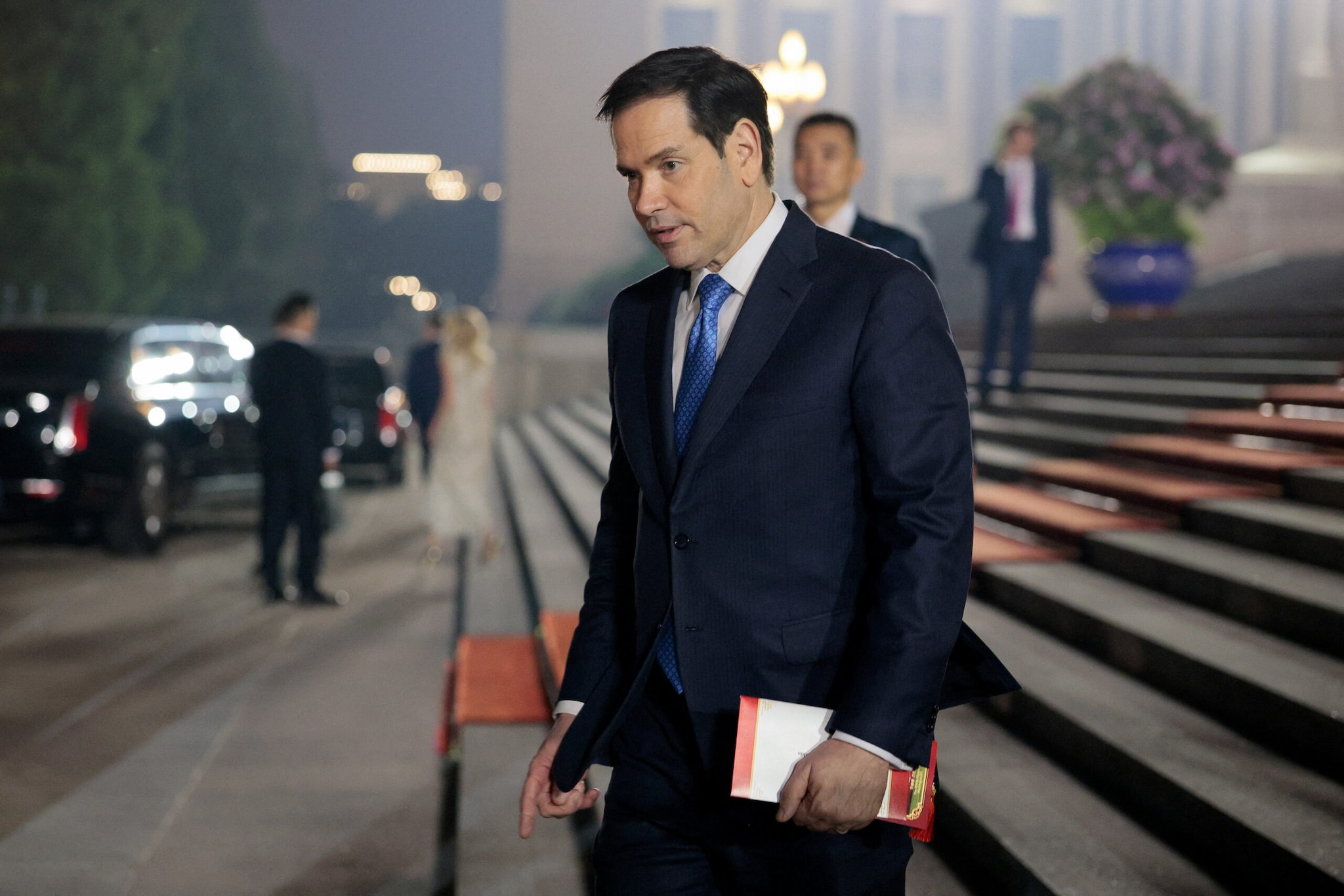
Diplomatic itineraries are usually predictable exercises in handshakes and stale press releases. But the upcoming trip of US Secretary of State Marco Rubio to India from May 23-26 is different. It isn't just another routine bilateral meeting. It is a high-stakes recalibration of Washington's strategy in Asia at a time when global alliances are fracturing under intense pressure.
Most news reports focus on the basic facts. Yes, Rubio is heading to New Delhi. Yes, he is attending the Quad Foreign Ministers' Meeting. But looking at the broader geopolitical map reveals something far more complicated. Rubio arrives directly from a tense NATO meeting in Sweden, flying into an Indian capital that just hosted the foreign ministers of Russia and Iran. If you think this is a simple introductory visit for the Secretary of State, you're missing the real story.
The Balancing Act Over Tariffs and Sanctions
The relationship between Washington and New Delhi has hit some rough patches lately. While both sides talk a big game about a shared strategic vision, economics tells a different story. The Bilateral Trade Agreement remains unfinalized, caught in legal limbo after the US Supreme Court's scrutiny of recent American tariff policies.
India recently pledged over $20 billion in investments through the Select USA initiative, marking a massive vote of confidence in the American market. Yet, Indian officials are deeply anxious about unpredictable US trade measures. Rubio and Indian External Affairs Minister S. Jaishankar need to iron out these wrinkles. Expect fierce, behind-the-scenes haggling over market access, defense technology transfers, and the threat of secondary sanctions.
The elephant in the room is India’s stubborn non-alignment. Just days before Rubio's arrival, New Delhi rolled out the red carpet for Iranian Foreign Minister Abbas Araghchi and Russia's Sergei Lavrov at a BRICS gathering. The US wants India to distance itself from Moscow and Tehran, especially given the ongoing West Asia crisis. India won't do that. Jaishankar has repeatedly made it clear that India protects its own national interests first. Rubio knows this, and his primary goal in New Delhi isn't to force a total break, but to ensure that India’s independent foreign policy doesn't actively undermine Washington's core goals.
The Quad and the Battle for Critical Minerals
On May 26, the focus shifts to the Quad alliance, featuring Rubio, Jaishankar, Australia’s Penny Wong, and Japan’s Toshimitsu Motegi. While the public statements will emphasize a free and open Indo-Pacific, the real work centers on a highly specific economic vulnerability: critical minerals.
China controls the vast majority of the global supply of graphite and rare earth elements. These materials are essential for everything from electric vehicle batteries to missile guidance systems. Last year, the Quad launched the Critical Minerals Initiative to build alternative supply chains. Rubio's task in New Delhi is to transform that theoretical framework into concrete infrastructure.
Quad Critical Minerals Strategy:
1. Diversify supply chains away from Chinese monopoly
2. Secure graphite and rare earth element processing channels
3. Map joint investments in Australian mining and Indian processing
This isn't just about security; it's about commercial survival. The Quad nations are trying to build an entirely parallel industrial base. If they fail, their technological independence remains at the mercy of Beijing.
Four Cities and 250 Years of America
The geography of Rubio’s trip is unusually extensive. Usually, top diplomats fly into New Delhi, spend 48 hours in a secured zone, and fly out. Rubio is visiting four distinct hubs: Kolkata, Agra, Jaipur, and New Delhi.
This footprint matters. By traveling to Kolkata, the historical and cultural heart of eastern India, Rubio is signaling that the US relationship extends beyond the bureaucratic elite of New Delhi. It's a calculated move to engage with regional economic centers closer to the Bay of Bengal, a critical maritime zone.
The stop in New Delhi will also feature a massive public reception celebrating 250 years of American independence. It's a symbolic backdrop designed to emphasize shared democratic values, even when the daily politics get messy. Rubio is an experienced political operator; he understands that diplomacy requires appealing to public sentiment just as much as negotiating in closed rooms.
What Happens Next
The true measure of this trip won't be found in the joint communique issued on May 26. Watch these specific indicators over the coming weeks to evaluate if the meetings actually succeeded:
- The Progress of the Bilateral Trade Agreement: See if both sides announce a new timeline or compromise on industrial tariffs before the next major summit.
- Defense Technology Transfers: Watch for specific regulatory approvals regarding the joint production of fighter jet engines or unmanned aerial vehicles in India.
- Mineral Supply Chain Deals: Look for concrete financing commitments from the US International Development Finance Corporation for processing facilities in India.
The US-India partnership is built on shared anxieties regarding China's regional dominance, but it is constantly tested by diverging views on trade and traditional alliances. Rubio's four days in India will determine whether these two global powers can move past diplomatic talking points and establish a functional, resilient alliance.