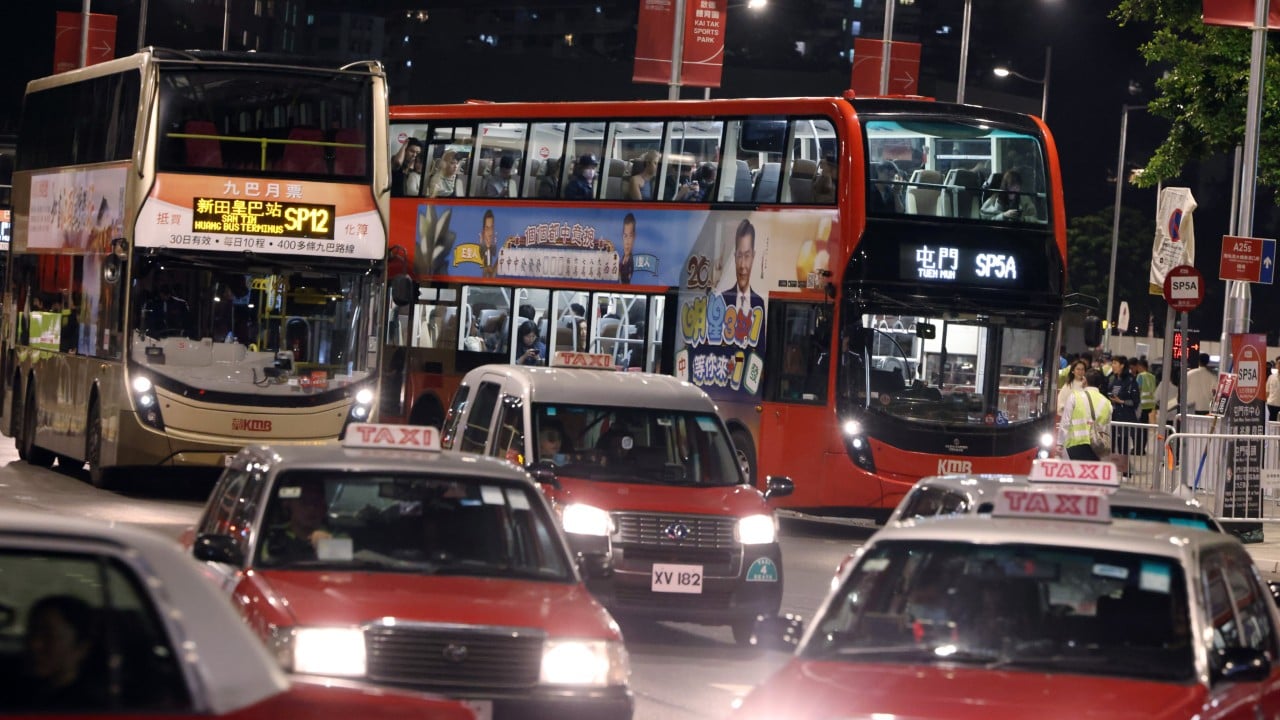
Hong Kong is about to spend millions of dollars to make its roads more dangerous.
Following a series of high-profile accidents involving public transit and commercial vehicles, the knee-jerk reaction from regulators, tech vendors, and transport unions has been perfectly predictable. They want to mandate Driver Monitoring Systems (DMS). They want infrared cameras staring into the eyes of every bus driver and trucker in the territory, buzzing and vibrating every time a human blinks too slowly.
It sounds like common sense. It sounds like responsible governance.
It is dangerously naive.
The push to expand DMS across Hong Kong’s commercial fleets relies on a fundamentally flawed premise: that real-time surveillance cures human error. I have spent years auditing automation integration in complex logistics networks, and I have seen exactly what happens when you shove an aggressive, AI-driven nanny into a high-stress cockpit. It does not create safer drivers. It creates paranoid, distracted, and fatigued operators who are forced to game a broken algorithm just to keep their jobs.
The current consensus is not just wrong; it is a recipe for a systemic spike in traffic fatalities.
The Irony of Automation: How Safety Tech Breeds Distraction
The loudest advocates for DMS do not understand the human factors engineering principles established by researchers like Lisanne Bainbridge in her seminal work, Ironies of Automation. When you introduce an automated system to monitor a human, you do not eliminate the human element. You simply warp it.
DMS platforms function by tracking eyelid closure (PERCLOS), gaze direction, and head position. If a driver looks away from the road for more than a pre-set threshold—usually two seconds—the system triggers an audio alert or shakes the seat.
Here is what actually happens on the streets of Mong Kok and Central when these systems are deployed:
- The Look-Away Tax: A driver needs to check their side mirrors to safely navigate a tight lane change around a double-decker bus. Because Hong Kong's streets are highly congested, this check requires a prolonged, careful glance. The DMS interprets this necessary safety check as "distraction" and sounds an aggressive alarm.
- The Alarm Fatigue Cascade: When an alarm triggers falsely dozens of times a shift, the human brain undergoes habituation. Drivers stop associating the alert with actual danger. Instead, the alert becomes a раздражитель—a spike of cortisol that induces panic, anger, or acute cognitive overload.
- Fixation Culture: To prevent the system from flagging them and reporting an "incident" to fleet management, drivers actively force themselves to stare dead ahead. They freeze their gaze on the rear bumper of the vehicle in front of them, abandoning the active, scanning visual patterns that define defensive driving.
By forcing drivers to optimize their behavior for a camera lens rather than the actual road, we are actively training them to be worse operators. They are no longer scanning for pedestrians stepping off the curb in Sham Shui Po; they are scanning their own dashboard to ensure they are keeping the AI happy.
The Data the Tech Vendors Are Hiding From You
Look at the marketing brochures for any major telematics or DMS vendor currently lobbying the Hong Kong government. They will promise a 60% to 80% reduction in "distraction events."
Do not fall for the semantic trick. A reduction in a metric defined by the software itself does not equate to a reduction in actual hull losses or traffic injuries.
In real-world fleet deployments, aggressive DMS rollouts frequently correlate with an initial drop in minor incidents, followed by a sharp plateau and a subsequent rise in severe, high-speed rear-end collisions. Why? Because the systems address the symptom (fatigue symptoms) while exacerbating the root cause (cognitive exhaustion).
Consider the physiological reality of a professional driver working a split-shift in a high-density urban environment. They are already battling chronic sleep deprivation caused by Hong Kong's notoriously long working hours. If a driver is genuinely fatigued, an infrared camera flashing a warning light does not magically inject caffeine into their bloodstream. It simply jolts them into a state of micro-panic. The driver suppresses the yawn, forces their eyes wide open to trick the sensor, and continues driving while suffering from profound, unmonitored cognitive slowing.
We are replacing visible, manageable fatigue with invisible, unmanageable micro-sleeps where the eyes remain open but the brain is functionally offline.
The Privacy Tax and the Flight of Skilled Labor
Hong Kong’s transport sector is already facing a crippling labor shortage. The average age of a green minibus driver is well over 60. Minibus and taxi drivers are independent operators or low-wage employees working under immense pressure to meet daily rental quotas.
When you install an intrusive, biometric surveillance apparatus into their workspace, you do not professionalize the industry. You decapitate it.
The most experienced drivers—the ones who rely on decades of tacit knowledge and situational awareness to navigate the city’s chaotic streets—will leave. They refuse to work in an environment where their every facial twitch is recorded, analyzed, and used as a performance metric by a middle manager sitting in an air-conditioned office.
Who replaces them? Inexperienced, lower-tier drivers who are willing to tolerate the surveillance because they have no other options. You trade decades of institutional safety knowledge for a workforce that knows how to pose correctly for a camera.
How to Actually Fix Hong Kong’s Traffic Safety Crisis
If the goal is truly to reduce accidents rather than to provide political cover for regulators who want to look like they are taking action, we must abandon the surveillance obsession. We need to focus on systemic, structural interventions that alter the physical reality of the driving environment.
1. Mandate Active, Non-Intrusive Intervention (AEB)
Stop watching the driver’s face and start watching the road. Advanced Driver Assistance Systems (ADAS) that utilize Autonomous Emergency Braking (AEB) and blind-spot radar intervention do not care if a driver is blinking or thinking about dinner. If the distance between the bus and the object in front of it decreases at a rate that guarantees a collision, the vehicle applies the brakes.
This removes the subjective, error-prone layer of human compliance from the safety loop. It does not scold the driver; it stops the vehicle.
2. Reform the Commission and Quota System
The root cause of commercial transit accidents in Hong Kong is not a lack of technology; it is the economic architecture of the industry. Minibus drivers operate on razor-thin margins where every minute stuck in traffic costs them personal income.
When survival depends on maximizing trips per shift, speed and risk-taking become rational economic choices. No amount of DMS warnings will override a driver’s need to pay rent. Government intervention should target the restructuring of driver compensation, shifting from a predatory quota system to guaranteed, dignified hourly wages that disincentivize reckless scheduling.
3. Implement Physical Infrastructure Forcing Functions
Urban design dictates behavior far more effectively than digital surveillance. The Transport Department needs to accelerate the deployment of physical infrastructure interventions:
- Continuous, high-visibility pedestrian barriers in high-risk zones.
- Speed-dispersion road geometry at notorious blackspots.
- Universal installation of intelligent speed adaptation (ISA) systems that physically limit a vehicle's maximum velocity based on GPS-localized speed limits.
The Blind Spot of the Surveillance State
To validate the downsides of this approach, let us be entirely transparent: relying on infrastructure and structural economic reform takes time. It requires political will, capital expenditure, and a willingness to confront powerful transport cartels. It is much easier, much cheaper, and much faster for a bureaucrat to sign a contract with a tech vendor, mandate a camera on every dashboard, and declare victory over traffic accidents.
But that ease is an illusion.
When you turn a vehicle's cabin into a panopticon, you do not create a safer environment. You create an adversarial one. You turn the driver against the vehicle, the employee against the employer, and the operator against the road.
The next time you see an article urging the government to expand driver-monitoring systems, recognize it for what it is: a corporate sales pitch masquerading as public safety policy. If Hong Kong proceeds down this path of mandatory biometric surveillance, the cost will not just be measured in millions of dollars wasted on hardware. It will be measured in the lives lost when a terrified, distracted driver focuses on the camera instead of the child stepping into the crosswalk.
Stop watching the eyes. Watch the road. Ensure the vehicle can stop itself when the human inevitably fails. Everything else is just expensive theater.