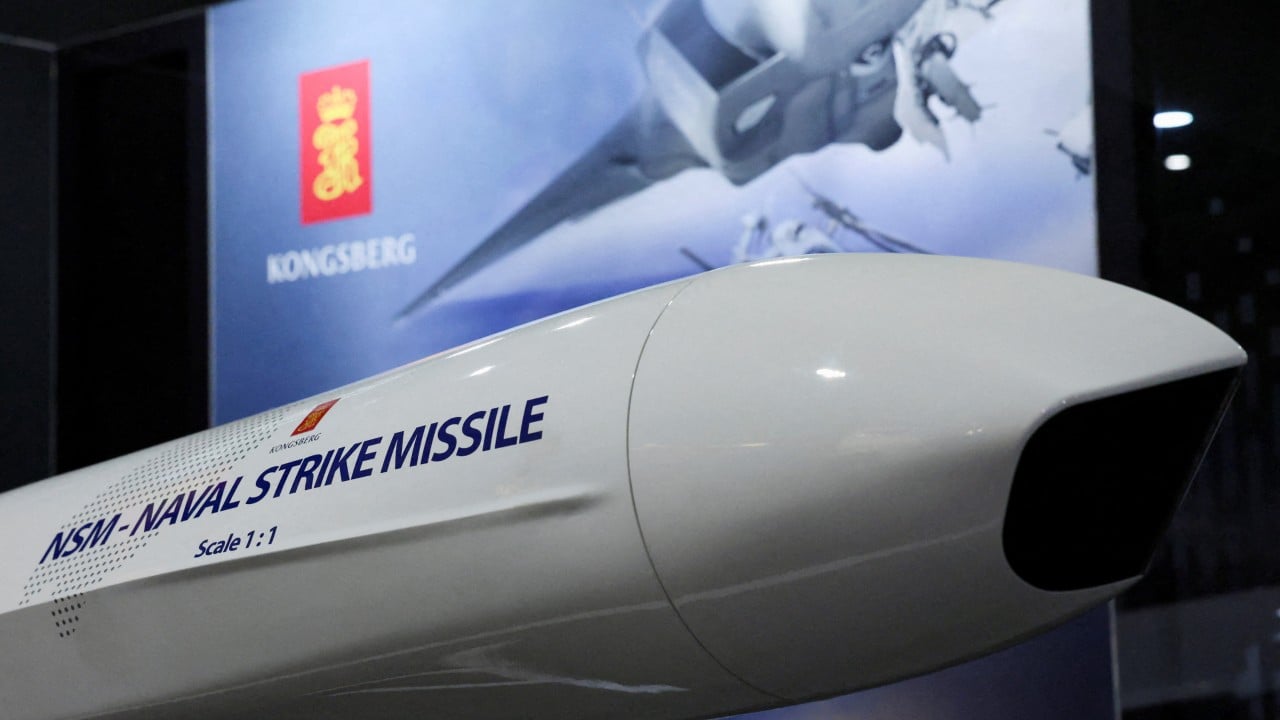
Malaysia demanding US$257 million from Norway’s Kongsberg Defence & Aerospace over a cancelled Naval Strike Missile deal is not a commercial dispute. It is a loud, ringing alarm that the era of strategic neutrality in military procurement is officially over. The standard reporting treats this as a standard breach of trust, a messy legal fight over direct and indirect losses, or an unfortunate diplomatic hiccup. Defence Minister Mohamed Khaled Nordin can issue all the notices of demand he wants for the RM1.06 billion spent. Prime Minister Anwar Ibrahim can register his vehement objections over the phone to Oslo. None of it changes the cold reality. The modern geopolitical arena does not tolerate weapon neutrality anymore.
When Norway unilaterally revoked the export licenses for the missile systems right before their scheduled delivery, it exposed a fatal flaw in how middle powers buy weapons. For years, non-aligned nations operated under the assumption that if your check cleared, the hardware arrived. If you paid 95% of the bill, you owned the capability. That rulebook has been torn up. Defense procurement is no longer an open marketplace. It is an explicit declaration of allegiance.
The Fallacy of the Customer Is Always Right
The lazy consensus dominating the discussion suggests that Kongsberg and the Norwegian government committed a shocking violation of international trade norms. Observers point to the fact that Malaysia scrupulously honored its financial commitments since 2018, paying €129.86 million out of the contract value. They argue that because Malaysia did everything right, Norway’s policy shift restricting sensitive technology strictly to NATO members and close strategic partners is an unfair, retroactive penalty.
This view ignores how sovereign risk actually operates. In high-end defense manufacturing, a contract is not a guarantee of delivery; it is merely an option contract contingent on the seller's shifting national security imperatives. Norway did not cancel the deal because of Malaysia’s conduct. Oslo changed its rules because the security environment in Europe fractured completely. With intense focus shifting toward domestic defense and immediate regional alliances, Western nations are pulling back their crown-jewel technologies from any country that refuses to explicitly pick a side.
I have spent years watching defense ministries blow fortunes on advanced systems without securing the underlying strategic alignment required to keep those systems operational. Buying a missile system is not like buying a fleet of commercial aircraft. You are purchasing a continuous relationship that requires software updates, spare parts, target-generation data, and structural integration. The moment a supplier country decides you are no longer in their immediate defensive orbit, your multi-million-dollar asset transforms into an expensive, unguided paperweight.
Imagine a scenario where Malaysia somehow forces Kongsberg to deliver the hardware without the export license. The Royal Malaysian Navy would inherit a collection of complex composite hulls and solid-fuel rocket motors that they could never update, recalibrate, or integrate with their combat management systems. The cancellation saved Malaysia from an even deeper logistical trap down the line.
The Submarine and Jet Engine Delusions
To understand why Malaysia found itself in this position, look at its historical procurement strategy. The country has long prided itself on diversifying its suppliers to maintain strategic independence. A few French submarines here, some Russian Sukhoi fighter jets there, a handful of British and German naval platforms, and now an attempt at Norwegian precision strike weapons.
This strategy is built on a fundamental misunderstanding of modern warfare technology. Decades ago, hardware was relatively isolated. A missile was a self-contained projectile that needed a physical rail and a simple radar trigger. Today, a weapon like the Naval Strike Missile is an extension of an integrated digital ecosystem. It requires precise geolocation data, electronic counter-countermeasures updates, and complex sensor data sharing.
When you buy from five different empires, you do not achieve independence. You achieve total systemic fragmentation. You spend double on training, triple on supply chains, and find yourself entirely dependent on foreign contractors to patch together systems that were never designed to talk to each other. The ongoing struggles with the Maharaja Lela-class littoral combat ships—which are sitting at over 77% physical progress but missing their primary teeth—show the danger of this approach.
The True Cost of Chasing Alternatives
Malaysia’s current playbook is predictable: threaten legal action, demand the return of the €129.86 million in direct payments, tack on another €96.26 million in indirect costs for dismantling installed hardware and retraining personnel, and then go shopping elsewhere. Officials have already hinted at looking toward Italy, France, Turkey, or South Korea to fill the capability gap.
This pivot will be vastly more expensive than the defense ministry admits. Switching to an alternative weapon system, such as Turkey's Atmaca or a South Korean equivalent, is not a simple plug-and-play operation.
- Structural Redesign: The physical launcher foundations, deck penetrations, and weight distribution profiles already built into the LCS hulls must be structurally modified.
- Combat System Re-engineering: The software architecture governing the ships' combat management systems must be rewritten to interface with an entirely different missile protocol.
- Testing Deadlines: Every single modification pushes the sea acceptance trials further into the future, compounding interest on loans and driving up overhead costs at local shipyards.
Chasing a refund through international arbitration will take years. Defense companies are heavily protected by state sovereign immunity clauses when export licenses are denied by their home governments. Kongsberg did not fail to deliver because they went bankrupt or grew lazy; they failed to deliver because their state made it illegal to do so. Winning a legal judgment against a defense prime under those conditions is an uphill battle that usually ends in a quiet, discounted settlement behind closed doors.
The Sovereignty Paradox
The hard truth nobody wants to acknowledge is that true military independence cannot be bought off a foreign shelf. If a nation is unwilling to commit to a formal defense alliance that guarantees technology transfers, it must build the industrial base to manufacture its own precision weapons.
Look at how Turkey transformed its defense industry. In the 1990s and 2000s, Ankara faced repeated arms embargoes and technological restrictions from its Western allies. Instead of whining to international tribunals or endlessly switching suppliers, they poured billions into Roketsan and Aselsan. They accepted short-term capability deficits to build long-term sovereign industrial capacity. Today, they export the very missiles that other nations scramble to buy.
Malaysia has a highly capable electronics manufacturing sector and an established aerospace maintenance infrastructure. Yet, the country continuously defaults to buying complete, foreign-made weapon systems because it lacks the political will to endure the decade-long, capital-intensive cycle of indigenous development. Buying foreign hardware is a shortcut that creates an illusion of security while ensuring permanent geopolitical vulnerability.
Stop Complaining About Broken Trust
The diplomatic outrage coming out of Kuala Lumpur is an exercise in futility. Describing Norway’s decision as an "erosion of trust" assumes that international relations are governed by schoolyard rules of fairness. They are not. They are governed by raw national interest.
Norway looked at the shifting global alignment, calculated the risk of its premier anti-ship technology leaking or being deployed in a theater outside its control, and decided that maintaining absolute technology security with NATO allies outweighed a €124 million commercial contract with a non-aligned nation. It was a rational, calculating decision.
Malaysia needs to drop the moral indignation and start operating with the same level of calculation. The demand for US$257 million should be pursued, but not under the delusion that it will restore the naval modernization timeline. That timeline is shattered. The focus must immediately shift from salvaging a dead European contract to aggressively negotiating unconditional technology transfers on whatever system replaces it. If a supplier refuses to provide the source codes, the manufacturing blueprints, and the local assembly rights, the deal should be rejected immediately.
If you are going to remain non-aligned, you must accept the brutal price of admission: you have to build your own weapons, or accept that you will only ever have the weapons your suppliers allow you to keep. Anything less is just expensive theater.