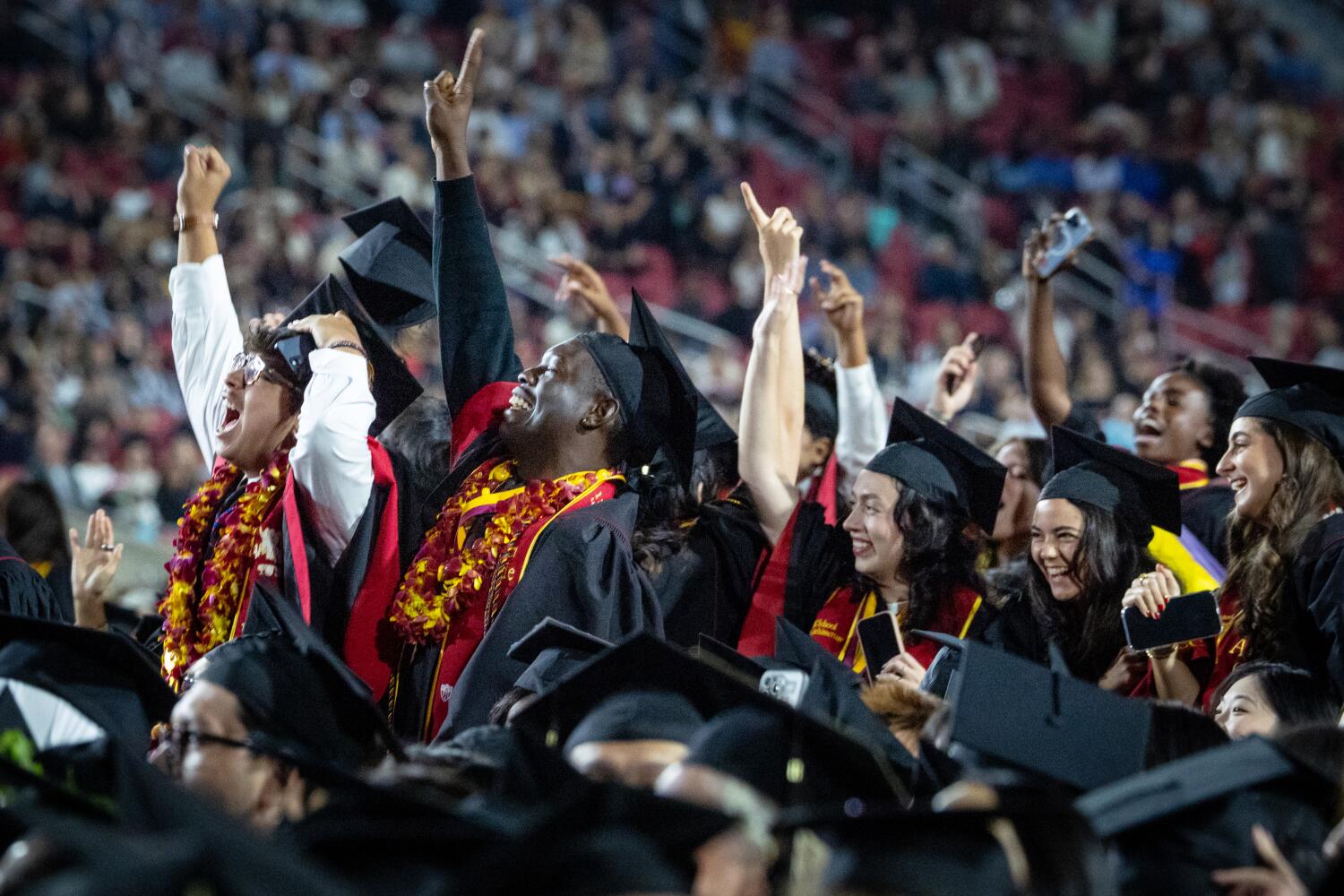
The air inside the stadium carries a specific, heavy friction. It is the friction of thousands of families shifting in plastic seats, the rustle of black synthetic gowns, and the low, collective hum of anticipation. Anyone who has ever stood on the precipice of graduation knows this temperature. It is the warmth of an ending colliding head-on with a beginning.
On this particular May morning at the University of Southern California, the sun cuts through the typical Los Angeles haze, illuminating a sea of cardinal and gold. But the crowd is not just waiting for the turning of tassels. They are waiting for a man who has spent his entire life proving that a wooden stick, wielded with enough conviction, can reshape the world.
Gustavo Dudamel walks toward the stage.
To the casual observer, it is a standard piece of academic pageantry. A university hands an honorary degree to a famous artist. The artist smiles, shakes hands, poses for the cameras, and goes home.
That version of the story is easy. It is also entirely wrong.
To understand why the music director of the Los Angeles Philharmonic is standing here, draped in academic velvet, you have to look past the flashbulbs. You have to look at the hands of the students watching him.
The Weight of the Upbeat
Consider a young violinist sitting in the back row of an orchestra. Let us call her Maria. She is twenty-two, the exact age of many of the graduates sitting in the Colosseum today. Her fingers are calloused. Her back aches from years of poor posture over a wooden instrument. For the last four years, her life has been measured in millimeters and metronome ticks.
To Maria, and to thousands of young musicians across Los Angeles, Dudamel is not just a celebrity. He is proof of life.
When he raises his arms, something invisible happens. Music, at its core, is an exercise in collective faith. A hundred individual musicians, each holding an instrument capable of making terrible noise, must agree on the exact microsecond to breathe together. If the conductor lacks authority, the sound fractures. If the conductor lacks humanity, the sound dies.
Dudamel’s genius has never been just about technical precision. It is about tension.
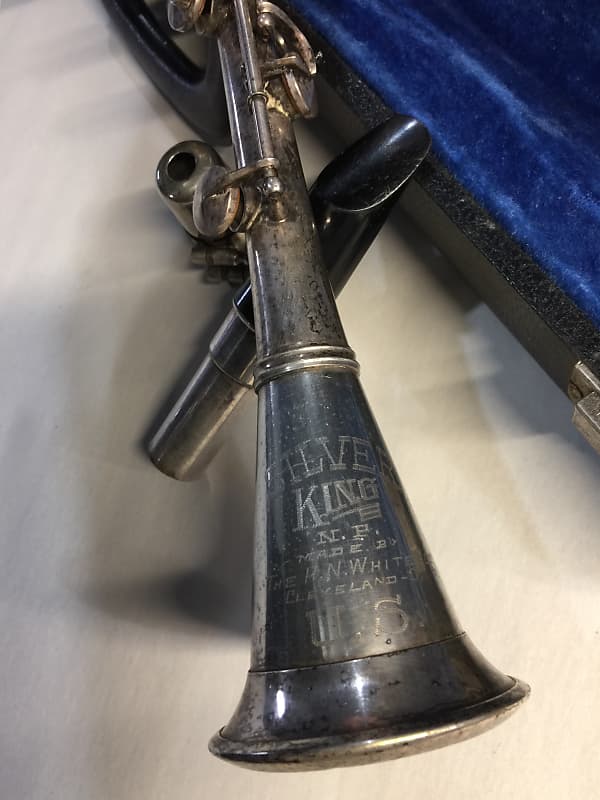
He understands that a community, much like a symphony, requires friction to create something beautiful. He grew up in El Sistema, Venezuela’s famous publicly funded music education program. He was the kid from Barquisimeto who found a trumpet before he found a calling. He knows what happens when you give a child an instrument instead of an empty street.
That is the invisible stake of the morning. The honor bestowed by USC is not a retirement trophy. It is an acknowledgment of a living philosophy. In an era where arts education is often the first item slashed from school budgets, standing on that stage is a political act. It is an assertion that culture is not a luxury item. It is infrastructure.
The Sound of the City
Los Angeles is a city defined by its fractures. It is a sprawling grid of freeways that separate neighborhoods by concrete and income. For decades, the Walt Disney Concert Hall sat on Bunker Hill like a gleaming silver spaceship, beautiful but detached from the reality of the streets below it.
Then came the curls. The energy. The man the orchestra simply calls Gustavo.
He did not leave the music inside the silver ship. He dragged it out into the sunlight. Through the Youth Orchestra Los Angeles (YOLA), he ensured that children from East LA, South LA, and the Rampart District had access to the same rigorous training as the kids from Beverly Hills.
Now, look back at the graduation stage.
When the university president reads the citation, listing the Grammys and the international accolades, it sounds like a resume. But the truth lives in the rhythm of the applause. The loudest cheers do not come from the VIP sections or the donors in the front rows. They come from the upper decks. They come from the students who grew up watching this man treat a youth orchestra in a gymnasium with the exact same fierce reverence he gives the Vienna Philharmonic.
This is the lesson the graduates are actually receiving, whether they realize it or not.
Most of the young people sitting in those gowns will not become professional musicians. They will become data analysts, civil engineers, lawyers, and biologists. They have spent years accumulating facts, memorizing formulas, and learning how to navigate systems. They are prepared to enter a world that values efficiency above almost everything else.
But efficiency does not sustain a culture.
The Friction of Success
It is easy to romanticize the life of a maestro. We see the final product: the sweat flying from his hair during a Mahler symphony, the roar of the crowd, the standing ovations that stretch on for ten minutes.
We do not see the isolation.
Conducting is a lonely business. You stand on a podium, facing away from the audience, communicating entirely through gesture and silent eye contact. You are responsible for the livelihoods and the emotional output of a hundred highly sensitive, fiercely intelligent artists. If the performance fails, it is your fault. If it succeeds, the credit is shared.
The subject of leadership is often treated with dry academic detachment in university lecture halls. Professors talk about management styles, organizational behavior, and strategic leverage.
Dudamel offers a different curriculum.
His leadership is vulnerable. Watch him during a rehearsal. He does not yell. He does not dictate. Instead, he leans forward, closes his eyes, and asks the orchestra for something they didn't know they had left to give. He risks failure in public, every single night.
That is the real value of the honorary doctorate presented at the 2026 commencement. It is a degree in emotional bravery.
The Final Chord
The ceremony moves forward with the inevitable momentum of all large institutional events. Names are read. Diplomas change hands. The sun climbs higher, making the heavy black polyester robes increasingly uncomfortable.
But for a moment, the heat drops away.
As Dudamel accepts the hood, the gesture is simple, almost intimate amidst the grand scale of the stadium. It is a moment of punctuation in a career that has defied the traditional boundaries of classical music. He stands as a bridge between the old world of European tradition and the new world of a multicultural, chaotic, beautiful American metropolis.
The true significance of this day will not be found in the press releases or the photographs published in the evening news.
It will be found tomorrow.
It will be found when a graduate from today’s ceremony walks into a corporate boardroom or a research lab and remembers that excellence is empty without empathy. It will be found when a young person realizes that to lead is not to dominate, but to listen.
The applause eventually fades, swallowed by the roar of traffic on Figueroa Street. The crowd disperses into the Los Angeles afternoon, carrying their degrees, their flowers, and their futures. The stage is left empty.
But the air still vibrates with the ghost of a note that refuses to stop ringing.