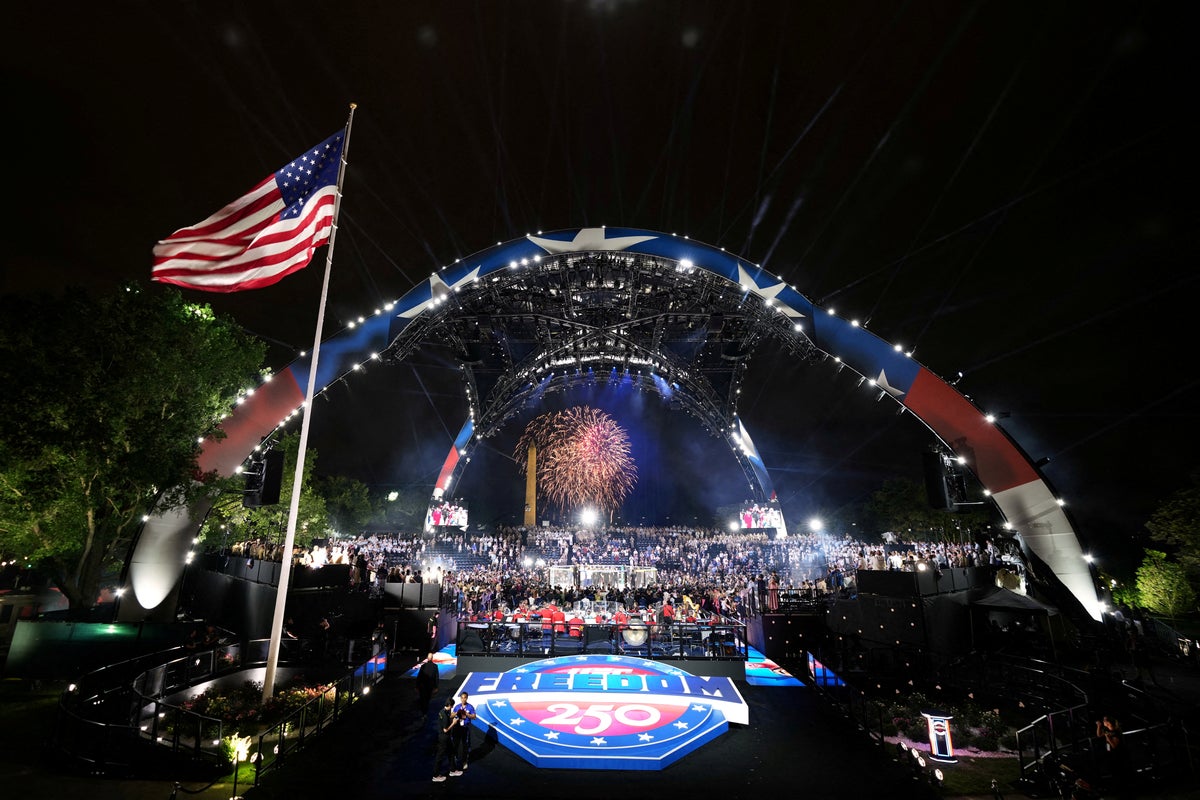
Every finance blog and combat sports pundit with a keyboard has spent the last week crying into their coffee over a thirty-million-dollar hole in the balance sheet. The headline writes itself. The Ultimate Fighting Championship stages a high-profile, high-risk spectacle dubbed the Freedom 250 on the South Lawn of the White House, burns an absolute mountain of cash, and the media reacts with predictable pearl-clutching. They call it a financial disaster. They call it executive hubris. They demand to know who signed off on a promotion that bled red ink faster than a third-round elbow to the forehead.
They are missing the entire point of modern corporate warfare.
I have spent the last fifteen years watching sports properties try to buy legitimacy, and I have seen executives panic the moment a single quarter turns negative. The consensus view on the Freedom 250 bloodbath is that it was an expensive mistake. That view is profoundly, dangerously naive.
Thirty million dollars is not a loss. It is a marketing line item. It is a toll bridge to cultural ubiquity.
The Accounting Illusion Of Modern Entertainment
Let us look at how traditional balance sheets evaluate live events. Bean counters tally ticket sales, pay-per-view buys, merchandise revenue, and local permits, subtract the obscene cost of hauling a professional cage onto federal turf, and arrive at a neat, catastrophic deficit.
This is how people who run grocery stores analyze entertainment media. It is completely wrong.
When you stage an event at the literal political center of the free world, you are not trying to break even on gate receipts. You are buying a megaphone that reaches every legislative desk, every board room, and every international market on the planet simultaneously. You are paying for a permanent shift in institutional posture.
Before the Freedom 250, MMA still fought an uphill battle against lingering perceptions of being a bloodsport for sub-literate brawlers. After the smoke cleared and the global news feeds stopped cycling the footage, the brand was no longer just a fighting league. It was an American institution.
Do you think the executives biting their fingernails over that thirty-million-dollar deficit care about short-term EBITDA when they are cementing a global monopoly? Of course not. They are playing a multi-decade game of cultural dominance while the critics are staring at a single quarter's spreadsheet.
The Cost Of Renting The Global Spotlight
Let us break down what thirty million dollars actually buys in the current media ecosystem.
If you want to run a traditional global ad campaign across digital, television, and print to reach that volume of unique eyeballs, you will spend triple that amount—and nobody will talk about it the next day. Advertising is a tax you pay for being unremarkable. A spectacle on the White House lawn is earned media. It is a cultural event that forces every major news network to run your branding for free.
Imagine a scenario where a challenger brand tries to buy equivalent mindshare through conventional sponsorship slots during the Super Bowl. They get thirty seconds of airtime, a massive bill, and zero organic conversation by Tuesday morning.
Now look at what happened here. The UFC traded thirty million in hard capital for billions of impressions, undeniable political alignment, and a permanent anchor in the history books of sports entertainment. The ROI is not calculated in direct ticket sales. It is calculated in enterprise valuation during the next media rights negotiation cycle.
When you own the room, you dictate the terms of every future contract.
The Lazy Consensus Of The Sports Punditry
The lazy narrative surrounding this event rests on a fundamental misunderstanding of how elite sports properties scale. Critics look at the direct cost and assume every dollar spent must return an immediate profit.
This is the exact mindset that keeps legacy television networks dying a slow death. They optimize for short-term margins while ignoring long-term relevance.
The commentators screaming about a thirty-million-dollar loss are the same people who told you Zuffa overpaid for fighters a decade ago. They are the ones who thought buying Pride FC was a financial dead end. They do not understand that category creators do not play by standard accounting rules. They rewrite the ledger.
Let us look at the anatomy of the criticism:
- The Gate Return Fallacy: Assuming an event must cover its own production costs through ticket sales alone.
- The Brand Dilution Myth: Believing that political association alienates fans rather than solidifying core demographics.
- The Short-Term Horizon: Judging a strategic positioning play based on a thirty-day financial window.
Every single one of these points collapses under the weight of basic enterprise strategy.
The Uncomfortable Truth About Risk
Here is the part the critics will never admit because it requires courage they do not possess. Big moves cost big money.
If you want to run a safe promotion, go book a mid-tier arena in the Midwest, sell out your tickets, post a modest profit, and stay entirely irrelevant on the global stage. That is a fine way to run a regional business. It is a terrible way to run a global titan.
The leadership team knew the event would not turn a profit on paper. They ran the numbers. They saw the projected deficit, looked each other in the eye, and wrote the check anyway. Why? Because they understood that staying stagnant is far more expensive than losing thirty million dollars on a masterstroke of audacious positioning.
When you operate at the top of the food chain, safety is a slow poison. Boldness, even when it bleeds cash in the short term, is the only thing that keeps you alive.
Stop crying about the ledger. Start studying the chess move.
The check has cleared. The event is history. And while the internet argues over the math, the brand is already cashing the real dividend.