The air inside the assembly hall in Shanghai doesn’t smell like victory. It smells of ozone, industrial sealant, and the nervous sweat of three hundred engineers staring at a composite wing spar that refuses to yield its secrets. These men and women aren't just building a plane. They are attempting to manufacture sovereignty.
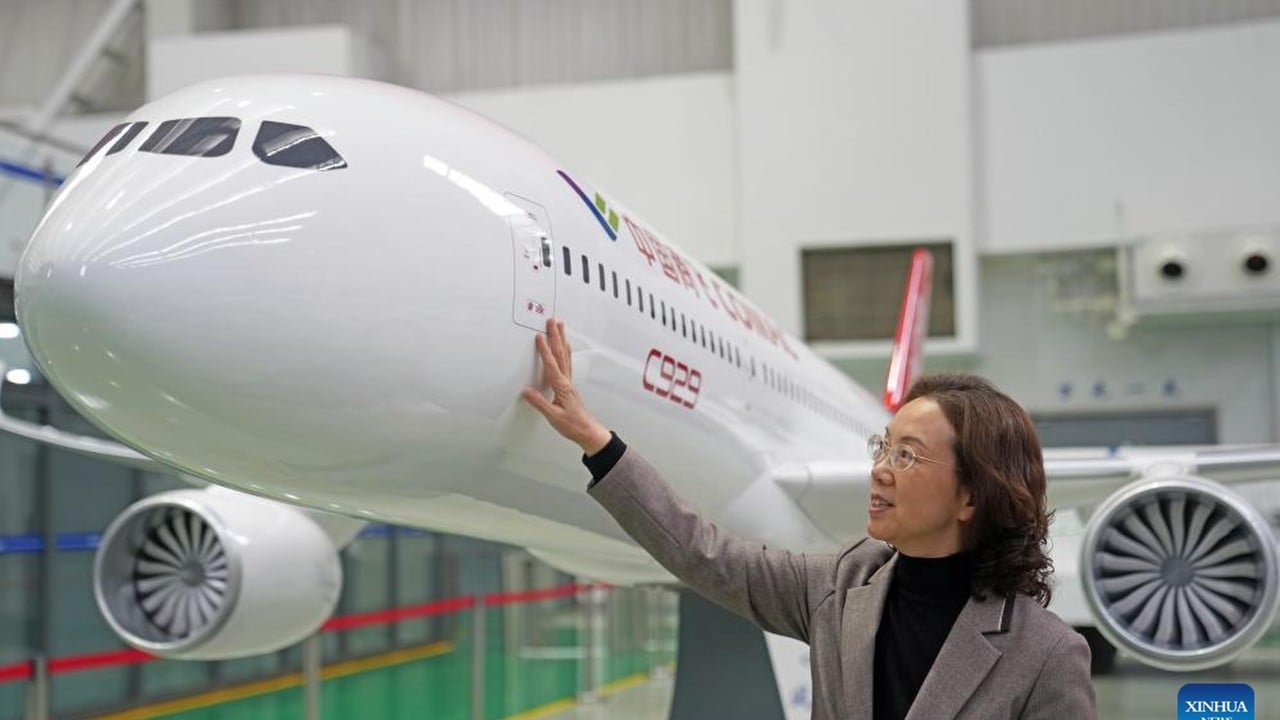
For decades, the sky has been a duopoly. You either fly on a bird born in Seattle or one hatched in Toulouse. This binary reality is comfortable for the West, but for China, it represents a glass ceiling made of aluminum and titanium. The C919, China’s narrow-body challenger, was the first crack in that glass. But the C929—the wide-body giant designed to carry 280 passengers across oceans—is the sledgehammer.
Building a wide-body jet is a feat of engineering masochism. It requires mastering the physics of heavy lift, the chemistry of advanced carbon fibers, and the brutal mathematics of fuel efficiency. Yet, the hardest part isn't the physics. It’s the paperwork.
The Certification Trap
Imagine you have spent ten years and billions of dollars building a masterpiece. You present it to the world, and the world says, "Prove it."
To fly internationally, a plane needs more than wings; it needs a certificate of airworthiness from the big gatekeepers—the FAA in the United States or the EASA in Europe. Without these stamps of approval, a jet is a very expensive museum piece, confined to domestic routes. For the C929, the path to these certificates has been blocked by a thicket of geopolitical tension and technical skepticism.
China originally planned to walk this path with Russia. The joint venture, known as CRAIC, was supposed to be a marriage of Russian aerodynamic experience and Chinese capital. It was a logical alliance until the world shifted. Sanctions and shifting priorities turned that partnership into a ghost. China found itself standing alone in a hangar with a half-finished dream.
So, they changed the play.
Instead of waiting for an invitation to the exclusive club of global aviation, Beijing began forging its own alliances. They are not looking toward the traditional powers. They are looking at the emerging hubs of the global south and the specialized suppliers who are tired of being squeezed by the Boeing-Airbus hegemony.
The Human Toll of Precision
Consider an engineer named Chen. (Chen is a composite of the dedicated veterans currently working the Shanghai lines). Chen hasn't seen his daughter awake in three days. He stays late because a wide-body wing undergoes forces that would snap a standard building's foundation.
The $C929$ aims to use a high proportion of composite materials—over 50%. This isn't a stylistic choice. It's a survival tactic. Every kilogram saved is a kilometer gained in range. But composites are temperamental. They require autoclaves the size of houses and a level of precision that leaves no room for human error.
When Chen looks at the blueprints, he isn't seeing a machine. He is seeing the pride of a nation that is tired of being the world's factory. They want to be the world's laboratory. The stakes for Chen and his colleagues are invisible but heavy. If the C929 fails, it isn’t just a corporate bankruptcy. It is a signal that China cannot yet cross the final frontier of high-value manufacturing.
A New Map of the Sky
The strategy has shifted from a single partnership to a web of tactical alliances. China is now aggressively courting tier-one suppliers in Europe and Asia, offering them something the big two cannot: a seat at the table of a rising empire.
By diversifying its supply chain, COMAC (the Commercial Aircraft Corporation of China) is attempting to bypass the bottlenecks of certification. If they can integrate world-class engines and avionics from global partners, they create a product that the EASA cannot easily ignore. It becomes a global effort disguised as a national project.
But the real genius lies in the "Air Silk Road."
China is leveraging its massive infrastructure investments in Southeast Asia, Africa, and the Middle East to create a ready-made market for the C929. They aren't just selling a plane; they are selling a transportation ecosystem. They provide the financing, the airport construction, the maintenance crews, and the aircraft. It’s a closed loop.
A budget airline in Jakarta or a state carrier in Addis Ababa doesn't care about the political optics in Washington. They care about seat-mile costs. If the C929 can deliver $15%$ better fuel efficiency through its advanced aerodynamics, the market will move. Greed, or perhaps just the necessity of profit, often moves faster than diplomacy.
The Invisible War of Standards
The battlefield is a conference room in Montreal or a testing facility in Harbin. It is a war of standards.
When a new aircraft is certified, every bolt, every line of code, and every fire-suppression nozzle must be documented. The "Big Two" have written the rules of this game for seventy years. They own the textbooks. China is currently trying to write a new chapter.
This is where the alliance strategy becomes a weapon. By partnering with international certification experts and consultants who have spent their lives at the FAA or EASA, COMAC is "fast-tracking" its education. They are buying the institutional memory they lack.
It is a slow, agonizing process. It involves thousands of hours of flight testing. It involves bird-strike tests where carcasses are fired from cannons into running engines. It involves "wing-up" tests where the wings are pulled by hydraulic cables until they snap, just to see if the math holds true.
The Weight of the Future
There is a specific kind of silence that happens when a wide-body jet takes off for its maiden flight. It’s the sound of thousands of people holding their breath.
For the C929, that moment is still on the horizon, but the momentum is shifting. The alliances being forged today—with engine makers, software designers, and international regulators—are the invisible struts supporting that future flight.
We often talk about aviation in terms of "disruption," a word that has lost its teeth through over-use. But this is different. This isn't a new app or a faster way to deliver groceries. This is a reconfiguration of how the planet is connected.
If China succeeds, the monopoly is dead. The sky becomes a more crowded, more competitive, and perhaps more dangerous place for the incumbents. For the traveler, it might mean cheaper tickets to London or Singapore. For the engineers in Shanghai, it means they can finally go home and tell their children that they built something that conquered the wind.
The C929 is more than a fuselage and two engines. It is a 200-ton message written in carbon fiber. The message is simple: the center of gravity is moving east, and it's moving at Mach 0.85.
The rivets are being driven in. The contracts are being signed in ink and blood. The world is watching the hangar doors, waiting for the giant to roll out into the light. When it finally does, the air will never smell the same again.