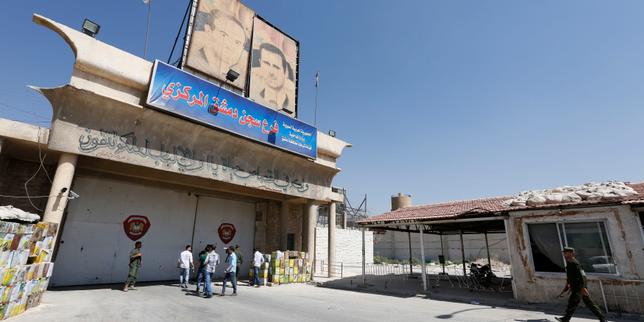
The Architecture of Silence
Concrete remembers.
It absorbs the echoes of boots clicking down subterranean corridors long after the guards have gone home. It holds the damp chill of solitary cells where daylight is a rumor whispered between iron bars. In the sprawling archive of state-sponsored brutality, walls do not just witness; they preserve. They retain the exact cadence of terror—the heavy thud of a steel door swinging shut, the metallic clink of keys dangling from a belt, the sharp intake of breath before the first blow falls.
For decades, certain men operated under a comfortable, terrifying assumption. They believed that geography was a shield. They believed that if you crossed enough oceans, changed enough names, slipped across enough porous borders, and melted into the quiet hum of suburban life in a foreign hemisphere, the past would dissolve into mist. They thought history belonged exclusively to textbooks, safely quarantined behind national boundaries.
They were wrong.
Consider the ordinary American suburb. Lawns are neatly manicured. Mailboxes sit uniformly at the edge of driveways. Children ride bicycles past parked sedans as sprinklers hiss rhythmically against dry grass. It is a portrait of domestic tranquility, an emblem of sanctuary. Yet, beneath the surface of this globalized era, borders are porous not just for commerce and digital data, but for memory. What happens a thousand leagues away does not stay there. It follows. It accumulates. It waits in the quiet dust of administrative files until the right key turns in the lock.
When the Past Crosses the Threshold
To understand what brought a former Syrian prison director to face a sixty-year sentence in an American federal courtroom, one must first dismantle the illusion of distance.
Imagine a room bathed in the harsh, flicker-free glare of fluorescent lighting. This is not a theater of war with flashing artillery and smoke-choked skies. This is bureaucratic evil in its purest, most sterile iteration. Desks are stacked with intake forms. Telephones ring with administrative urgency. Here, men in crisp uniforms decide who receives a blanket, who receives a crust of stale bread, and who receives the systematic eradication of their humanity.
The man who once walked these corridors in Damascus didn't wear horns. He wore civilian clothes eventually, blending into the quiet rhythm of relocation. He paid taxes. He bought groceries. He breathed the air of a country built on ideals of liberty and due process, ironically relying upon those very protections to shield his identity while denying them entirely to everyone he left behind in the cells of Tadmor or Sednaya.
Cruelty, in its institutionalized form, is remarkably mundane. It is ledger books and shift changes. It is coffee cups left on metal tables. It is an administrator signing off on suffering with the detached indifference of a clerk approving an invoice for office supplies. This mundane face of horror is what makes it so difficult to prosecute, and so vital to confront. When the perpetrators of atrocity walk among us disguised as ordinary neighbors, they bank on our collective exhaustion. They count on the sheer complexity of international law to glaze our eyes over with boredom.
They rely on the assumption that a crime committed in a distant desert kingdom loses its sharpness once it hits Western shores.
The Anatomy of Accountability
Justice moves slowly. Its wheels do not grind with the explosive fury of a battlefield; they turn with the agonizing, inexorable friction of a millstone.
When investigators began piecing together the life of this former prison chief, they were not looking for cinematic confrontations. They were looking at paper trails, witness testimonies, digital fragments, and the fragile, trembling accounts of survivors who had managed to claw their way out of the abyss. Every survivor's testimony was a brick laid down to build a bridge across an ocean of impunity.
Think of what it takes for a broken body and a fractured mind to speak across time zones. To sit in a brightly lit room in Europe or North America, years after the fact, and drag oneself back into the dark. To name names. To describe the exact shade of a wall, the specific weight of a baton, the sound of a voice echoing down a concrete hallway. This is not merely testimony. It is an act of resurrection. It drags ghosts into the harsh light of a courtroom and forces the living to look them in the eye.
The defense rested on technicalities. Jurisdiction. Sovereignty. The passage of time. These are the traditional armor plates of the authoritarian. They wrap themselves in the flag of state immunity or hide behind the legal fiction that what happens within a sovereign nation’s borders is nobody else's business.
The court rejected that premise entirely.
Sixty years.
Let the number settle in the mind. It is not just a punishment; it is an erasure of the perpetrator's remaining horizon. It is a mathematical translation of decades of stolen breath, broken bones, and extinguished lives. It sends a message across every meridian and parallel on the globe. There is no corner of the earth remote enough, no political regime secure enough, and no bureaucratic disguise thick enough to outrun the consequences of industrial-scale human rights abuses.
The Ripple Effect of Truth
We live in an age of profound cynicism. Every day, news feeds overflow with stories of impunity, where the powerful escape unscathed and the vulnerable bear the brunt of geopolitical games. It is easy to look at the state of the world and conclude that power is the only currency that matters, that morality is a luxury reserved for the naive.
This ruling disrupts that cynical narrative.
It proves that systems designed to protect human dignity, however flawed or sluggish they might appear, retain a latent capacity for reckoning. When a court thousands of miles away from the screams of a Syrian detention center hands down a half-century-plus sentence for torture, it redraws the moral map of the world. It declares that certain crimes are so fundamentally corrosive to the human project that they belong to all of us. They are offenses against the species itself.
Consider the silence that follows such a verdict. It is not the heavy, oppressive silence of a prison cell where prisoners hold their breath to avoid drawing the guard's attention. It is a different kind of silence—the quiet that comes when a lie finally collapses under the weight of accumulated truth.
For the families who scatter ashes into rivers where no bodies were ever recovered, for the men and women carrying invisible scars beneath their clothes, this verdict does not reverse the past. No courtroom can stitch together shattered ribs or restore stolen decades. But it offers something irreplaceable. It offers validation. It tells the victim that their suffering was real, that it mattered, and that the world did not look away forever.
The lights in the federal courtroom flickered off. The stenographer packed away her machine. The defendant was led back down the hall in chains, his civilian anonymity stripped away permanently, replaced by the stark, orange uniform of a convicted torturer. Outside, the evening air was cool, carrying the ordinary sounds of traffic and distant laughter.
Across the globe, the concrete walls still stand, but the men who built their empires upon the suffering within them now know a new truth.
The world is smaller than it used to be. And the dark is not as deep as they thought.