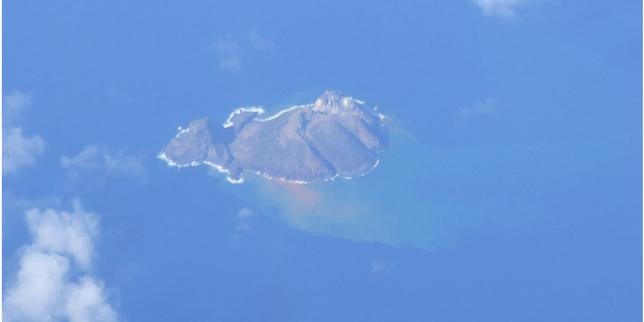
Small island states operate under a structural disadvantage in bilateral negotiations with nuclear-armed permanent members of the United Nations Security Council. When power asymmetry defines the baseline, diplomatic appeals for equity routinely stall against bureaucratic inertia and domestic political costs in the colonizing capital. Vanuatu chose to bypass this bilateral impasse by formally depositing an application against France at the International Court of Justice concerning the sovereignty of Matthew and Hunter islands. This escalation shifts the dispute from a stalled conversation between Port Vila and Paris into a formalized legal battleground governed by public international law.
The structural mechanics of this conflict extend far beyond two uninhabited volcanic outcrops sitting roughly three hundred kilometers east of New Caledonia. At its core, the dispute operates as an economic and strategic contest over maritime entitlements defined by the United Nations Convention on the Law of the Sea. Under the legal framework of exclusive economic zones, ownership of a minor land feature generates a massive aquatic perimeter. Control over Matthew and Hunter dictates who regulates commercial tuna fisheries, authorizes marine scientific research, and licenses potential seabed mining across thousands of square nautical miles of the South Pacific. France administers the islands as an integral component of New Caledonia, leveraging them to anchor its expansive regional footprint. Vanuatu claims them as part of its Tafea province, rooted in indigenous customary ties and the principle of complete decolonization following its independence from Anglo-French rule in 1980.
Bilateral negotiations broke down because the two governments approached the table with mutually exclusive optimization functions. Vanuatu maintained a non-negotiable stance that territorial sovereignty must be settled prior to any maritime boundary delimitation. Paris offered joint management frameworks and shared administrative access while explicitly preserving French legal ownership. For Port Vila, accepting joint access with a distant European power institutionalized a neo-colonial hierarchy. For Paris, yielding sovereignty over any overseas territory triggered acute domestic political liabilities, particularly amid ongoing constitutional tensions surrounding New Caledonia. Once these diplomatic parameters hardened into a zero-sum matrix, legal adjudication became the only rational mechanism left to break the equilibrium.
Bringing the matter before the International Court of Justice introduces immediate procedural bottlenecks. Because France has not accepted the compulsory jurisdiction of the court under Article 36 of the Statute of the International Court of Justice, the tribunal cannot automatically hear the application. The court must transmit the filing to Paris to ascertain whether the French government consents to ad hoc jurisdiction. Historically, major nuclear powers exhibit extreme caution regarding judicial exposure on territorial questions tied to strategic security and domestic sovereignty. If Paris declines consent, the case stalls at the threshold, forcing Vanuatu to weigh alternative multilateral forums or general assembly advisory opinions modeled after the Chagos precedent.
The legal arguments on both sides expose the friction between nineteenth-century colonial administration records and contemporary decolonization doctrines. French title claims rest on administrative acts, twentieth-century decree integrations, and bilateral understandings reached with the United Kingdom during the colonial era. Vanuatu counters that these historical arrangements were forged without indigenous consent and violate the right to self-determination, pointing to traditional cultural connections embedded in the indigenous languages of Aneityum and Futuna. This clash forces international jurists to weigh the stability of historical title against the evolving customary norms of post-colonial state integrity.
The strategic play moving forward relies entirely on multilateral pressure. Vanuatu must leverage its diplomatic capital within the Pacific Islands Forum to mobilize regional solidarity, transforming a bilateral friction point into a collective test of how major powers respect maritime equity in Oceania. By forcing France to publicly accept or reject international judicial scrutiny, Port Vila alters the reputational cost of avoiding the courtroom, turning procedural inertia into a visible diplomatic liability.