The sea does not care about flags, and it certainly does not care about ultimatums whispered in air-conditioned boardrooms thousands of miles away.
To understand what happened in the narrow throat of the Strait of Hormuz, you have to smell the air there. It smells like hot metal, heavy crude oil, and an oppressive, suffocating salt that clings to your eyelashes. It is a waterway barely twenty-one miles wide at its absolute constriction, yet through this aquatic bottleneck flows a massive heartbeat of global energy. On any given day, massive tankers crawl through these shipping lanes like steel leviathans, their bellies full of the fuel that keeps cities lit and engines turning across the planet.
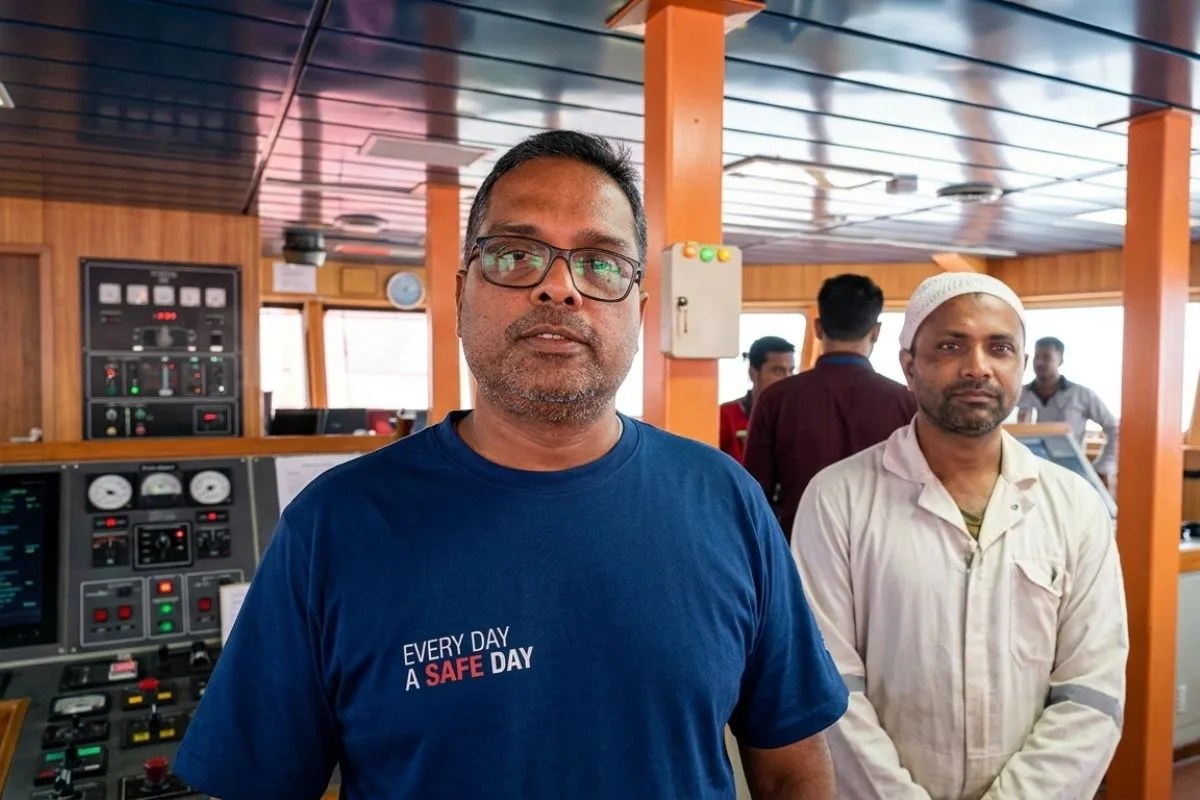
And right there, suspended between the towering dunes of the Arabian Peninsula and the jagged cliffs of Iran, sixteen Indian sailors looked out over the dark water and simply said no.
They were not mutineers in the cinematic sense. They were not waving fists or shouting slogans. They were men whose calloused hands had weathered decades of salt spray, men who send modest remittances home to families in Kerala, Mumbai, and Goa. They had signed contracts. They had families relying on school fees and medical bills being paid on time. Yet, as their vessel approached the perilous expanse of the Strait, the invisible line separating a routine cargo transit from a potential war zone became too real to ignore.
The tension in the region had been tightening like a tourniquet. Threats had escalated from diplomatic grumbling to active maritime flashpoints. Mines drifted like lethal metallic urchins beneath the surface; fast-attack craft buzzed commercial vessels like angry hornets. For these sixteen men, the abstract statistics of geopolitical conflict suddenly translated into a very concrete, terrifying reality: a burning ship, a trapped engine room, a watery grave far from home.
Refusing to sail into a combat zone is a quiet act of immense courage. It requires staring down employers, legal penalties, and the heavy guilt of abandoned wages. But it also exposes the raw nerve of modern globalization.
We live in a world that treats supply chains as invisible magic. We flip a switch, and light floods the room. We turn a key, and our cars roar to life. We rarely pause to think about the human cost embedded in every barrel of oil or containerized cargo box. We forget that the global economy is not powered by abstract market forces or digital algorithms. It is powered by human beings standing on rolling steel decks, breathing in diesel exhaust, and gambling their lives so that the rest of the world can keep consuming without interruption.
Consider the weight of that choice. On one side sits contractual obligation and the economic survival of a household. On the other side sits the volatile gamble of surviving a missile strike or a naval seizure. When those sixteen Indian sailors stepped back and refused the passage, they dragged the invisible stakes of international conflict squarely into the light.
The geopolitical chessboard is often discussed in terms of capitals, sanctions, and aircraft carrier strike groups. Analysts pore over satellite imagery, debating strategic choke points and naval doctrines. But the real friction point of history is always found at the human level. It is found in the weary eyes of a chief engineer calculating fuel reserves, or a deckhand watching the horizon for shapes that do not belong there.
When the news trickled out, it was treated in many places as a mere logistical hiccup—a delay in transit times, a minor insurance headache for maritime syndicates. That is the great anesthesia of modern reporting. It flattens human terror into bullet points. It turns courage and fear into market indicators.
Yet, beneath the dry headlines lies a profound moral question about how much risk we expect ordinary workers to shoulder for the sake of international commerce. When political leaders rattle sabers, the shockwaves do not remain contained in diplomatic cables. They ripple outward until they strike the working class, forcing choices no one should have to make between feeding their children and walking into the line of fire.
The standoff in Hormuz eventually settled into quiet negotiations, legal reviews, and crew rotations. Replacements were found, or routes were altered, and the massive tankers continued their slow, heavy procession through the strait. The global machinery resumed its grinding rotation.
Hours after the decision, out on the dark and indifferent water, the moon cast a long, trembling silver streak across the Persian Gulf. The waves slapped rhythmically against the hull of an anchored vessel, indifferent to the treaties broken or the fears voiced below deck. Far away, a phone pinged in a quiet kitchen in Kochi, bringing news that the crew was safe, that the line had been drawn, and that some men had decided their lives were worth more than the cargo they carried.