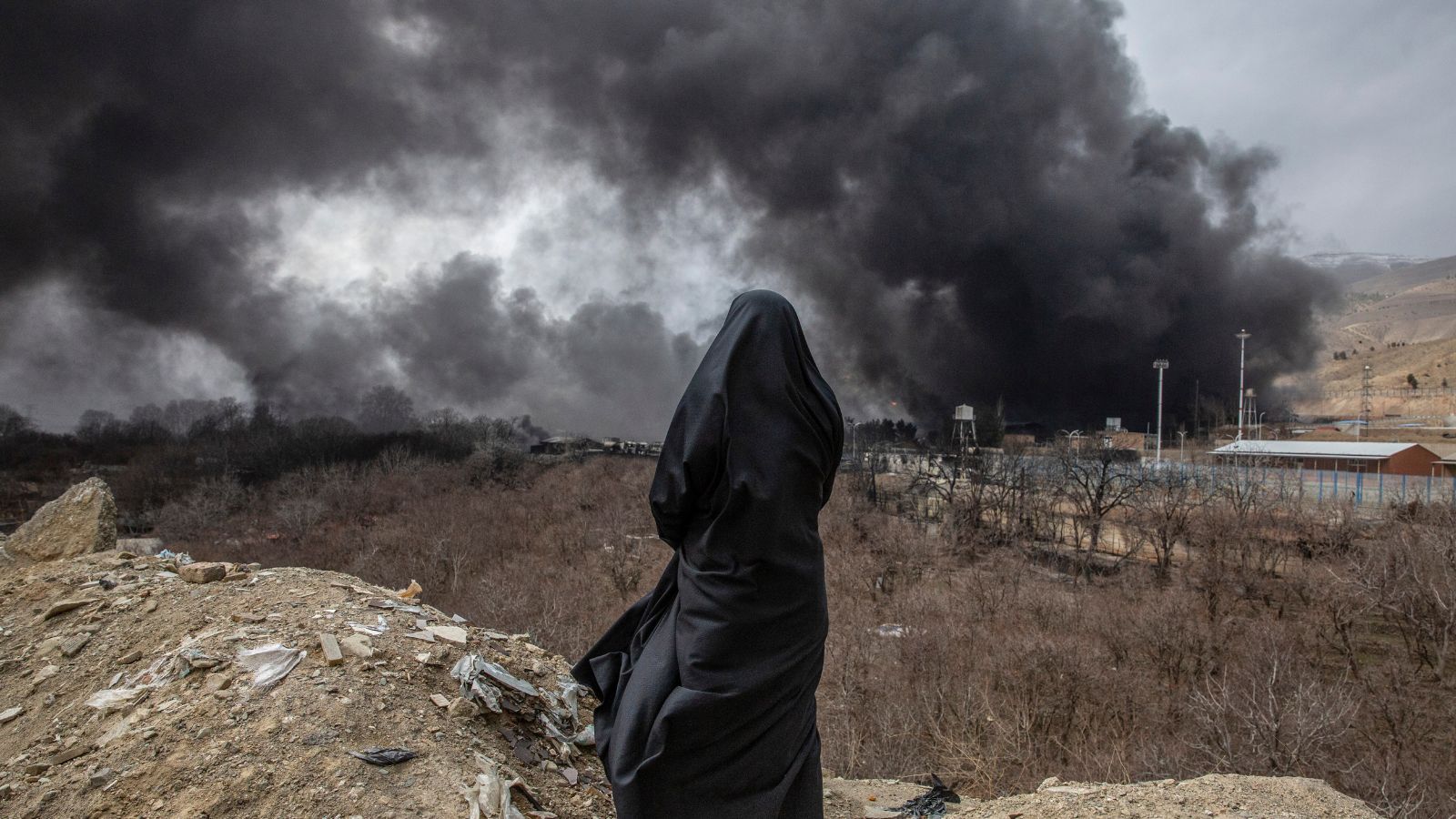
You wake up, check the exchange rate, and then check the flight trackers. This is the morning routine for millions in Tehran. It isn't about productivity or "wellness." It's about survival. For months, the shadow of a full-scale regional war has loomed over Iran, leaving a population of 88 million squeezed between the threat of external bombardment and the rigid grip of their own leadership.
People are tired. Really tired. There’s a specific kind of fatigue that sets in when you're constantly told a "great victory" is coming while you can't afford a kilogram of red meat. The disconnect between the fiery rhetoric on state television and the quiet desperation in the local bazaars has never been wider. While officials talk about strategic depth and regional influence, the average person is wondering if their savings will be worth half as much by sunset.
The Double Bind of Modern Iran
Imagine living in a house where the roof is rotting and the neighbors are threatening to throw a firebomb through the window. You can't fix the roof because you're spending all your money on a security system you didn't ask for. That’s the Iranian reality.
On one side, you have the threat of Israeli or American strikes. On the other, you have a government that treats domestic dissent as a foreign conspiracy. When the sirens go off or the news breaks about another targeted assassination, the reaction in Tehran isn't a unified surge of nationalism. It's a complicated, messy mix of anxiety, apathy, and anger.
Many Iranians feel like they’ve been taken hostage by a geopolitical game they never signed up for. They don't want the bombs, but they're also not waving flags for the people claiming to protect them. It's a lonely place to be. You're a target for one side and a pawn for the other.
Why the Economic Collapse Hurts More than the Bombs
War is a possibility, but poverty is a certainty. This is the core truth that many Western analysts miss. We focus on the "Axis of Resistance" or the technical specs of a Fattah missile. But for a father in Isfahan, the real "strike" happened years ago when the rial plummeted.
Inflation isn't just a number here. It’s a thief. It steals your retirement. It steals your ability to get married. It steals the chance to buy a simple car. According to various reports from the Statistical Centre of Iran, inflation has hovered around 40% to 50% for several years. Imagine your paycheck losing half its value while the cost of eggs triples.
When the government spends billions on regional proxies or missile programs, the average citizen sees that as money stolen from their healthcare and their schools. The "defiant rulers" the world sees on TV are seen at home as managers of a failing firm who refuse to change their business model even as the company goes bankrupt.
The Psychology of Living in Limbo
There's a psychological toll to this kind of "no-war, no-peace" state. Human beings aren't built to live in a permanent state of high alert. Eventually, something snaps. Or worse, it goes numb.
In North Tehran cafes, you see kids in Balenciaga knock-offs scrolling through TikTok via VPNs. They look like kids anywhere else. But they’re experts at navigating digital blockades and avoiding the morality police. They live in a parallel universe. One foot is in a globalized, digital culture, and the other is stuck in a 1979 time capsule.
This duality creates a weird, dark humor. Iranians are famous for their memes during crises. When a potential strike is announced, the internet fills with jokes about how the missiles might actually hit a pothole and improve the roads. It's a coping mechanism. If you don't laugh, you'll probably never stop screaming.
The Generation Gap is a Chasm
The people running the country are mostly in their 70s and 80s. The people living in it are mostly under 40. This isn't just a gap. It's a different language.
The ruling elite views the world through the lens of revolutionary struggle and "sacred defense." They remember the Iran-Iraq war of the 1980s. To them, hardship is a badge of honor. But the Gen Z and Millennials of Iran don't want to be martyrs. They want jobs. They want to travel. They want to be able to say what they think without a "Death to [X]" slogan attached to it.
The 2022 protests following the death of Mahsa Amini weren't just about a headscarf. They were a visceral rejection of the entire worldview offered by the state. Even though the streets are quieter now, the sentiment hasn't changed. The resentment is just fermenting.
Misconceptions About the Iranian Public
A common mistake outsiders make is thinking that because Iranians hate the sanctions or fear a war, they must love their government. Or vice versa. It’s not binary.
Most Iranians are patriotic. They love their country. They don't want to see their infrastructure destroyed or their civilians killed by foreign drones. But they are also deeply disillusioned with the clerical establishment. They can hold two thoughts at once. They can be against foreign intervention and against domestic oppression simultaneously.
The idea that "The enemy of my enemy is my friend" doesn't apply here. To many Iranians, both the hawks in Washington/Tel Aviv and the hardliners in Tehran are obstacles to a normal life. They feel like the grass being trampled while the elephants fight.
What Happens When the Defiance Hits a Wall
The Iranian leadership prides itself on "Maximum Resistance." They’ve built a system designed to withstand pressure. But systems have breaking points.
The strategy of the ruling class relies on the idea that the population will always prefer the status quo over the chaos of a Syrian-style civil war or a Libyan-style collapse. They use "Syrianization" as a bogeyman to keep people in line. "It might be bad now," they say, "but at least we aren't ISIS."
That argument is losing its teeth. When the present is miserable enough, the fear of a theoretical future loses its power. We’ve seen this in the increasingly frequent strikes by oil workers, teachers, and pensioners. These aren't political activists. These are people who literally can't afford to live anymore.
The Real Risk of Miscalculation
The danger right now is that the "defiant rulers" might actually believe their own propaganda. If they think the population will rally behind them in the event of a strike, they might take risks they shouldn't.
In reality, a major conflict could just as easily be the spark that reignites internal unrest. History is full of regimes that entered a war to distract from domestic problems, only to find that the war accelerated their downfall. The bond between the people and the state is frayed to a single thread.
How to Navigate the News on Iran
If you want to understand what's actually happening, stop looking only at the satellite images of missile bases. Look at the price of bread in Mashhad. Look at the number of Iranian doctors and engineers emigrating to Europe and North America every year. Brain drain is a better indicator of a country's health than its stockpile of enriched uranium.
Don't fall for the "united front" image the state portrays. Iran is a boiling pot with a heavy lid. The more heat you add from the outside, the higher the pressure gets inside.
Keep an eye on the following indicators to gauge the real situation.
- The Rial to USD black market rate. This is the true "confidence meter" of the Iranian people.
- The frequency of localized protests. Small, recurring protests over water rights or wages are often more significant than one-off political rallies.
- The rhetoric of "moderate" figures within the system. When even the loyalists start sounding worried, the situation is critical.
Stop waiting for a "grand bargain" or a "total collapse." Iran exists in the gray area between the two. The people there are masters of navigating that gray, but even the best navigators eventually get tired of the fog.
If you’re watching from the outside, remember that there’s a massive difference between the Iranian government and the Iranian people. Supporting the latter usually means advocating for policies that don't just punish them for the actions of the former. Sanctions that prevent life-saving medicine from reaching a pharmacy in Shiraz don't hurt the generals. They hurt the people the world claims to be helping.
Pay attention to the stories coming out of the country that aren't about drones. Read the translated poems, watch the underground films, and listen to the people who are actually living this reality. They’re the only ones telling the truth.