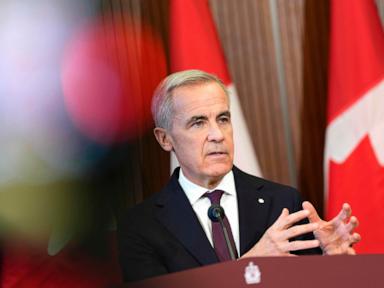
Canadian Prime Minister Mark Carney’s public alignment with congressional Democrats following the 2026 US midterm elections signals a calculated shift in North American trade strategy, moving away from bilateral executive negotiation toward legislative containment. While surface-level reporting treats this development as simple diplomatic applause, the underlying reality involves a complex collision between US constitutional trade authorities, presidential veto math, and integrated cross-border supply chains. Understanding whether a Democratic congressional push can actually dismantle President Donald Trump’s tariff regime requires mapping the statutory mechanisms governing American trade policy, calculating the exact procedural bottlenecks on Capitol Hill, and evaluating Ottawa's asymmetric economic vulnerabilities.
The Statutory Architecture of Executive Tariffs
To evaluate the viability of a legislative rollback, analysts must first separate the political rhetoric of trade relief from the statutory instruments used to impose the duties. Under Article I, Section 8 of the US Constitution, the power to regulate foreign commerce and lay tariffs belongs strictly to Congress. Over the past century, however, Congress delegated broad swaths of this authority to the executive branch through specific trade statutes, each possessing distinct termination mechanisms and vulnerability profiles to congressional intervention.
The executive branch relies on three primary statutory pillars to enact unilateral tariffs against trading partners like Canada:
- The International Emergency Economic Powers Act (IEEPA): Enacted in 1977, IEEPA allows a president to regulate international commerce after declaring a national emergency in response to an unusual and extraordinary threat originating outside the United States. When tariffs are anchored to border security, fentanyl trafficking, or migration emergencies, they bypass standard trade investigation timelines entirely.
- Section 232 of the Trade Expansion Act of 1962: This provision authorizes the president to adjust imports—including imposing tariffs or quotas—if the Secretary of Commerce determines that specific goods are being imported in quantities or under circumstances that threaten to impair national security. Historically applied to steel and aluminum, Section 232 grants the executive wide latitude with minimal statutory expiration triggers.
- Section 301 of the Trade Act of 1974: Managed by the Office of the United States Trade Representative (USTR), Section 301 permits retaliatory tariffs against foreign governments that violate trade agreements or engage in acts deemed unjustifiable, unreasonable, or discriminatory against US commerce.
A legislative push by congressional Democrats to end tariffs on Canada does not operate in a vacuum; it must target the specific statutory delegation used to erect the barrier. Under the National Emergencies Act (NEA), which governs IEEPA declarations, Congress possesses a theoretical mechanism to terminate a declared national emergency via a joint resolution. Yet the operational mechanics of a joint resolution reveal why diplomatic optimism in Ottawa faces severe institutional friction in Washington.
The Veto-Proof Bottleneck and Bicameral Friction
A post-midterm shift in congressional power alters committee chairmanships, subpoena authority, and floor scheduling, but it does not automatically repeal executive trade actions. Even if Democrats secure control of one or both chambers of Congress, terminating executive tariffs requires passing legislation—either a joint resolution of disapproval under the National Emergencies Act or standalone statutory amendments curbing Section 232 and IEEPA authorities.
This creates a rigid mathematical constraint. Under the Presentment Clause of the US Constitution, any joint resolution terminating a national emergency or repealing tariff authority must be presented to the president for signature. Because President Trump retains the executive veto until January 2029, a simple majority in the House of Representatives and the Senate is insufficient to force a policy reversal.
- Committee Gatekeeping: In a Democratic-controlled chamber, the House Ways and Means Committee and the Senate Finance Committee gain the power to mark up trade legislation, hold oversight hearings on domestic inflation caused by import duties, and bring disapproval resolutions to the floor.
- The Senate Filibuster: Standalone bills amending the Trade Expansion Act of 1962 or restricting IEEPA require 60 votes in the Senate to overcome cloture, unless attached to privileged budget reconciliation vehicles—a maneuver strictly constrained by the Byrd Rule, which bars extraneous non-budgetary policy changes.
- The Executive Veto Override: Once a joint resolution passes both chambers, the White House will veto it. Overriding that veto requires a two-thirds supermajority in both the House (290 votes) and the Senate (67 votes).
Unless agricultural, manufacturing, and energy-state Republicans defect in large numbers to join congressional Democrats, a legislative effort to strip presidential tariff authority stalls at the veto pen. Carney’s endorsement of the Democratic initiative is therefore less about expecting an immediate statutory repeal and more about weaponizing legislative friction to raise the political cost of maintaining the duties.
Cross-Border Supply Chain Elasticity and Cost Incidence
To grasp why Ottawa prioritizes rapid tariff removal over prolonged retaliation, one must examine the structural asymmetry of the US-Canada economic relationship. Trade between the two nations is not characterized by finished consumer goods moving in one direction; it is defined by intermediate inputs crossing the border multiple times before final assembly.
Consider the North American automotive and energy sectors. An automotive component manufactured in Ontario may cross the Ambassador Bridge into Michigan for sub-assembly, return to Canada for integration into a drivetrain, and cross back into the United States for final vehicle assembly. When an ad valorem tariff is applied at the border, it does not function as a single tax on a finished product. Instead, it acts as a compounding transaction tax on integrated production networks.
Economists measure the burden of these duties through tariff incidence—the distribution of the tax burden between foreign exporters and domestic importers—and price elasticity of supply and demand. In sectors where the United States lacks immediate domestic substitutes, such as heavy sour crude oil from Alberta, potash for agricultural fertilizers, or specialized aluminum alloys, US importers exhibit low short-term price elasticity. American refiners in the Midwest, configured specifically to process Canadian heavy crude, cannot rapidly retool to accept light sweet crude from the Permian Basin without massive capital expenditure and downtime.
Because US buyers cannot easily switch suppliers in the short run, the immediate financial incidence of tariffs on inelastic Canadian inputs falls heavily on American industrial consumers, refiners, and downstream manufacturers. Conversely, in sectors with high substitutability—such as softwood lumber, generic manufactured goods, or agricultural products—Canadian exporters absorb the margin compression or lose market share to domestic US producers and third-country competitors.
Ottawa's Strategic Calculus and Deterrence Asymmetry
Prime Minister Mark Carney, operating with a background in central banking and institutional risk management, approaches this trade dispute through the lens of macroeconomic stability rather than populist escalation. When a smaller, trade-dependent economy confronts a larger, relatively closed economy in a tariff dispute, symmetrical dollar-for-dollar retaliation carries severe domestic risks.
Canada’s exports to the United States account for roughly one-fifth of Canadian Gross Domestic Product, whereas US exports to Canada represent less than two percent of US GDP. This ten-to-one structural asymmetry limits Ottawa's capacity to wage an open-ended tariff war without triggering domestic stagflation—simultaneously depressing Canadian export growth while raising consumer prices through retaliatory import duties.
By welcoming and amplifying the post-midterm Democratic push in Congress, Ottawa executes a multi-vector flanking strategy designed to bypass this bilateral asymmetry:
- Sub-National Coalition Activation: Congressional Democrats represent districts deeply embedded in cross-border supply chains, particularly across the Great Lakes industrial belt, New England, and the Pacific Northwest. By aligning with their legislative push, Ottawa validates the economic grievances of US governors, mayors, and state-level trade associations without appearing to interfere directly in domestic American politics.
- Targeted Retaliation Calibration: Rather than imposing broad-based tariffs that harm Canadian consumers, Ottawa pairs its diplomatic support for congressional action with precision retaliatory tariffs aimed at politically sensitive US exports originating in districts held by vulnerable Republican lawmakers. The objective is not to out-tax Washington, but to create localized economic pain that forces Republican legislators to weigh party loyalty against constituent solvency.
- Institutionalizing Uncertainty: Even if a congressional repeal bill faces a guaranteed presidential veto, forcing floor votes compels Republican lawmakers in farm and manufacturing states to go on the record either supporting tariffs that raise input costs for their constituents or breaking with the White House.
Limitations of the Legislative Containment Strategy
Relying on congressional Democrats to neutralize executive trade actions carries distinct operational risks for Ottawa. First, trade protectionism in the United States is no longer a purely partisan phenomenon. While post-midterm Democratic leadership may oppose sweeping, unilateral tariffs on a close NATO ally like Canada due to inflationary pressures and alliance damage, significant factions within the Democratic Party remain committed to industrial policy, domestic content mandates, and Buy American procurement rules. Support for removing broad tariffs on Canada does not translate into a Democratic consensus for frictionless free trade; sector-specific disputes over dairy supply management, digital services taxes, and softwood lumber persist across party lines.
Second, public alignment between a foreign head of government and the US domestic opposition party risks hardening White House resolve. Executive trade policy under the Trump administration relies heavily on bilateral leverage and personal dealmaking. If the White House perceives that Ottawa is attempting to run out the clock by conspiring with congressional Democrats to strip executive authority, the administration may escalate non-tariff barriers, tighten rules-of-origin enforcement under the United States-Mexico-Canada Agreement (USMCA), or accelerate the review of the pact itself.
Third, the timeline of legislative mechanics does not match the liquidity needs of exposed industries. Congressional investigations, committee markups, floor debates, and veto override attempts unfold over quarters and legislative sessions. Capital-intensive industries operating on thin margins—such as cross-border trucking, specialty steel fabrication, and forestry—face immediate working capital constraints from border duties that legislative posturing cannot relieve in the near term.
The USMCA Review Leverage Point
The true strategic intersection of Carney’s diplomatic outreach and the post-midterm congressional landscape lies in the mandatory joint review of the United States-Mexico-Canada Agreement. Unlike unilateral tariffs imposed under IEEPA or Section 232, the USMCA is a ratified congressional-executive agreement governed by strict statutory timelines and formal domestic consultation requirements.
Under the USMCA Implementation Act, the US Trade Representative must consult extensively with the House Ways and Means Committee and the Senate Finance Committee prior to and during the joint review process. With Democrats holding legislative leverage in Congress following the midterms, the executive branch cannot easily alter the foundational architecture of North American trade without congressional buy-in.
- Statutory Guardrails: Congress retains the ultimate authority over any legislative modifications required to implement changes negotiated during the USMCA review.
- Appropriations Leverage: Congress controls the funding for the USTR, Customs and Border Protection (CBP), and the Department of Commerce, allowing appropriators to attach policy riders that restrict the expenditure of funds used to administer or enforce specific tariff classifications.
- Information Asymmetry Reduction: Congressional oversight hearings force the administration to publish granular data on tariff revenue collection, exclusion request backlogs, and small-business compliance costs, arming industry lobbyists and Canadian trade negotiators with empirical ammunition.
Operational Execution for Cross-Border Enterprises and Policymakers
Given the mathematical improbability of a veto-proof congressional repeal of executive tariffs before 2029, neither Canadian policymakers nor North American corporate leaders can afford to treat the Democratic legislative push as an imminent cure. Instead, this political shift must be operationalized as a bargaining chip within a broader risk-mitigation framework.
For Ottawa, the optimal strategic play is to decouple the diplomatic track from the legal-institutional track. Publicly, Carney should maintain constructive engagement with congressional Democrats to keep domestic US inflation and supply chain disruption at the forefront of the legislative agenda, maximizing pressure on swing-district Republicans ahead of the next electoral cycle. Privately, Canadian negotiators must prepare targeted sectoral concessions—such as harmonized critical mineral supply chain security, coordinated industrial capacity controls against non-market economies, and increased defense burden-sharing—that allow the White House to claim a bilateral victory and suspend tariffs via executive action without conceding constitutional authority to Congress.
For cross-border enterprises managing North American supply chains, strategy must be anchored in statutory mechanics rather than legislative headlines. Firms should immediately audit their Harmonized Tariff Schedule (HTS) classifications to ensure strict compliance with USMCA rules of origin, utilize bonded warehouses and Foreign-Trade Zones (FTZs) to defer duty payments on intermediate inputs, and diversify sub-tier supplier networks to insulate operating margins against prolonged executive tariff volatility.