Silence.
That is what fills a Silicon Valley cleanroom at three in the morning, broken only by the low, relentless hum of HEPA filters scrubbing microscopic dust from the air, a sound like distant ocean surf trapped behind glass, where a single stray skin cell can ruin a silicon wafer worth more than a suburban home.
I have stood on the observation decks of semiconductor fabrication plants from Hsinchu to Hillsboro, watching engineers in white bunny suits move with the slow, deliberate grace of deep-sea divers. You learn quickly in those sterile hallways that the most valuable currency on Earth is no longer oil, gold, or sovereign debt. It is compute. Specifically, it is the architecture etched onto fingernail-sized pieces of silicon designed by a company called Nvidia and run by a man who never takes off his black leather jacket.
Jensen Huang.
For the past three years, Huang has been treated less like a corporate executive and more like a rock star mixed with a head of state. When he walks onto a stage in Taipei or San Jose, thousands of grown adults scream as if he were about to play an encore. Yet, strip away the stage lights, the trillion-dollar market capitalization, and the breathless coverage of artificial intelligence, and you find a man walking a razor's edge between two superpowers locked in a cold war over silicon.
And then came the whisper.
In the autumn of 2026, a shadow fell across that brightly lit stage. Rumors, intelligence leaks, and breathless headlines began circulating through Washington and financial capitals around the world, linking Nvidia’s orbit to a Chinese espionage operation—a classic "honeytrap" scandal designed to compromise engineers, extract proprietary chip architectures, and bypass American export controls. Suddenly, the man who builds the brains of the modern world was standing in the crosshairs of national security hawks.
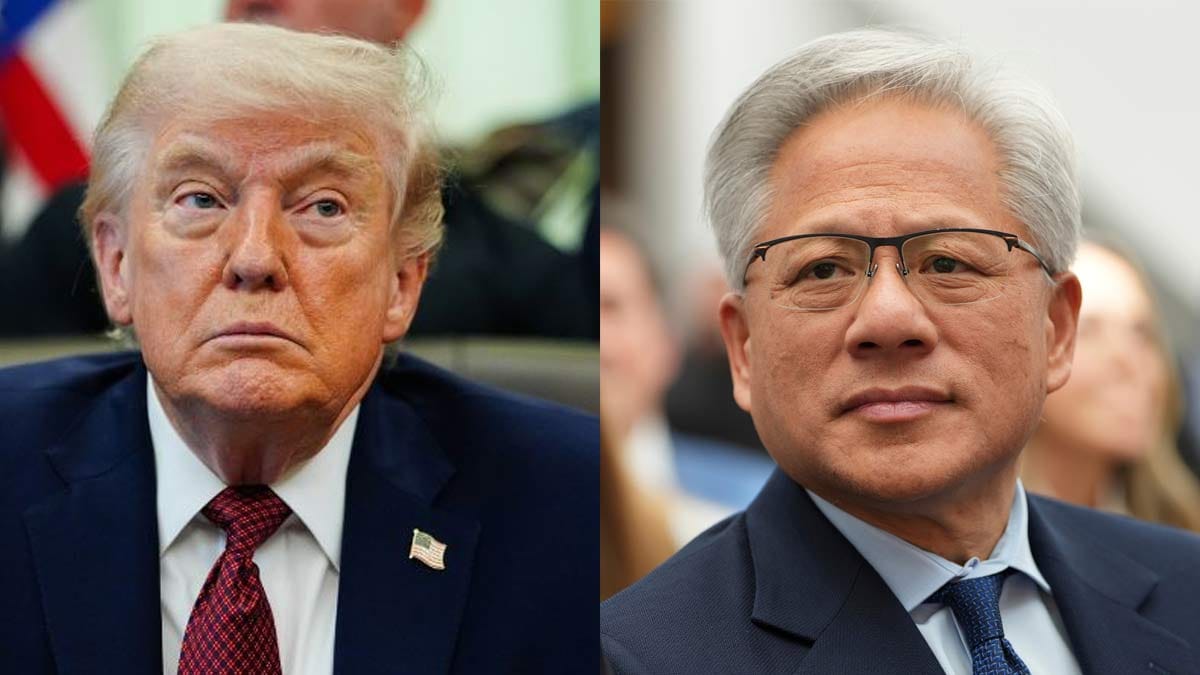
Until Donald Trump stepped up to a microphone and called him an "honourable guy."
Three words. Casual, off-the-cuff, delivered with the familiar cadence of a man who treats geopolitical crises like high-stakes real estate negotiations. Yet those three words sent a shockwave through Washington, Beijing, and Wall Street, freezing a narrative that threatened to tear the global tech industry in half.
To understand why a presidential endorsement of a chipmaker’s character matters more than almost any piece of legislation passed this decade, you have to step away from the cable news chyrons. You have to look at the human anatomy of espionage, the terrifying fragility of modern supply chains, and the impossible position of a Taiwan-born American billionaire caught between his heritage and his homeland.
The Anatomy of a Modern Trap
Forget trench coats, dead drops in rainy parks, and microfilm hidden inside hollowed-out coins. If you want to understand how state-sponsored intelligence services operate in Silicon Valley today, picture a quiet wine bar in Palo Alto or a boutique hotel lobby in Taipei during a major tech conference.
Let us create a hypothetical character to ground this reality—call him David. David is thirty-four, brilliant, exhausted, and holds a security-adjacent engineering role at a major chip designer. He spends sixty hours a week staring at logic gates and thermal dissipation models, living in a cramped two-bedroom apartment in Sunnyvale that eats half his paycheck. He rarely gets thanked. Nobody outside his immediate team knows what he does, even though the code he writes powers the data centers running half the Western world.
Now, picture someone sitting down next to him at a conference afterparty. She is sharp, charming, fluent in the obscure jargon of semiconductor packaging, and genuinely fascinated by his work. Over weeks and months, a relationship forms. Maybe it is romantic. Maybe it is an ego-stroking professional mentorship that turns into an all-expenses-paid speaking gig in Macau or Shanghai. By the time David realizes the questions have shifted from flattering curiosity to specific inquiries about interconnect speeds and firmware vulnerabilities, the hook is already set. There are photographs, bank transfers, or simply the crushing dread of ruined career prospects if he comes clean to corporate security.
This is the reality behind the phrase "honeytrap." Intelligence agencies—particularly China’s Ministry of State Security—have spent decades perfecting the art of exploiting human loneliness, ambition, and financial pressure. When the United States slammed the door shut on exporting advanced AI chips to China, Beijing did not simply give up on artificial intelligence. It turned its intelligence apparatus toward the human beings who build those chips.
When whispers of a Chinese honeytrap operation touching Nvidia’s ecosystem surfaced, the reaction in Washington was immediate and visceral. Hawks on Capitol Hill, already suspicious of any American tech company that still maintained business ties in China, saw blood in the water. To them, Nvidia was no longer just an American success story; it was a potential sieve through which America’s greatest technological advantage was leaking straight to the People’s Liberation Army.
If the federal government decided that Nvidia’s leadership was compromised, careless, or overly sympathetic to Beijing, the consequences would not be a slap on the wrist. It would mean subpoenas, frozen contracts, crippling regulatory oversight, and a forced decoupling that could wipe hundreds of billions of dollars off the retirement accounts of everyday Americans.
The Man in the Middle
To grasp the weight pressing down on Jensen Huang during those weeks, you have to understand where he came from. Born in Tainan, Taiwan, in 1963, Huang spent his early childhood in Taiwan and Thailand before his parents sent him and his brother to the United States to escape political instability. He ended up at a rural boarding school in Kentucky—a place where he had to scrub toilets every day and defend himself against bullies before eventually making his way to Oregon, earning engineering degrees, and co-founding Nvidia in a Denny’s booth in 1993.
He is, by every metric, the quintessential American immigrant success story. Yet, in the hyper-polarized atmosphere of 2026, his background is precisely what makes him a target of suspicion for hardliners who view the world in stark binaries.
Think of the global semiconductor supply chain not as a neat assembly line, but as an impossibly complex, fragile ecosystem—like a coral reef that took forty years to grow. Nvidia designs the chips in California. Dutch engineers at ASML build the lithography machines that print them using extreme ultraviolet light. Japanese firms supply the specialized chemicals and silicon wafers. And Taiwan Semiconductor Manufacturing Company—TSMC—actually fabricates the chips on an island sitting ninety miles off the coast of mainland China.
If you take a hammer to any single piece of that reef, the whole structure dies.
Huang knows this better than anyone alive. For years, he has performed an exhausting diplomatic high-wire act. He has complied strictly with U.S. export controls, designing watered-down chips specifically for the Chinese market to follow the letter of American law, only to watch Washington tighten the rules again and again. Meanwhile, he has repeatedly warned American policymakers that cutting China off completely will not stop Beijing from developing AI; it will simply force Chinese engineers to build their own domestic alternatives, eroding American technological dominance from the outside in.
In Washington, nuance is often mistaken for treason. When the honeytrap scandal broke into the headlines, critics did not ask whether Nvidia’s security protocols had successfully caught an intrusion, or whether a sprawling company of thirty thousand employees could realistically police the private romantic lives of every engineer on its payroll. They asked whether Jensen Huang could be trusted.
Three Words That Changed the Temperature
I remember watching the footage when Donald Trump was asked about the controversy. In politics, when a major corporate figure is brushed by an espionage scandal, the standard playbook is distance. Politicians suddenly forget the CEO’s name. They promise "full investigations" and "unwavering vigilance" while quietly letting the executive twist in the wind until the news cycle moves on.
Trump did the exact opposite.
He looked at the reporters, dismissed the notion that Huang was compromised or disloyal, and called him an "honourable guy."
Why? Was it purely personal chemistry? Trump has long admired founders who build massive, tangible empires, and Huang’s transformation of a niche graphics card maker into the most indispensable company on Earth fits Trump’s worldview like a tailored suit.
But look closer, and you see a cold, pragmatic calculation underneath the casual compliment.
Trump understands leverage. If you are sitting in the Oval Office trying to negotiate trade deals, tariffs, and technological supremacy with Beijing, Jensen Huang is not a liability—he is your single sharpest weapon. Every major AI lab on the planet runs on Nvidia’s CUDA software platform and Blackwell-generation hardware. As long as the world builds its artificial intelligence infrastructure on American designs, the United States holds the master key to the twenty-first century.
Destroying Nvidia’s reputation or crippling its leadership over an intelligence agency’s attempt to infiltrate its ranks would be like burning down your own ammunition factory because you caught a spy near the fence.
By publicly vouching for Huang’s integrity, Trump instantly neutralized the political feeding frenzy. He signaled to the national security establishment, to Wall Street, and to Beijing that the White House viewed Nvidia as an American champion, not a suspect. The investigation into the espionage attempt would continue quietly in the shadows, where counterintelligence belongs, rather than turning into a public execution of America’s most valuable tech company.
What the Headlines Miss
Still, if you think this story ends with a presidential pat on the back and a rebound in Nvidia’s stock price, you are missing the deeper, far more unsettling truth.
The real story here is not about whether Jensen Huang is an honorable man. By all accounts—from his fierce loyalty to his early employees to his relentless work ethic—he is. The real story is about how vulnerable our modern world has become to human frailty.
We spend billions of dollars building air-gapped servers, quantum-resistant encryption, and fortress-like data centers. We pour concrete ten feet thick and scan retinas at laboratory doors. Yet at the center of all that incomprehensible technology sits a human being. A human being who gets lonely, who worries about paying off student loans, who craves validation, or who falls in love with the wrong person at a hotel bar in Singapore.
State-sponsored espionage does not need to crack 256-bit encryption when it can simply buy a drink for an underappreciated engineer.
Consider what happens next in this quiet war. As artificial intelligence becomes deeply embedded in military logistics, autonomous drones, cyber warfare, and economic forecasting, the pressure on the people who build these systems will only intensify. Every engineer at Nvidia, OpenAI, Anthropic, Google, and TSMC is now, whether they asked for it or not, a front-line soldier in a geopolitical conflict they never enlisted to fight.
I think back to those cleanrooms I have walked through over the years. Behind the thick glass, everything looks pristine, controlled, and absolute. Every variable is measured down to the nanometer. Temperature, humidity, vibration—all of it mastered by human ingenuity.
Yet outside those doors, out in the messy, unpredictable world of politics, desire, and ambition, there are no HEPA filters. There is no way to scrub human nature clean.
Jensen Huang walked away from the scandal with his reputation intact, shielded by the most powerful voice in Washington and the undeniable reality that the modern world cannot function without the chips his company designs. He will put on his leather jacket tomorrow, step onto another stage under blinding lights, and talk about the next leap in artificial intelligence.
And somewhere in a quiet hotel lobby half a world away, another stranger will pull up a chair next to another tired engineer, smile, and ask what he is working on.