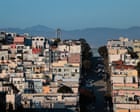
The fog rolls across the asphalt of Mission Street not as a weather pattern, but as an eviction notice. It creeps over the sidewalks, blurring the edges of Victorian bay windows and swallowing the neon signs of corner bodegas that have stood for decades. In San Francisco, the air itself tastes like salt and saltier economics.
Consider Elena. She is a fictional composite drawn from hundreds of real kitchen-table spreadsheets across the city, yet her panic is entirely authentic. Elena works seventy hours a week between a tech incubator’s front desk and an evening shift at a neighborhood bakery. She is college-educated, speaks two languages, and lives in perpetual terror of a piece of paper slipped beneath her door. Her rent went up by four hundred dollars last Tuesday. There is no negotiation. There is only the math: a monthly deficit that grows faster than her tips. If you liked this piece, you might want to look at: this related article.
When a city reaches the point where its bakers, its teachers, and its nurses must calculate whether to buy groceries or pay the landlord, the municipal machinery breaks down.
That machinery sputtered into official recognition when San Francisco Mayor London Breed formally declared a rent emergency. On paper, it is a policy maneuver—a bureaucratic activation designed to bypass red tape, unlock emergency powers, and shield tenants from predatory displacement while a hyper-inflated market eats its own tail. In human terms, it is a flare fired into a darkening sky. It acknowledges what everyone walking these steep hills already knows: the cost of living here has crossed the boundary from expensive into predatory. For another perspective on this story, refer to the latest update from USA Today.
To understand why this emergency declaration matters, we have to look past the bureaucratic jargon of municipal code and examine the physics of urban survival.
San Francisco is a geographical cage. Surrounded by water on three sides and hemmed in by stringent zoning laws, historical preservation mandates, and geographical barriers on the fourth, the city has long operated under a severe scarcity model. When you restrict supply while demand scales upward on the back of regional wealth accumulation, housing ceases to be shelter. It becomes a speculative asset class. It becomes a high-stakes casino where the chips are measured in square footage.
For years, the municipal strategy relied on incremental adjustments. Officials tinkered with inclusionary zoning percentages, offered modest incentives for affordable housing developments, and watched helplessly as neighborhood activists and developers locked horns in endless planning commission meetings. Every proposed apartment block became a battleground over shadow studies and architectural character.
Meanwhile, the people who actually sweep the streets, pour the espresso, and care for the elderly packed their lives into U-Haul trucks and drove across the Bay Bridge toward Antioch, Vallejo, and Tracy. They traded a two-hour daily commute for a fighting chance at a stable lease.
The rent emergency declaration is an attempt to smash through that gridlock. By cutting through the procedural morass, the city can expedite tenant protection measures, freeze certain types of predatory hikes, and funnel emergency legal aid to families staring down the barrel of an eviction notice. It is a tourniquet on a bleeding limb.
Yet a tourniquet is not a cure.
Walk down Valencia Street on a Tuesday afternoon and watch the juxtaposition. Venture capital firms occupying sleek, glass-walled offices discuss seed rounds over artisanal pour-overs, while three blocks away, a family of four sorts through donated clothes on the steps of a transit station. This dual reality defines the modern urban experience. It is a city of staggering innovation built upon a foundation of staggering exclusion.
When housing becomes an unattainable luxury for the working class, the cultural DNA of the place begins to mutate. San Francisco earned its global reputation not because of venture-backed software companies, but because it was a sanctuary for the eccentric, the bohemian, the radical, and the working-class dreamer. It was a place where a starving artist could rent a cold-water flat in the Mission or the Tenderloin and spend their days painting murals or writing poetry.
That version of the city is currently gasping for air.
When the baker cannot afford to live within forty miles of the oven, the bakery eventually closes. When the transit driver spends four hours a day sitting on a congested freeway just to reach the bus yard by dawn, the transit system strains and fractures. Economics eventually demands a reckoning. You cannot price out the foundational labor of a city without eventually watching the city itself grind to a halt.
The emergency declaration is a recognition of this vulnerability. It signals that the status quo is no longer tenable, even for the political establishment. But wielding emergency powers requires immense political will. It means standing up to neighborhood NIMBYism, confronting entrenched real estate interests, and pushing through high-density construction whether the neighbors like the view or not. It means accepting that preserving the "character" of a neighborhood is a hollow exercise if the people who animate that character have already been priced out of existence.
Back on Mission Street, the fog has burned off, replaced by the sharp, unforgiving glare of the afternoon sun. Elena is wiping down the counter at the bakery, listening to the espresso machine hiss. Her phone buzzes in her apron pocket. It is another notification from her landlord’s portal, detailing a fee she doesn't understand and cannot afford. She turns the screen off, slides the phone back into her pocket, and picks up a cloth. She has tables to clear and a city to survive in, one impossible month at a time.


