The metal gate didn’t screech; it sighed. It was a heavy, rhythmic sound that Mr. Lam had heard every evening for thirty-two years, a mechanical punctuation mark at the end of a long shift. But today, the sound was different. It felt like an ending.
He stood in the center of a living room that was no longer a room, just a collection of pale rectangles on the walls where family photos used to hang. The air smelled of dust and the faint, citrusy ghost of the floor cleaner his wife favored. Outside the window, the Hong Kong skyline continued its frantic, neon pulse, indifferent to the fact that within the concrete ribs of Wang Fuk Court, a community was being hollowed out.
This is the quiet reality of urban redevelopment. We talk about it in terms of "housing stock," "structural integrity," and "zoning efficiency." We look at blueprints and see progress. But if you stand in a stripped-bare apartment on the fourteenth floor, you realize that progress is often built on the bones of a thousand small, invisible histories.
The Weight of a Key
Earlier that morning, a woman named Mrs. Chen stood by the elevators. She wasn't moving. She was just watching the numbers flicker—12, 11, 10—as if she could slow down time by sheer force of will. She held her keys so tightly they left silver indentations in her palm.
For the residents of Wang Fuk Court, the return home wasn't a celebration. It was a wake. They had been told to leave because the building was tired. The concrete was spalling, the pipes were weeping, and the city’s hunger for modern high-rises had finally reached their doorstep.
Logic dictates that moving to a newer, safer facility is a net positive. The elevators won't break down twice a week. The air conditioning will be more efficient. The walls won't sweat when the humidity hits 90%. Yet, as Mrs. Chen looked at the height mark carved into the doorframe—a series of jagged lines tracing her son’s growth from a toddler to a man—logic felt like a very thin blanket.
Human beings do not live in "units." We live in the friction between our lives and our surroundings. We live in the specific way the morning light hits the kitchen table and the muffled sound of a neighbor’s television through the wall. When you move a thousand people, you aren't just relocating bodies; you are shattering a delicate, organic web of social insurance that took decades to weave.
The Social Economy of the Corridor
In Wang Fuk Court, the corridors were more than transit routes. They were marketplaces of gossip, shared recipes, and emergency childcare. If you ran out of soy sauce, you didn't go to the store; you knocked on 4B. If an elderly resident didn't pick up their newspaper by 10:00 AM, someone noticed.
Consider the hypothetical—but statistically certain—case of an eighty-year-old widower moving to a shiny new estate three districts away. In his old building, he was "Uncle Ho." The security guard knew he liked his tea strong. The woman in the flat below knew he struggled with the heavy trash bags and would leave them by the lift for her to take.
In the new building, he is a stranger in a sterile hallway. The security guard is a revolving door of outsourced staff. The walls are thicker, the doors are heavier, and the silence is absolute. This is the "hidden cost" of redevelopment. It is a poverty of connection that no amount of modern plumbing can fix.
The residents returning to bid farewell weren't just mourning their floor plans. They were mourning the loss of their status as people who were known.
The Myth of the Blank Slate
Urban planners often treat old neighborhoods like a whiteboard that needs erasing. They see "aging infrastructure" as a problem to be solved with a wrecking ball. But there is a fundamental misunderstanding of what makes a city livable.
A city isn't a collection of buildings; it’s a collection of memories.
When Wang Fuk Court was built, it represented a promise. It was the dream of the middle class, a vertical village where the working families of Hong Kong could finally plant roots. To tear it down is to admit that the dream has a shelf life. It tells the residents that their history is disposable, that the value of the land beneath them has finally outpaced the value of the lives lived upon it.
One resident, a retired teacher, walked through the empty courtyard. He pointed to a concrete planter where the paint was peeling in long, sun-bleached strips. "I taught three generations of kids how to ride bikes right there," he said. His voice wasn't angry. It was just hollow.
He, like many others, found the process of "farewell" complicated because there was no one to blame. The building was old. It did need work. But the clinical efficiency of the relocation felt like a betrayal. It was the difference between a planned surgery and a sudden amputation.
The Ghost in the Machine
We often trick ourselves into thinking that "digital" is the only thing that matters in the modern world. We focus on connectivity, speed, and data. But we are biological creatures who require physical anchors.
The physical environment acts as an external hard drive for our memories. You see a stain on the carpet and remember the night you dropped the birthday cake. You look at the chipped tile in the bathroom and remember the Saturday morning you spent trying to fix a leak with your father.
When those physical anchors are demolished, the memories lose their sharpness. They become untethered, floating in the mind until they eventually drift away.
As the sun began to set over Wang Fuk Court, the remaining residents moved like shadows. They took photos of empty rooms. They touched the walls one last time. Some left small tokens behind—a coin hidden under a loose floorboard, a name scrawled on the inside of a closet—as if to say, we were here. We mattered.
The Unseen Fracture
The tragedy of Wang Fuk Court isn't that it is being demolished. Buildings have lifespans; we understand this. The tragedy is the assumption that the "human element" is something that can be easily recreated in a new location.
Social capital is not a modular furniture set. You cannot pack it into a box, load it onto a truck, and expect it to fit perfectly in a different room. It is a slow-growing lichen that requires specific conditions to thrive.
When we talk about the "housing crisis" or "urban renewal," we must stop using the language of spreadsheets. We need to start using the language of psychology. We need to ask what happens to the mental health of a grandmother who loses her entire support network in a single afternoon. We need to calculate the loss of safety when a neighborhood's eyes—the people who watch the street from their balconies—are removed.
Mr. Lam finally walked out of his apartment. He didn't look back. He couldn't. He walked toward the elevator, his footsteps echoing in a hallway that had once been filled with the smells of a hundred different dinners and the chaotic music of a hundred different lives.
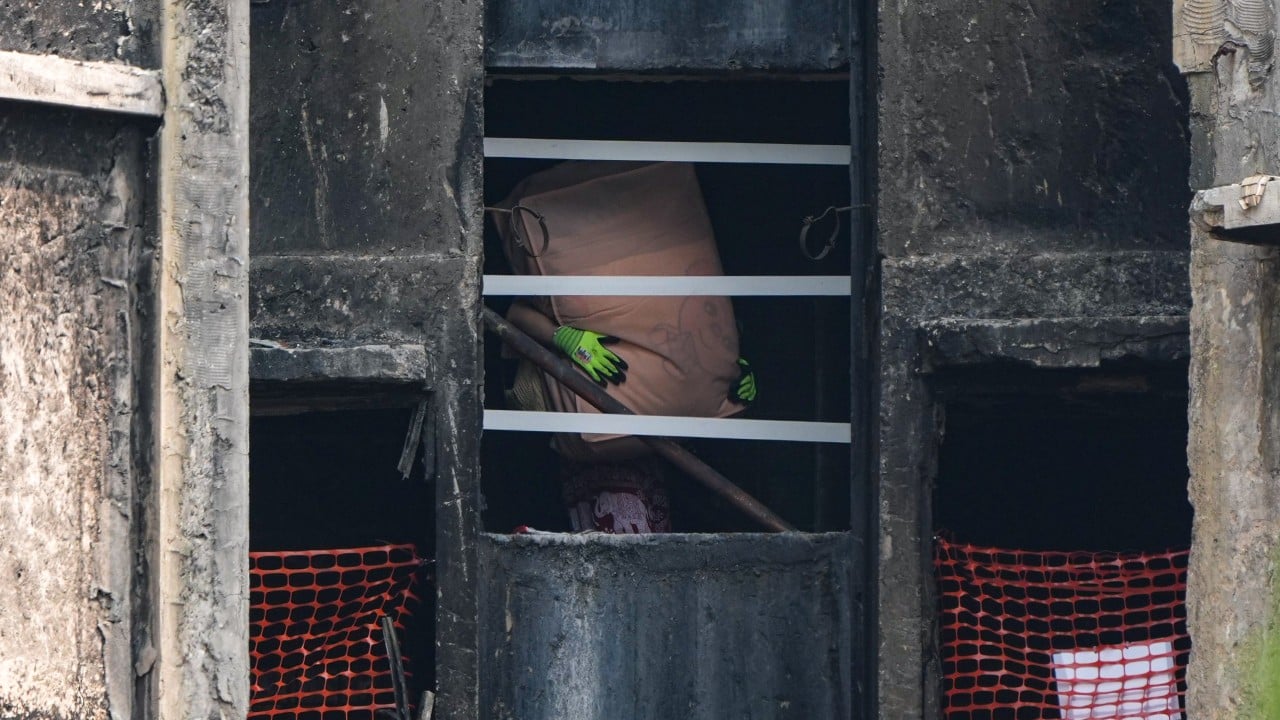
He reached the ground floor and stepped out into the humid evening air. The construction fences were already up, bright orange and uncompromising. They were the color of the future—plastic, temporary, and loud.
Behind him, the dark windows of the court looked like empty eye sockets. The building was still there, but the soul had already been hauled away in the back of a moving van.
It is a strange thing to be a ghost in your own home. It is stranger still to realize that the city you helped build no longer has a place for your past, only for the profit your absence will generate.
The metal gate closed behind the last resident.
Snap.