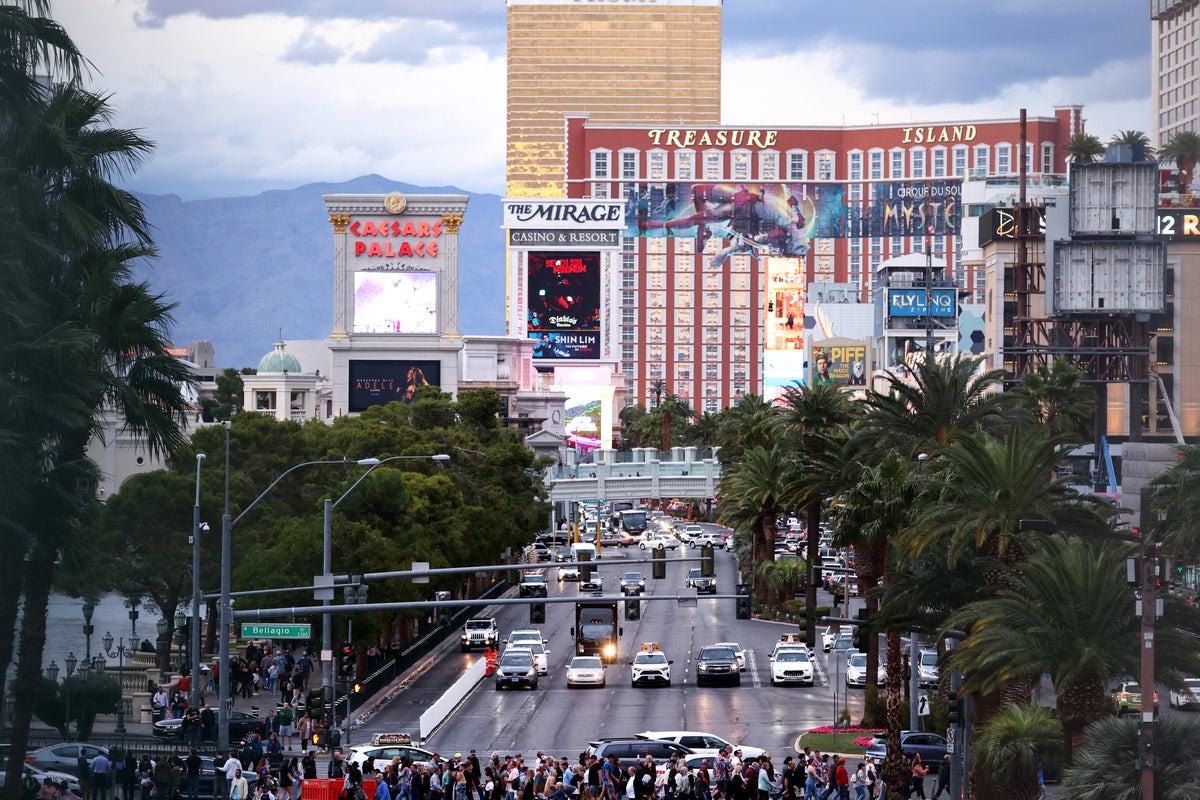
Walking across a busy downtown street in Sin City can feel like playing a high-stakes video game. Millions of visitors crowd the neon corridors every year, weaving between casino exits, street performers, and impatient drivers. Traditional overhead streetlights often fail to cut through the visual noise of flashing commercial signs, leaving pedestrians vulnerable in crosswalks. To fix this, city officials deployed an artificial intelligence system at a notoriously hectic intersection to track foot traffic and actively illuminate people as they cross.
How Smart Lighting Tracks Pedestrians
The pilot program sits right at the corner of First Street and Ogden Avenue, just a short walk from the massive crowds of the Fremont Street Experience. Instead of relying on a standard overhead bulb that casts a dull, static glow over the entire asphalt, this setup uses advanced video analytics. Developed by Intelligent Security Systems and known as SecurOS Soffit, the technology watches the sidewalk using specialized sensors.
When a person steps off the curb, the software instantly recognizes their movement. A dynamic array of high-powered LED lights locks onto the pedestrian and shines directly down, tracking them step-by-step across the lanes.
Drivers cannot miss them. The spotlight makes pedestrians stand out against the dark pavement and the bright background glare of casino marquees. When the crosswalk is empty, the system drops down into a standby mode, maintaining baseline illumination so motorists still recognize the crossing zone ahead.
Moving Beyond Standard Urban Safety Fixes
Cities have tried painting crosswalks, adding bright yellow warning signs, and installing standard flashing beacons for decades. These traditional methods rely entirely on drivers paying constant attention. In a tourist hub packed with distractions, those old measures frequently fall short.
Las Vegas integrated this project under its broader Vision Zero framework, an international data-driven strategy aimed at eliminating traffic deaths. Federal funding via a 1.4 million dollar grant from the Bipartisan Infrastructure Law supports broader tech upgrades across the corridor, allowing the city to experiment with adaptive technology that responds dynamically to human behavior rather than working on a rigid timer.
Similar smart lighting technology has already undergone testing in smaller municipalities like Dublin, Ohio, and Kodiak, Alaska. However, testing a system near the massive tourist volume of downtown Las Vegas provides a severe stress test for how hardware handles constant, heavy foot traffic.
What Happens Next for City Infrastructure
Municipal tech projects live or die based on how well they perform during a trial period. Officials have not yet announced a hard deadline for the conclusion of this proof of concept, nor have they released public timelines for scaling the lights to other dangerous corridors.
If the tracking lights successfully reduce near-misses and pedestrian accidents at First Street and Ogden Avenue, expect to see more intersections adopt automated illumination. Local leaders want to keep tourism thriving without sacrificing public safety, and handing visibility control over to an algorithm might just become the new standard for busy urban planning.