Cultural battlelines and tech supremacy are moving faster than standard policy can track. Over a single weekend, a series of seemingly disconnected events across Asia exposed a deeper truth: the friction between local identity and aggressive state engineering is reaching a boiling point. Whether it’s a beauty pageant contestant fumbling local slang or a nation culling over ten thousand university programs to fuel an artificial intelligence blitz, the region is rapidly ditching legacy systems.
If you think these are just isolated headlines, you're missing the bigger picture. Here is exactly what happened and why it matters for global economic dominance and regional identity.
The Cultural Battle for Cantonese in a Shifting Hong Kong
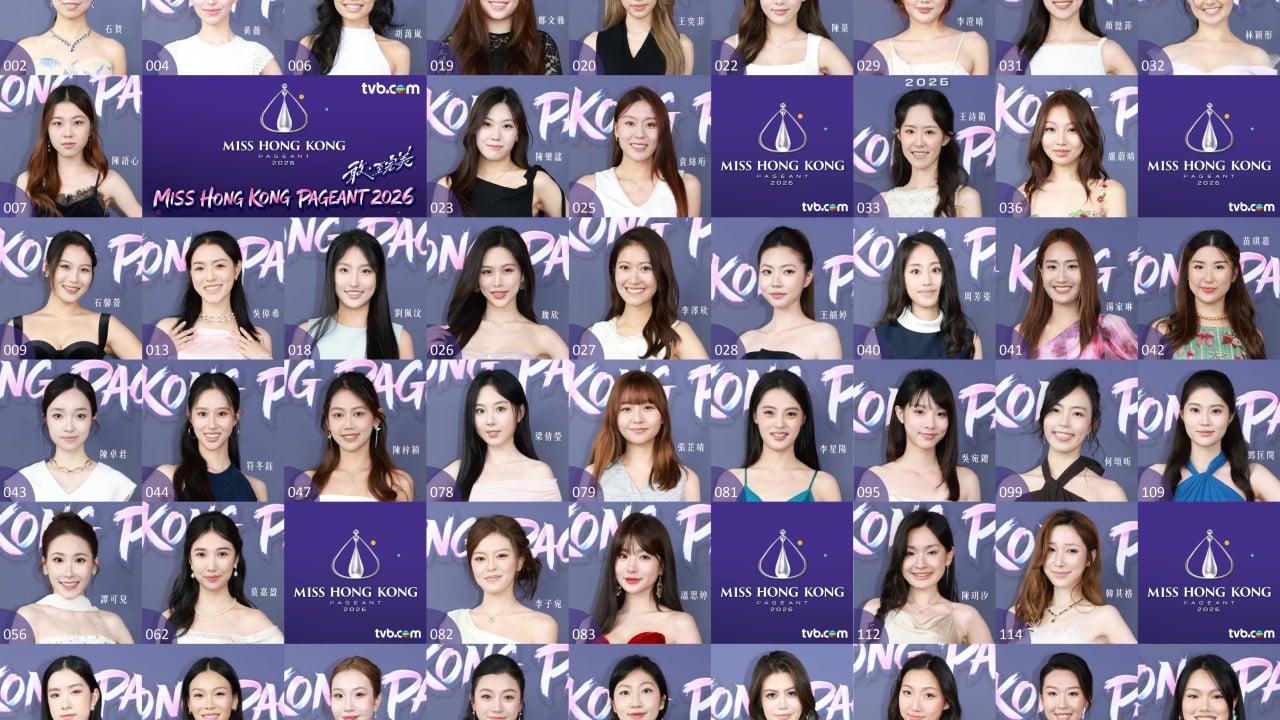
Can a simple condiment trigger a geopolitical debate? Absolutely. During the recent second-round auditions for the Miss Hong Kong pageant, a contestant surnamed Wen admitted to the judging panel that she was struggling to master Cantonese. The real flashpoint came when she stumbled over how to say "tomato sauce" in the local dialect.
It sounds trivial, but it instantly ignited an intense online firestorm. For decades, the Miss Hong Kong pageant wasn't just entertainment; it was the ultimate showcase of local culture, sophisticated Cantonese wit, and distinct identity. Seeing a contestant unable to navigate foundational vocabulary hit a raw nerve.
This isn't just snobbery. It reflects a deep-seated anxiety about the survival of Cantonese. With the integration of the Greater Bay Area and a massive influx of mainland talent, Mandarin is increasingly dominant in corporate and public spheres. For locals, the language barrier in a legacy institution like Miss Hong Kong feels like a microcosm of a larger cultural erasure. It proves that despite political integration, language remains a fiercely guarded line of defense for regional identity.
China Ditches Twelve Thousand Degrees to Feed the AI Beast
While Hong Kong fights over its linguistic soul, Beijing is aggressively reshaping its intellectual capital. China’s Ministry of Education has executed a massive academic purge, revoking or suspending roughly 12,200 undergraduate degree programs between 2021 and 2025. This historic culling has wiped out more than 30 percent of the country’s university offerings.
The casualties? Arts, humanities, foreign languages, and traditional management programs. These fields are now officially classified as "obsolete" or oversaturated by state planners.
In their place, universities introduced 10,200 new, tech-focused programs engineered to win the global automation race. For instance, nine major universities have established specialized majors in embodied intelligence—the field of fusing AI brains with physical robotic bodies.
This dramatic shift tells us two things:
- Zero tolerance for economic fluff: Beijing views the humanities as a luxury it won't subsidize during a critical technological standoff.
- Aggressive state alignment: The education system has been completely weaponized to supply immediate, specialized labor for the semiconductor, AI, and robotics sectors.
If you are a student or professional relying solely on traditional administrative or soft-skill credentials in the region, the door is rapidly closing.
Singlish Claims Victory Over Colonial Language Standards
Meanwhile, further south, Singapore is experiencing its own linguistic revolution, but in the exact opposite direction of Hong Kong. For years, the Singaporean government pushed hard to suppress "Singlish"—the vibrant, English-based creole that blends Malay, Hokkien, Tamil, and English. The official stance was that Singlish would ruin the country's global competitiveness.
A new study has turned that logic completely on its head, showing a massive surge in acceptance. Singlish is no longer viewed as broken English; it’s now embraced as the defining marker of Singaporean identity.
Even global platforms and local corporations now use terms like "can lah" to connect with the public. While Hong Kong fears the loss of its native tongue to an external dominant force, Singaporeans have successfully reclaimed their creole, turning a historical administrative headache into a badge of cultural pride and national unity.
Chinese Space Scientists Spot Flaws in NASA Moon Plan
The competition between East and West isn't just playing out in classrooms and beauty pageants; it’s escalating on the lunar surface. A Chinese research team openly flagged what they call a "life-threatening weakness" in NASA’s Artemis lunar exploration program.
According to peer-reviewed analysis from Chinese aerospace engineers, NASA's current lunar lander architecture relies far too heavily on a single main power source for its descent. By contrast, China’s own lunar lander design incorporates three independent backup engines to ensure redundancy in case of a catastrophic system failure.
American defense circles often dismiss foreign critique as mere propaganda, but this public call-out signals a massive spike in Chinese aerospace confidence. Beijing isn't just trying to keep up with NASA anymore; its scientists are publicly auditing American engineering flaws, positioning China as the safer, more precise alternative for the next era of space exploration.
Medical Ethics and Legal Chaos at the Frontlines
Closer to the ground, Hong Kong’s healthcare system faced its own internal shock. An intern doctor, surnamed Lai, was recently released on bail and allowed to return to work at a public hospital amid an ongoing police investigation. While the details of the probe remain tightly managed, the decision to allow a suspect under active police investigation back into active clinical duty has sparked fierce internal debates over patient safety and medical ethics.
Public hospital systems across the globe are facing extreme staffing crises, and Hong Kong is no exception. But when the pressure to keep hospital wards staffed overrides standard administrative suspensions during criminal investigations, it shows how incredibly fragile the city's public health infrastructure has become.
Navigating the New Regional Landscape
The old rules of language, education, and regional influence no longer apply. If you want to remain competitive or understand where global capital and culture are moving, you need to adapt immediately.
First, ignore the corporate noise about generalized tech training and look at where state funding is actually going. If you are positioning a business or a career in Asia, focus heavily on hard technical niches like embodied intelligence and automated systems engineering. Traditional credentials in management and humanities are losing their state-backed market value.
Second, recognize that hyper-local identity is becoming a powerful marketing and political tool. In Singapore, utilizing authentic local vernacular is now essential for real market penetration. Conversely, in Hong Kong, businesses must tread carefully between mainland linguistic integration and the fierce local protection of Cantonese culture.
The divide between state engineering and local identity is widening. Success belongs to those who can read these subtle cultural shifts while aligning with the realities of the silicon race.