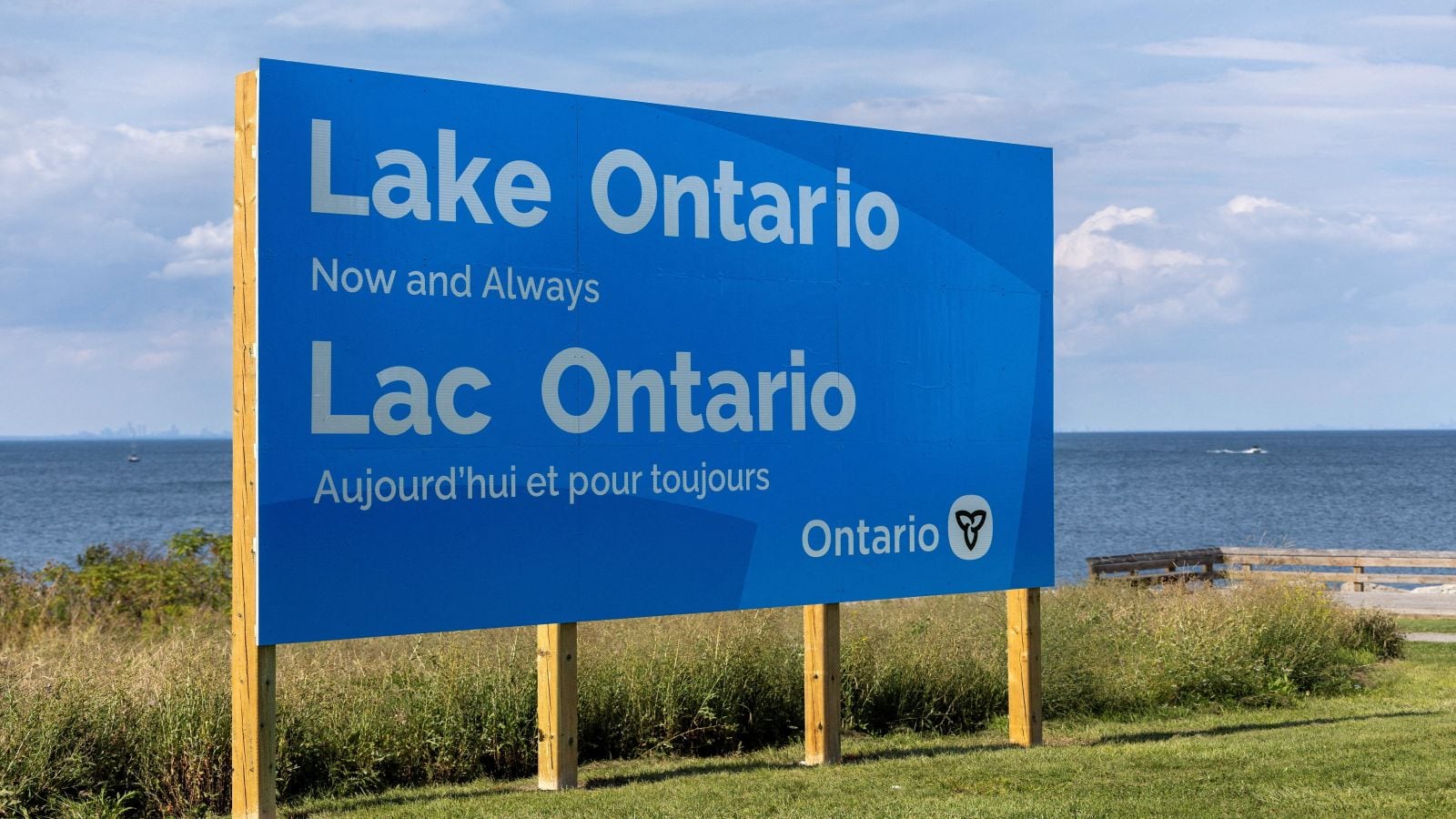
Geopolitics meets hydrography and everyone loses their minds over a headline. The internet spent the week clutching its collective pearls over a satirical stunt mocking a theoretical executive order to rename Lake Ontario to Lake America. Canadian politicians posed with maps. Social media accounts fired off witty nationalist rebukes. Editorial boards declared it a vital defense of sovereignty against southern overreach.
It is all exhausting, performative noise built on a fundamental misunderstanding of what a body of water actually is.
Borders do not exist underwater. Fish do not pause at the 45th parallel to check their passports. Phosphorus runoff, invasive zebra mussels, and climate-driven thermal stratification do not respect flags, treaties, or sovereign proclamations. While Ottawa and Washington posture over nomenclature and imaginary lines, the ecosystem bridging two countries is quietly collapsing under the weight of municipal waste and agricultural discharge.
We need to stop treating geography as a proxy for patriotism.
The Cartographic Delusion
Maps are political fictions we agree to treat as facts. When a government drafts a decree—real or satirical—about renaming a shared natural resource, it triggers a reflex wired into modern media consumption: pick a side, wave a flag, farm the engagement.
I have spent years dealing with cross-border resource management and environmental compliance in the Great Lakes basin. I have watched millions of dollars burn in bureaucratic turf wars while actual scientists tried to figure out why toxic algal blooms were expanding faster than models predicted. Nobody on a research vessel cares what a lake is called on a Washington press release. They care about parts per billion of microplastics and dissolved oxygen levels.
The lazy consensus in modern media coverage treats international borders as ecological barriers. They are not. Lake Ontario is a single, interconnected dynamic system containing roughly 1,640 cubic kilometers of water. It is the lowest and most vulnerable link in the Great Lakes chain, catching the outflow of Erie, Huron, Michigan, and Superior before funneling it down the St. Lawrence River.
When you pollute the western basin near Toronto or discharge industrial effluent near Rochester, you are not offending a neighbor; you are poisoning a shared bathtub. Pretending that a name change or a clever political comeback protects that water is like shouting at a hurricane.
Why Nationalism Is Bad Science
Patriotism is an emotional shortcut. Ecology is an exact science. When a news cycle reduces environmental stewardship to a national identity contest, real problems get buried under performative outrage.
Consider the baseline data governing the basin. The Great Lakes Water Quality Agreement, signed by the United States and Canada, operates on binational cooperation because nature forces the issue. Yet, political rhetoric constantly retreats into tribalism.
- The Sovereignty Trap: Politicians love fighting over boundary waters because it costs nothing and plays well to domestic bases. It substitutes symbolic defense for actual infrastructure investment.
- The Regulatory Gap: While authorities argue over jurisdiction, non-point source pollution from agricultural runoff continues to bypass federal oversight entirely.
- The Public Distraction: Every hour spent debating the optics of a renaming stunt is an hour stolen from updating aging combined sewer overflow systems that dump raw sewage into the lake after heavy rains.
Imagine a scenario where both governments stopped treating the lake as a political football and instead handed watershed management entirely to an independent, science-led binational commission with veto power over municipal zoning. It will never happen because politicians prefer drama to solutions. Drama wins elections. Clean water just prevents birth defects and ecological collapse.
The Real Threat Lurks Beneath the Surface
The obsession with national titles ignores the structural rot destroying the basin. Look at the actual metrics that matter.
$$\text{Ecosystem Health} = \frac{\text{Nutrient Control} + \text{Invasive Species Management}}{\text{Political Interference} \times \text{Urban Runoff}}$$
When political interference rises, ecosystem health flatlines. We are currently watching climate change accelerate water temperature spikes that promote botulism outbreaks in fish populations. Cormorants strip islands bare of vegetation. Chemical plasticizers degrade into endocrine disruptors circulating from Niagara to Kingston.
None of these phenomena check whether the water is labeled Canadian or American.
The Canadian response to the renaming stunt felt good. It generated retweets. It stroked the national ego. But it was a distraction from the uncomfortable truth that Canada's own municipalities regularly fail to upgrade wastewater treatment facilities, relying on exemptions and sluggish provincial enforcement to keep costs down. Pointing across the border and shouting about sovereignty is a great way to avoid cleaning your own backyard.
Stop Falling for the Spectacle
The next time a viral political spat erupts over geography, look at what is happening in the background. Usually, it coincides with a budget cut to environmental monitoring agencies or a stalled infrastructure bill.
We do not need better flags. We need better drainage systems, stricter agricultural regulations, and politicians who understand that water doesn't read press releases. Stop cheering for the clever comebacks. Start demanding functional policy. The lake is watching, and it does not care who won the news cycle.