The milk glass was sweating on the oilcloth. It was 1982, and my mother was staring at a lined piece of notebook paper, her ballpoint pen hovering like a hawk. On the left side of the page was my father’s weekly paycheck. On the right was a list of demands that didn’t care about the number on the left. Meat was up. Heating oil was soaring. The mortgage was an unblinking predator.
She didn't have a degree from Oxford. She had never set foot in the London Stock Exchange. Yet, as she crossed out beef and replaced it with a cheaper cut, she was executing a complex macroeconomic adjustment.
We often treat the economy as a massive, ethereal beast. We talk about it in the abstract, using terms that sound like they were cooked up in a sterile laboratory. Gross Domestic Product. Inflationary pressures. Quantitative easing. We listen to talking heads in tailored suits who speak with the practiced gravity of high priests. They make us feel small. They make us believe that managing the wealth of a nation requires a specialized brain available only to a select few.
It is a grand illusion.
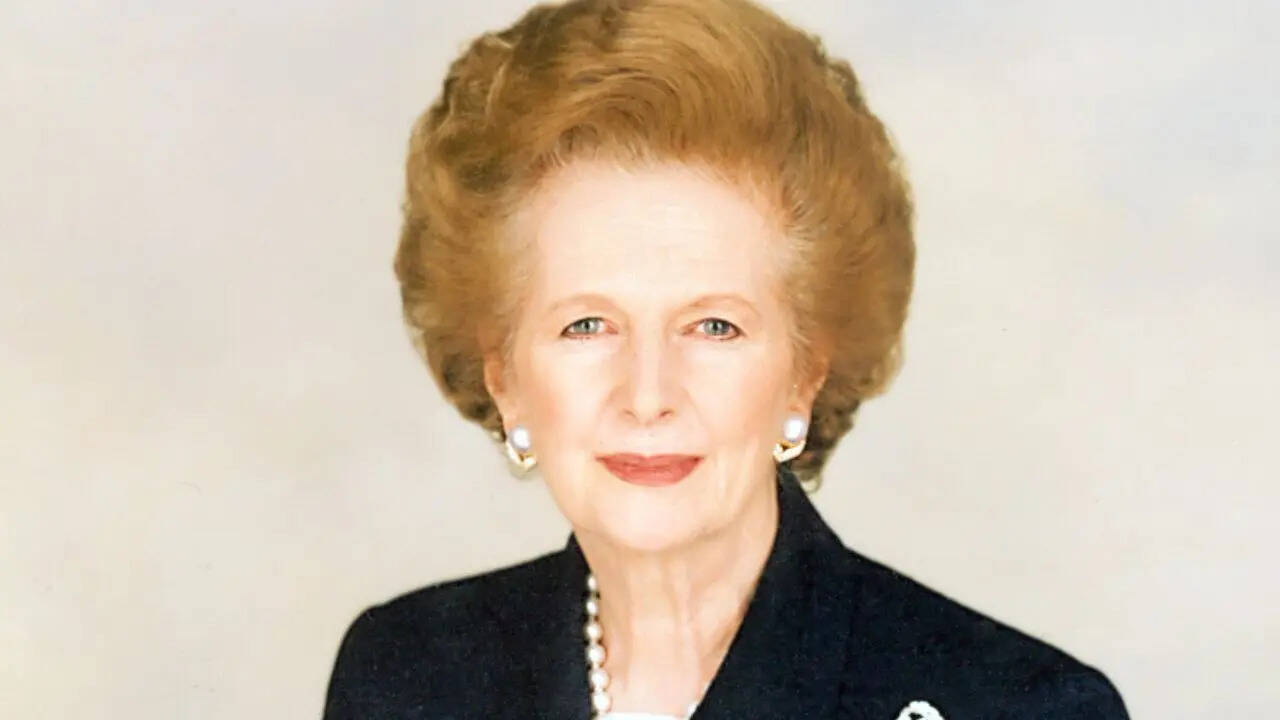
The truth is much closer to the ground. It smells of floor polish and burnt toast. In 1979, a woman named Margaret Thatcher walked into 10 Downing Street and brought a specific, domestic philosophy with her. She famously noted that any woman who understands the problems of running a home will be nearer to understanding the problems of running a country.
Critics mocked it as simplistic. They called it "grocer’s daughter economics." But they missed the profound, gritty reality at the heart of the observation. The mechanics of a superpower and the mechanics of a three-bedroom semi-detached house are driven by the exact same human truths.
The Fiction of the Endless Well
Every budget, whether it belongs to a young family or a sovereign nation, begins with a single, brutal realization. Resources are finite.
Think about your own bank account on a Tuesday night. You want the new shoes. You need the car fixed. The kids need dental work. You cannot simply wish money into existence to cover all three. You are forced to make a choice. If you choose the shoes, the car rattles, and the teeth ache. Every decision carries a consequence. Economists call this opportunity cost. Mothers call it common sense.
When a government forgets this rule, the results are catastrophic.
Consider what happens next when a nation decides that the rules of the kitchen table don't apply to the parliament floor. A state cannot simply print money to solve its woes without devaluing the currency already in the pockets of its citizens. If my mother had simply added an extra zero to her checks with a black marker, the grocery store owner would have laughed her out of the shop. Yet, for decades, modern economic theory has tried to convince us that governments can play this very game without paying the price.
They call it deficit spending. It sounds sophisticated. It sounds deliberate. In reality, it is the national equivalent of maxing out a credit card to pay off another credit card, all while pretending the monthly statement will never arrive in the mail.
The Invisible Micro-Choices
To truly grasp why the household is the ultimate training ground for governance, you have to look at the micro-choices that occur outside the spotlight.
Let's look at a hypothetical household. Let's call the matriarch Sarah. Sarah has seventy pounds to feed her family for the week. The price of butter has doubled. She does not call a committee meeting. She does not commission a feasibility study. She pivots. She buys margarine, or she cuts back on sugar, or she finds a way to stretch Monday’s roast chicken into Wednesday’s soup and Thursday’s casserole.
This is resource allocation under pressure. It requires a deep, instinctual understanding of human behavior, supply chains, and waste management.
Now, look at a government department tasked with a similar problem. When costs rise, the bureaucratic instinct is rarely to pivot or economize. The instinct is to demand a larger budget. Why? Because the money does not belong to them. It belongs to the taxpayer. There is no skin in the game. There is no moment where the bureaucrat must look their child in the eye and say, "We cannot afford this."
The housewife operates with high stakes. If she fails, the family goes hungry or the lights go out. The government operates with low immediate stakes for the decision-makers; if they fail, they simply adjust the tax code or borrow against the future of children who haven't even been born yet.
The Balance of Incentives
There is a psychological element to budgeting that the textbooks often ignore. It is the concept of incentive.
In a home, you quickly learn that you cannot reward bad behavior and expect good outcomes. If a teenager blows their entire allowance on comic books in the first two days of the month, and the parents immediately refill their wallet, what does the teenager learn? They learn that scarcity is a myth. They learn that reckless behavior carries no penalty.
The exact same psychology governs the corporate world. When large financial institutions engage in high-risk gambling because they know the state will bail them out if things go south, they are acting precisely like that spoiled teenager. The "Too Big to Fail" doctrine is nothing more than bad parenting on a macroeconomic scale. It destroys the natural feedback loops that keep a system healthy.
Margaret Thatcher’s insight wasn’t about reducing statecraft to baking recipes. It was about recognizing that human beings respond to incentives in predictable ways, whether they are sitting in a kitchen in Manchester or an office in Washington. When you remove the penalty for failure, you invite disaster.
The Vulnerability of the Ledger
It is easy to get cynical about this. I know I do. When you look at the national debt clocks ticking upward by the thousands of dollars every second, it feels abstract. It feels like a video game where the points don't matter.
But the subject is terrifying because those numbers represent real human labor. Every dollar or pound of government debt is a mortgage on the future work of real people. It is a claim on the sweat of tomorrow's factory workers, teachers, and nurses.
When we lose sight of the household perspective, we lose our connection to reality. We start to believe that the state is an independent entity with its own money. It isn't. The state is simply a mechanism that redistributes the money earned by people sitting at kitchen tables trying to make their own ends meet.
I remember the day my mother finally finished that budget back in 1982. She put the pen down, rubbed her eyes, and looked at the final tally. It balanced. Barely. There was no room for error, no cushion for luxury, but the bills would be paid and the pantry would have food. There was a quiet dignity in that moment. It was a small victory against chaos.
True economic wisdom doesn't live in complex mathematical models that fail to predict the next crash. It lives in the quiet determination of ordinary people who understand that you cannot spend what you do not have, that debt is a trap, and that choices matter.
The next time a politician tries to drown you in a sea of economic jargon, look past the big words. Ask the simple questions that a mother asks when looking at the family ledger. Where is the money coming from? What are we giving up to get it? Who is going to pay it back?
The answers are usually found in the bottom of a scratched metal pot, scraped clean to feed the people who matter most.