The current pause in overt hostilities between the United States and Iranian-backed proxies is not a return to a peaceful equilibrium; it is a calculated period of re-armament and intelligence gathering within a narrow "fight-talk" framework. In geopolitical game theory, this is defined as a non-cooperative game where both actors utilize calibrated violence to signal red lines without triggering a total systemic collapse. The expiration of a ceasefire—whether formal or informal—does not mean a binary shift from peace to war, but rather an adjustment in the "Price of Kinetic Friction." To understand the current dynamic, one must analyze the strategic calculus through the lens of asymmetric leverage, domestic political constraints, and the shifting geography of the regional escalation ladder.
The Triad of Leverage in Proximal Conflict
The relationship between Washington and Tehran operates on three distinct levels of engagement, each governed by a different set of risks and rewards.
1. The Proxy Utility Function
Tehran utilizes its "Axis of Resistance" to externalize risk. By employing non-state actors in Iraq, Syria, and Yemen, Iran forces the United States to expend high-cost interceptors (such as the SM-2 or Patriot missiles) against low-cost offensive assets (one-way attack drones and unguided rockets). This creates a fiscal and logistical deficit for the U.S. Central Command (CENTCOM). The strategic goal here is not the total destruction of U.S. assets, but the incremental increase of the political cost of the U.S. presence in the Middle East.
2. The Nuclear Threshold Constraint
The U.S. approach is limited by the "breakout clock." Any conventional strike that is perceived as an existential threat to the Iranian regime risks triggering a dash for a nuclear weapon. Consequently, U.S. kinetic responses are intentionally throttled to target infrastructure rather than leadership or sovereign territory, creating a "ceiling" on escalation that Iran exploits to push "floor" operations (low-level harassment).
3. Domestic Political Cycles
The expiration of any ceasefire is tethered to the electoral calendars in Washington. An administration facing an election year is naturally risk-averse regarding fuel prices and American casualties. Tehran understands that the "Will to Escalate" in the U.S. is currently at a cyclical low, providing Iran with a window to extract concessions—such as sanctions relief or frozen asset releases—in exchange for "managing" its proxies.
The Mechanics of Calibrated Escalation
When the "talk" phase of the "fight-talk" dynamic ends, the transition to "fight" is rarely immediate. Instead, it follows a predictable sequence of operational signaling.
The first stage is the Resumption of Harassment. This involves the use of indirect fire (mortars and rockets) against U.S. bases in Iraq and Syria. These attacks are designed to be statistically likely to miss or be intercepted, serving as a "check-in" to see if the U.S. response remains tethered to the previous rules of engagement.
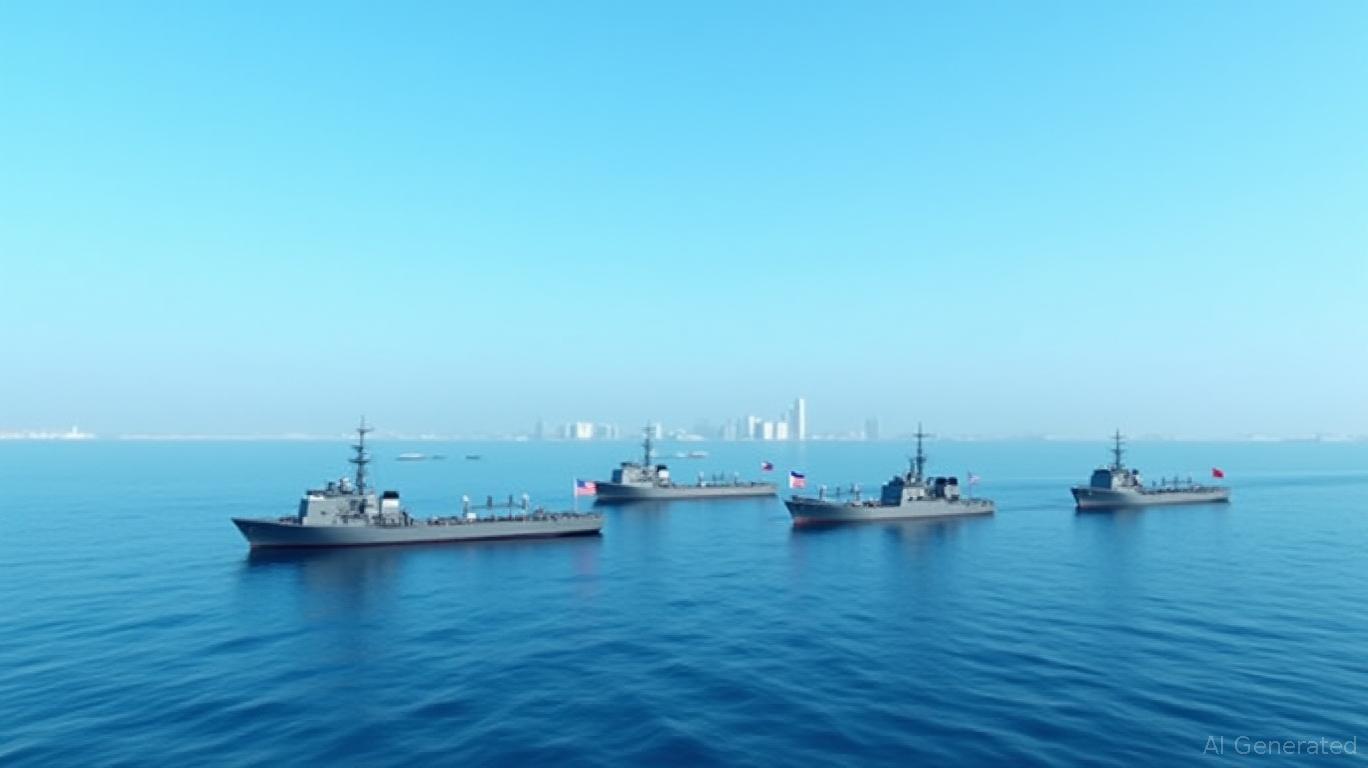
The second stage is the Threat to Maritime Chokepoints. Iran’s influence over the Bab al-Mandab and the Strait of Hormuz allows it to weaponize global inflation. If the U.S. responds too aggressively to land-based harassment, Iran pivots to maritime disruption. This forces a multilateralization of the conflict, as European and Asian economies are more sensitive to shipping delays than the energy-independent United States.
The third stage is the Targeted Attrition of Logistics. This is the most dangerous phase for the U.S., where proxies shift from "nuisance" strikes to precision strikes on fuel depots, repair facilities, and transport hubs. This creates a "bottleneck" effect, where the U.S. is forced to decide between escalating to a full-scale regional war or conducting a tactical withdrawal.
The Failure of Deterrence through Proportionality
The primary flaw in current U.S. strategy is the reliance on "proportional response." In a data-driven analysis of conflict, proportionality is a defensive posture that cedes the initiative to the aggressor. If Iran knows that the cost of killing a U.S. service member is exactly one retaliatory strike on a warehouse in eastern Syria, it can perform a cost-benefit analysis on human life.
For deterrence to be effective, the response must be disproportionate and unpredictable. However, the U.S. is currently trapped by the "Regional Contagion Fear." The fear that a disproportionate strike will ignite a regional conflagration leads to a policy of "signaled retaliation," where the U.S. often provides enough lead time through diplomatic channels (indirectly) or public statements for Iranian personnel to evacuate targeted sites. This renders the "fight" portion of the dynamic performative rather than destructive.
Structural Vulnerabilities in the Ceasefire Model
The ceasefire is inherently fragile because it lacks a verification mechanism. Unlike a state-to-state treaty, there is no way to verify if a drone strike by a militia in Iraq was ordered by Tehran, "allowed" by Tehran, or is an "independent" action by a rogue commander.
- Plausible Deniability: This allows Iran to maintain the "talk" portion of the dynamic while its proxies handle the "fight" portion.
- The Sunk Cost of Presence: The U.S. maintains approximately 2,500 troops in Iraq and 900 in Syria. These forces are too small to be a decisive offensive hammer but large enough to be high-value targets. This creates a "hostage" dynamic where the U.S. must keep talking to prevent these units from being overrun.
- Information Asymmetry: Iran’s intelligence network within local populations often exceeds U.S. technical surveillance capabilities. This allows proxies to melt into civilian populations, making "clean" retaliation nearly impossible without causing civilian casualties that further erode U.S. diplomatic standing.
The Economic Dimension: Sanctions as a Finite Tool
The U.S. has reached the point of diminishing returns with economic sanctions. The "Maximum Pressure" campaign demonstrated that while sanctions can cripple an economy, they do not necessarily change regime behavior if the regime has built a "resistance economy" centered on illicit oil sales and shadow banking.
The "talk" phase of the dynamic is often focused on the unfreezing of assets. For Iran, these assets represent the "prize" for temporary quiet. For the U.S., they represent the "price" of regional stability. However, this creates a perverse incentive: if Iran receives funds for stopping attacks, it learns that attacks are the most effective way to generate revenue. This is a classic "protection racket" model in international relations.
The Intelligence-Kinetic Loop
As the ceasefire nears its end, the intensity of electronic warfare (EW) and signals intelligence (SIGINT) increases. The U.S. utilizes this time to map the updated positions of militia leaders who moved during the quiet period. Simultaneously, Iranian-backed groups conduct "pattern of life" studies on U.S. patrols.
The expiration of a ceasefire is usually preceded by a "test strike." This is an attack that falls just outside the established red lines—for example, a strike on a commercial vessel with no U.S. ties, or a rocket attack on an empty field near a base. The speed and nature of the U.S. diplomatic or military response to this test strike determines the operational tempo for the following three to six months.
Strategic Realignment: The Path Forward
The "fight-talk" cycle will continue as long as the U.S. prioritizes "de-escalation" over "definition." By attempting to keep the lid on the Middle East, the U.S. allows Iran to define the temperature. A more effective strategy requires shifting from a reactive posture to a proactive "Buffer Zone" strategy.
This involves three critical moves:
- Decoupling the Nuclear and Regional Tracks: The U.S. must signal that regional proxy attacks will be met with direct costs to Iranian sovereign assets, regardless of the status of nuclear negotiations. The current "compartmentalization" allows Iran to advance on both fronts simultaneously.
- Hardening the Defensive Perimeter: Transitioning from a dispersed presence of small "tripwire" bases to fewer, highly fortified "power hubs" reduces the target surface area for drones and rockets.
- Kinetic Asymmetry: Instead of hitting the militia that fired the rocket, the U.S. should target the high-value logistics nodes that facilitate the movement of all militias—such as specific bridges, border crossings, or communication hubs. This imposes a structural cost on the entire Axis of Resistance rather than a localized cost on a single cell.
The current ceasefire is a tactical pause, not a strategic shift. The "fight-talk" dynamic is a mechanism for Iran to manage its slow-motion expulsion of U.S. forces from the region. Unless the U.S. changes the cost function of this engagement, the expiration of each ceasefire will lead to a more sophisticated and lethal "fight" phase than the one preceding it.
The immediate requirement for U.S. planners is to identify the "Value-at-Risk" for the Iranian IRGC-QF (Quds Force) and prepare a menu of targets that degrade their ability to command and control proxies, rather than simply destroying the hardware the proxies use. Stability in this region is not achieved through silence, but through the establishment of a credible, disproportionate threat that makes the "fight" phase of the dynamic too expensive to initiate.