Every single year, the sports media echo chamber coughs up the same tired headline. Speculation runs wild. Rumor mills churn. Fans beg for the billionaire mogul to finally take the center stage of the NFL's biggest night.
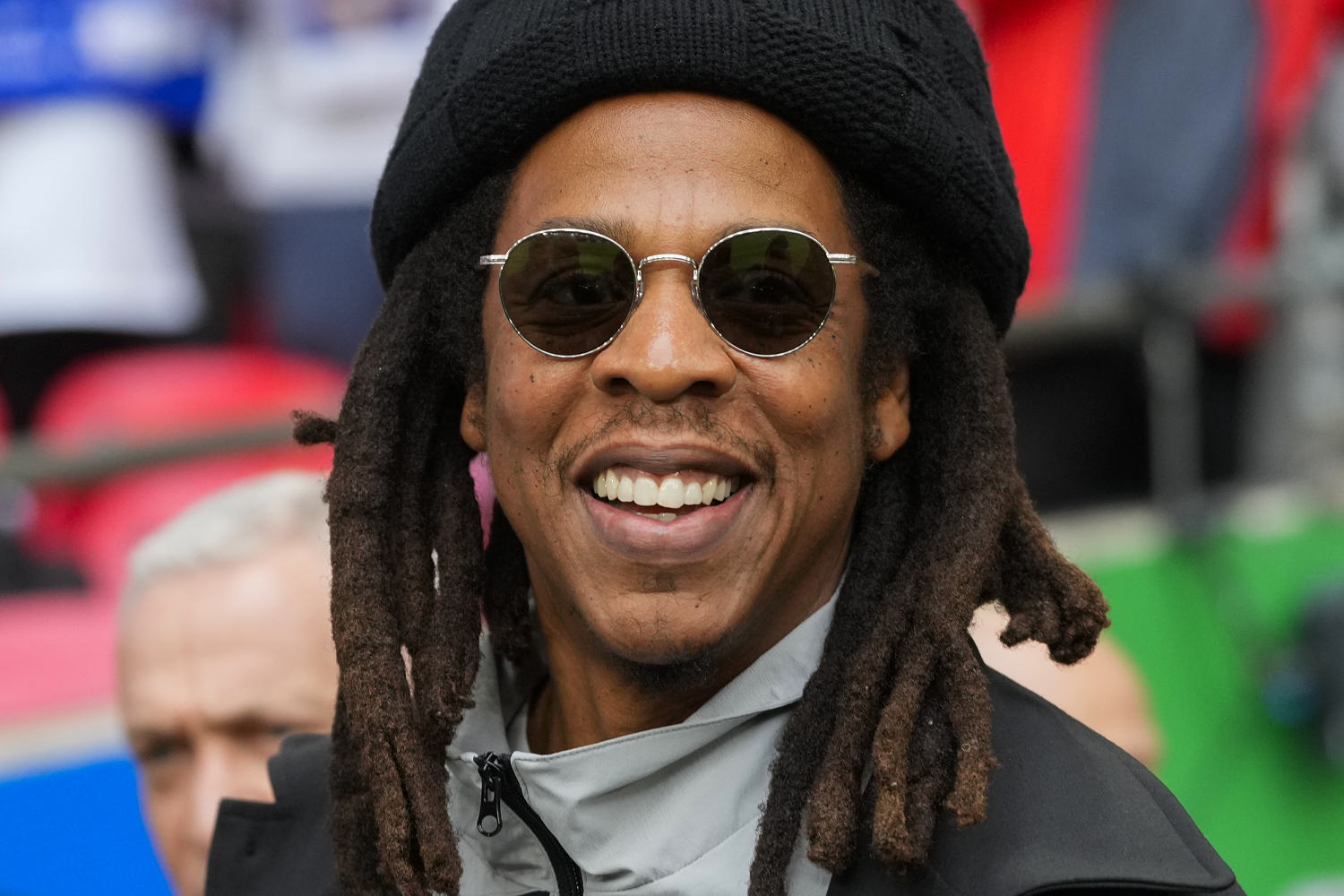
They want Jay-Z to headline the Super Bowl Halftime Show. They think it is a coronation. They think it is overdue.
They are completely wrong.
The lazy consensus assumes that because Shawn Carter is one of the greatest rappers alive—and because his company, Roc Nation, literally books the entertainment for the NFL—his eventual performance is both inevitable and ideal. Entertainment writers frame it as a cultural triumph, the final box to check on a Hall of Fame career.
That perspective misses the entire economic and strategic reality of modern entertainment. Putting Jay-Z on that stage wouldn't be a victory lap. It would be an operational demotion, a massive conflict of interest, and a fundamental misunderstanding of how the Super Bowl Halftime Show actually creates value in the streaming era.
The Architect Never Dances on the Scaffolding
Let's look at the actual power dynamics at play here. Since 2019, Roc Nation has served as the NFL’s "live music entertainment strategist." Read that title again. Strategist. Not vendor. Not talent.
When you own the casino, you do not sit at the blackjack table hoping to hit twenty-one.
I have watched dozens of legacy artists and entertainment executives burn millions in brand equity because they couldn't separate their ego from their balance sheet. They confuse visibility with control. Jay-Z does not make that mistake. For the last several years, he has acted as the kingmaker of the single most watched twelve-minute broadcast window in North America. He handpicked Shakira and Jennifer Lopez. He orchestrated the historic West Coast hip-hop showcase with Dr. Dre, Snoop Dogg, Eminem, Mary J. Blige, and Kendrick Lamar. He tapped Rihanna for her grand return. He greenlit Usher.
In every single one of those instances, Jay-Z held the clipboard. He dictated the cultural narrative of the NFL without having to sweat through a single rehearsal, risk a vocal crack in front of 120 million people, or subject himself to the brutal, unforgiving scrutiny of internet memes.
If Jay-Z steps onto that field with a microphone, he voluntarily surrenders his position as the executive producer of the culture to become a dancing bear for corporate sponsors. He trades the boardroom for the spotlight. For a man who spent twenty years transitioning from a street-level hustler to an art-collecting, champagne-owning, equity-holding titan, taking a gig that pays zero dollars in appearance fees makes zero sense.
The Zero-Dollar Economics of the Halftime Stage
People still ask how much the NFL pays its halftime performers. The answer is nothing. The league covers production costs—which can easily balloon past ten million dollars—and pays union scale, a rounding error for an artist of Carter’s caliber.
Artists accept this lopsided deal for one reason: catalog conversion.
The Super Bowl Halftime Show is the single most expensive commercial in the world, and the artist gets it for free. Following a successful performance, an artist’s back catalog routinely sees streaming spikes between 200% and 500% within twenty-four hours. Ticket sales for upcoming stadium tours instantly sell out. Brand partnerships multiply.
Now, apply that business model to Jay-Z.
- Does he need a streaming bump? His catalog is already institutional. Furthermore, after selling his majority stake in Tidal to Square and offloading half of Armand de Brignac to LVMH, his personal wealth is largely decoupled from per-stream royalty fractions.
- Is he touring? No. He hasn't mounted a solo tour since the 4:44 run in 2017. Even his joint On the Run II tour with Beyoncé was nearly a decade ago. You cannot convert Super Bowl hype into ticket revenue if there are no tickets to buy.
- Is he selling an album? He releases music on his own timeline, entirely detached from traditional promotional cycles.
Imagine a scenario where a multi-billionaire private equity founder decides to work a twelve-hour shift at a retail store just to remind people he knows how to use a cash register. That is the financial equivalent of Jay-Z headlining the Super Bowl. The ROI simply does not exist.
The Conflict of Interest Nobody Wants to Touch
The entertainment press loves a good fairytale, so they conveniently ignore the glaring corporate governance nightmare that a Jay-Z performance would create.
Roc Nation is paid a hefty retainer by the NFL to curate the halftime show. If the CEO and founder of Roc Nation suddenly awards the most coveted promotional slot in global entertainment to himself, the optics are atrocious. It reeks of self-dealing.
We live in an era where antitrust scrutiny and corporate transparency are at an all-time high. Rival agencies—Live Nation, CAA, WME—already bristle at Roc Nation’s exclusive stranglehold over the NFL’s entertainment pipeline. If Jay-Z books himself, he hands his competitors a loaded weapon. They will rightly point out that the NFL’s "strategist" is using league-funded production budgets to subsidize his own legacy.
Worse, it ruins the pristine reputation he has built with the league’s notoriously conservative owners. Men like Jerry Jones and Robert Kraft trust Jay-Z because he operates like them. He thinks about margins, liability, and long-term brand protection. The moment he becomes the talent, that peer-to-peer dynamic evaporates. He becomes an employee.
The Hard Truth About Hip-Hop Stadium Translation
Let’s address the elephant in the room—the music itself.
Hardcore rap fans will crucify me for saying this, and I will admit the downside to my own argument right up front: Jay-Z possesses one of the deepest, most influential catalogs in American music history. "Empire State of Mind," "Niggas in Paris," "99 Problems," and "Run This Town" are undeniable anthems. If anyone has the hits to fill fifteen minutes, it is him.
However, having hits and having stadium translation are two entirely different mechanics.
A Super Bowl halftime show is not a concert at Madison Square Garden. It is not a festival set at Coachella. It is a televised variety show designed to hold the attention of a distracted audience drinking beer in living rooms from Omaha to Orlando. Half the viewers do not know the deep cuts. A quarter of them are waiting for the commercials to come back on.
Great Super Bowl performances rely on one of three things:
- Hyper-kinetic choreography (Michael Jackson, Beyoncé, Bruno Mars, Usher).
- Massive vocal theatrics (Prince, Whitney Houston, Lady Gaga).
- Nostalgic visual spectacle (The Weeknd, Dr. Dre’s custom-built Compton set).
Jay-Z does none of these. His live brilliance has always been rooted in minimalism. A black t-shirt. A Yankee fitted. A cordless mic. Raw breath control and lyrical dexterity. It is an intimate, hip-hop purist aesthetic that relies on a crowd hanging on every syllable.
Put that minimalist approach on a 100-yard football field surrounded by 70,000 people sitting fifty yards away from the stage, and the energy dissipates instantly. Unless he turns the show into a massive ensemble piece—bringing out Beyoncé, Rihanna, Kanye West, and Justin Timberlake to do the heavy visual lifting—the broadcast risks feeling static. And if he relies on twenty guests to carry the visual weight, he isn't really headlining; he is just hosting a Roc Nation showcase.
Stop Asking Who Should Headline and Start Watching Who Actually Wins
Whenever this rumor surfaces, the "People Also Ask" sections of the internet flood with the exact same predictable queries: Has Jay-Z ever performed at the Super Bowl? Why hasn't Jay-Z done the halftime show? Will Jay-Z and Beyoncé perform together?
These questions are fundamentally flawed because they frame the halftime stage as the ultimate validation of a musician's career.
It isn't. For an emerging superstar, the Super Bowl is a launchpad. For a legacy act whose relevance is fading, it is a defibrillator.
Jay-Z needs neither a launchpad nor a defibrillator.
When Dr. Dre took the stage in 2022, it worked because Dre is a producer whose legacy is tied to the artists he discovered; seeing him behind a mixing board while Eminem, Snoop, and Kendrick performed was completely authentic to his brand. When Rihanna took the stage in 2023, it worked because she hadn't performed live in seven years and used the broadcast to launch a maternity-fueled media frenzy that drove hundreds of millions of dollars in earned media for Fenty Beauty.
Jay-Z has no beauty line to hawk during a camera pan. He does not need to prove he can still rap.
If you want to understand how the modern entertainment business actually works, stop waiting for Jay-Z to grab a microphone at midfield. Watch who he puts on that stage instead. Watch how he uses the NFL's platform to rehabilitate tarnished brands, elevate artists signed to his management roster, and quietly cement his status as the most powerful executive in music.
The true flex isn't performing at the Super Bowl. The true flex is deciding who gets to.