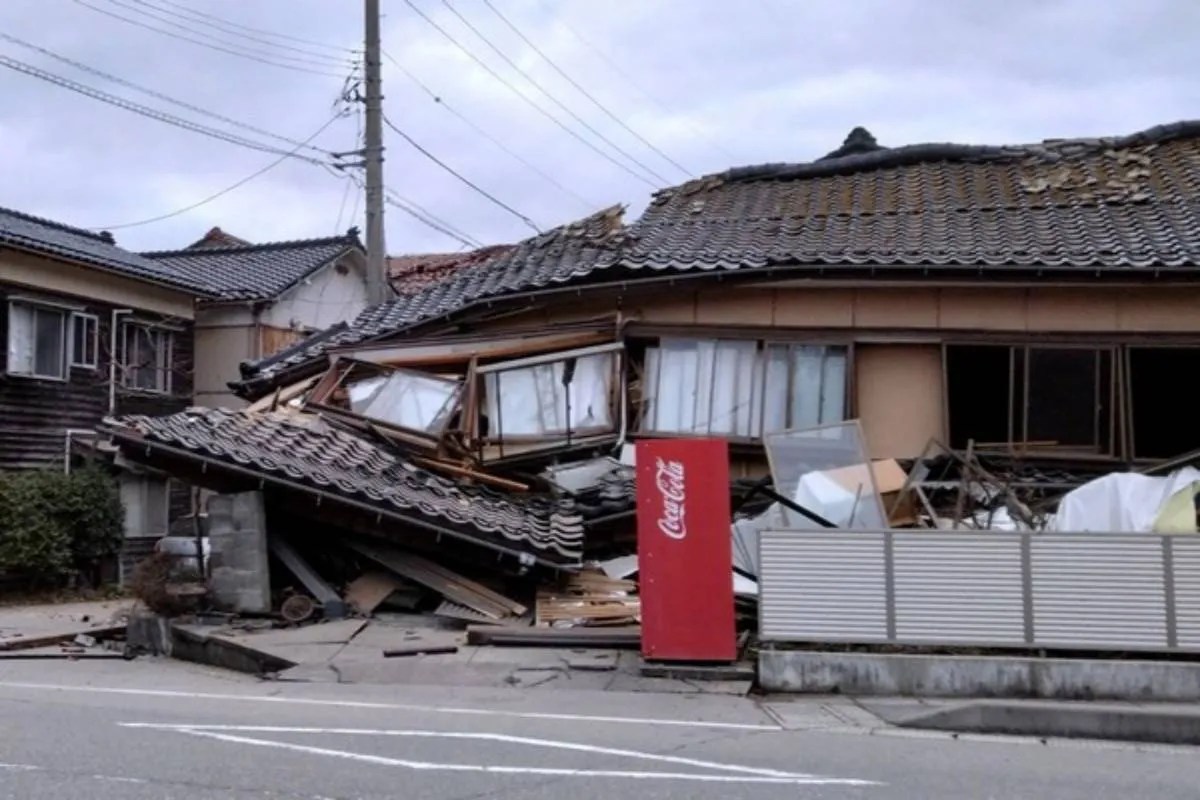
The massive 7.4 magnitude earthquake that recently tore through Japan is not merely a natural disaster. It is a systemic wake-up call. While the world watches footage of buckled asphalt and swaying skyscrapers, the real story lies beneath the surface in the widening gap between Japan’s legendary engineering and the escalating violence of the Pacific Ring of Fire.
Japan is the most prepared nation on earth, yet people are still running for their lives. This paradox exists because our understanding of "safe" is anchored to historical data that nature is now rewriting in real-time. The infrastructure held, mostly. The early warning systems fired, mostly. But the psychological and economic toll suggests that the nation’s survival strategy is hitting a ceiling of diminishing returns.
The Mechanical Failure of Modern Certainty
For decades, the global gold standard for seismic resilience has been the Japanese model. Base isolation, giant dampers, and flexible steel frames have turned cities like Tokyo into forests of kinetic art that can sway several feet without snapping. However, the 7.4 magnitude event exposed a critical flaw in the bureaucratic management of risk. We build for the "expected" disaster, but the earth does not follow a ledger.
The structural integrity of a building is a math problem. Engineers calculate the maximum ground acceleration a structure can withstand based on the worst-case scenario recorded in that specific fault zone. The problem is that the "worst-case" is a moving target. When a 7.4 hits, it creates a resonance that many older "earthquake-resistant" buildings were never designed to handle.
Why the Early Warning System Faltered
Japan’s J-Alert system is a marvel of physics. It detects the initial P-waves (primary waves) that travel faster but do less damage, providing a few seconds of warning before the destructive S-waves (secondary waves) arrive. In this latest event, the lead time was sufficient for high-speed trains to brake and gas lines to shut off automatically.
Yet, the human element remains the weak link. A five-second warning is a lifetime for a computer, but a blink for a parent in a high-rise. We are seeing a phenomenon called "warning fatigue." When the sensors are tuned to be ultra-sensitive to avoid missing a big one, they trigger for smaller tremors. People stop running. They stay in bed. They check their phones. Then, when the 7.4 arrives, the delay in physical reaction becomes fatal.
The Energy Grid Under Siege
We often focus on collapsing roofs, but the true threat to a modern economy is the invisible failure of the energy "heart." Following the 2011 triple disaster, Japan shifted its energy policy, but the ghost of Fukushima still haunts every major tremor.
The immediate shutdown of nuclear reactors during a 7.4 event is a hard-coded safety protocol. It is non-negotiable. However, this creates an instantaneous vacuum in the power grid that thermal and renewable sources struggle to fill. When the lights go out across entire prefectures, the disaster transitions from a geological event to a humanitarian crisis.
- Grid Instability: Rapid shutdowns cause frequency drops that can lead to a total blackout.
- Supply Chain Paralysis: Precision manufacturing, particularly in the semiconductor sector, cannot tolerate even a micro-second of power fluctuation.
- The Battery Myth: While home battery storage is increasing, it is nowhere near the scale required to keep a megalopolis breathing during a week-long recovery period.
The Tsunami Shadow
Every time the Japanese soil shakes with a magnitude above 7.0, a countdown begins in the minds of every coastal resident. The 7.4 tremor triggered immediate evacuations, but the geography of Japan’s coastline makes this a logistical nightmare.
The "Vertical Evacuation" strategy—moving people into reinforced concrete towers—is a desperate compromise. It assumes the building will withstand the hydrodynamic pressure of thousands of tons of debris-filled water. Many of these structures have not been tested against the specific lateral forces of a fast-moving surge following a 7.4 event. We are betting lives on simulations that may be outdated.
The Hidden Cost of Sea Walls
Japan has spent billions encasing its beautiful coastline in concrete. These sea walls provide a false sense of security. In some areas, they have been built so high that residents can no longer see the ocean. This "visual disconnect" is dangerous. People no longer judge the risk by looking at the water; they wait for an official digital signal. If that signal is delayed or the wall is overtopped, the surprise is absolute and deadly.
Economic Aftershocks and the Insurance Gap
Insurance is the silent pillar of disaster recovery, and in Japan, it is under immense strain. The 7.4 earthquake didn't just break glass; it broke the math for local insurers.
Most people assume their standard policy covers "acts of God." It doesn't. Earthquake insurance in Japan is often a separate rider, capped at a fraction of the property's value. We are looking at a future where thousands of small business owners will be unable to rebuild because the cost of "total resilience" has become uninsurable. The government cannot bail out every prefecture every time the crust shifts.
The Failure of Urban Density
The centralization of Japan in the Kanto Plain is a strategic disaster waiting to happen. By cramming the machinery of government, finance, and industry into a single seismic hotspot, the nation has created a "single point of failure."
A 7.4 magnitude earthquake in a rural prefecture is a tragedy. A 7.4 in a densely packed urban corridor is an existential threat to the global economy. The "super-tall" skyscraper trend in Tokyo is particularly concerning. These buildings are designed to be safe, but "safe" usually means they won't collapse. It doesn't mean they will be habitable. A 50-story building with broken elevators and severed water pipes is a vertical desert.
Rethinking the Survival Script
We need to move beyond the obsession with "strength." Stiffness leads to snapping. The future of seismic survival is "functional recovery."
The goal should not just be preventing a building from falling down. The goal must be ensuring that the building can be used the very next day. Currently, thousands of buildings are "safe" but useless after a 7.4 event because their internal systems are shredded. We need a radical shift in building codes that prioritizes the continuity of life, not just the preservation of the skeleton.
This involves rethinking how we distribute our population. Decentralization is no longer a "lifestyle choice" for digital nomads; it is a national security imperative. Spreading the risk across the Japanese archipelago is the only way to ensure that a single fault line cannot paralyze the entire state.
The Myth of the Controlled Disaster
There is a dangerous arrogance in believing we have tamed the tectonic plates. The 7.4 magnitude earthquake proved that nature does not care about our engineering degrees or our sophisticated sensors.
The reality of living in Japan—or any seismic zone—is a constant state of managed retreat. We are not "beating" the earthquake; we are merely negotiated with it for more time. The next step isn't just better concrete or faster apps. It is a fundamental shift in how we value land and where we choose to concentrate our power.
Stop looking at the magnitude numbers on the news and start looking at the maps of our power lines and supply routes. The tremor is the trigger, but the fragility of our interconnected systems is the real disaster. We have spent half a century building a world that is too efficient to be resilient. Now, as the ground continues to shift, the bill for that efficiency is coming due. Move the vital assets, diversify the energy source, and stop pretending that a concrete wall is a permanent solution to a planetary force.