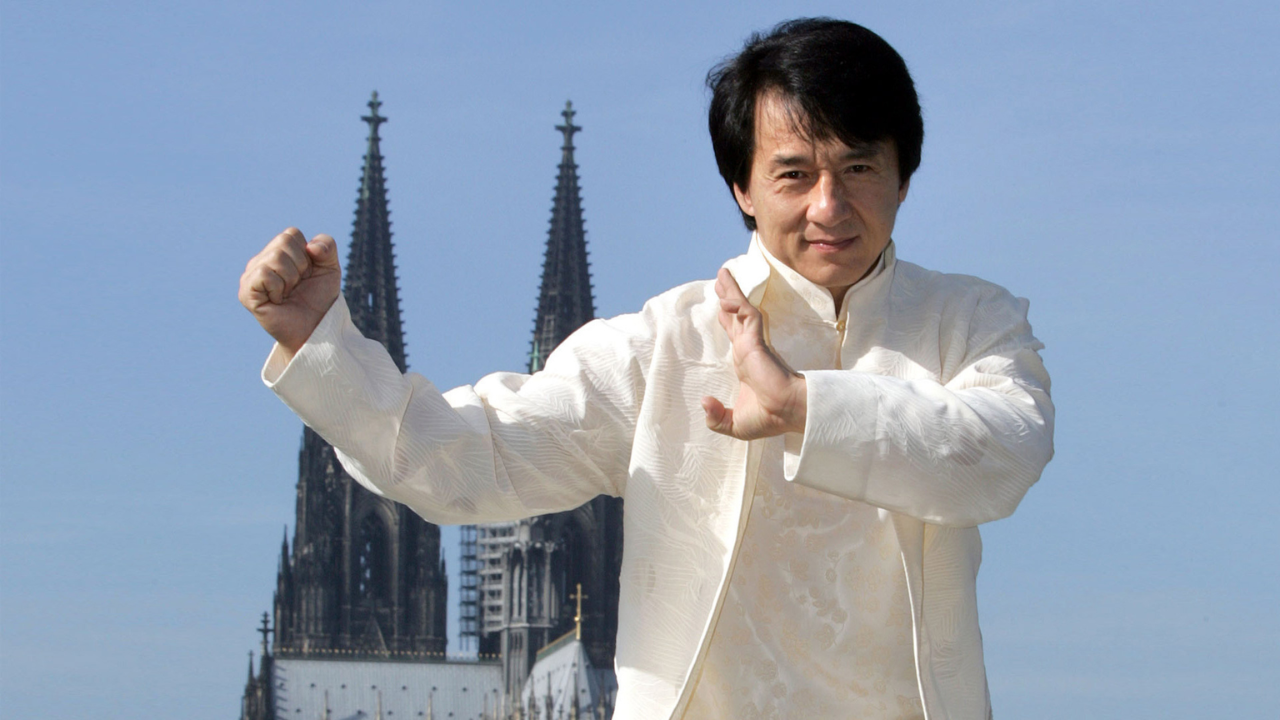
Jackie Chan gave us a neat little soundbite that the internet loves to swallow whole. You cannot go back and change your path, he told the world. Your life is decided by the choices you make every single minute. It sounds profound. It sounds like the kind of wisdom you carve into a wooden plaque and hang above a home office.
It is also absolute garbage.
The lazy consensus loves this brand of fatalistic accountability. We cling to the notion of linear trajectory because it gives us a clean narrative. If your career stalls, your relationship craters, or your business flatlines, the self-help industrial complex rushes in to nod solemnly and tell you that you chose this. Every micro-decision accumulated into your current misery.
I have spent two decades watching high-performers paralyze themselves over this exact premise. I have seen executives blow millions trying to optimize every daily choice out of fear that one wrong breakfast or misplaced email would ruin their destiny. It is a mental illness disguised as discipline.
Your life is not decided by the choices you make every minute. Most minutes do not matter at all. Your life is decided by the very few times you actually have the courage to rip up the map and walk in the opposite direction.
The Myth of the Unalterable Timeline
The core fallacy in the path-of-no-return philosophy is the worship of momentum. People treat their past decisions like wet cement. They believe that once a choice hardens, they are legally obligated to spend the rest of their existence walking down whatever hallway that door opened into.
This is structurally illiterate.
Think about how actual systems evolve. Markets crash, industries die, and human beings change their minds because new data arrives. If you treat your life as an irreversible sequence where every step forward locks you deeper into a predetermined cage, you become a prisoner of your own past CV.
Imagine a scenario where a software engineer spends a decade climbing the corporate ladder. By Chan logic, every line of code written, every meeting attended, and every promotion accepted locked in a definitive trajectory. Walking away would be wasting the path.
That is the sunk cost fallacy dressed up as philosophy.
The truth is that paths fork constantly, and sometimes the best move is not doubling down on the current track, but jumping the guardrail entirely. The most successful people I know are serial quitters. They quit bad strategies, toxic markets, dead-end projects, and outdated identities the moment the math stops working. They do not honor the path. They exploit it until it stops being useful, then they abandon it without a shred of sentimentality.
Why Micro-Decisions Are a Waste of Bandwidth
Let us address the obsessive tracking of daily choices. The productivity gurus want you to believe that your morning routine, your hydration levels, and your daily micro-habits dictate your grand outcome.
This is a scam designed to sell planners.
Human psychology runs on energy conservation. When you spend eighty percent of your cognitive bandwidth agonizing over whether waking up at five in the morning or six in the morning is sealing your fate, you have nothing left for the macro-strategy.
The heavy hitters in behavioral economics and decision theory understand that ninety percent of daily actions are pure noise. Nobel laureate Daniel Kahneman spent decades proving that human intuition under pressure relies on heuristic shortcuts, not hyper-calculated path optimization. You are going to make bad, mediocre, and random choices every single day. Your nervous system is not built for perfection.
And yet, you survive. You adapt.
The obsession with unbroken continuity creates a fragile ego. When someone believes their life is a delicate house of cards built by minute-by-minute choices, they panic at the first sign of friction. They think a single bad quarter or a failed project broke the trajectory.
It did not break anything. It just cleared the brush.
The Counter-Intuitive Power of Strategic Reversal
You can go back. You can change your path. In fact, you must, or you will die in a trench you dug five years ago for a version of yourself that no longer exists.
Let us look at the mechanics of structural pivot. Most people fail when they try to change direction because they treat it as an emotional crisis instead of an operational logistics problem. They mourn the sunk cost. They worry about what their peers will say. They look for permission from the universe to start over.
Stop looking for permission.
When an enterprise realizes its product line is heading toward a cliff, the board does not hold hands and reflect on the choices that led them there. They execute a ruthless corporate pivot. They write off the losses, fire the legacy management, and redeploy capital.
Apply that exact coldness to your personal trajectory.
- Identify the metric that actually matters to your current reality, whether that is net revenue, creative autonomy, or sheer peace of mind.
- Audit your current path against that metric with brutal honesty.
- If the trajectory leads to a destination you despise, stop moving forward immediately. Forward momentum on a bad road only gets you deeper into the wrong wilderness.
There is a distinct downside to this approach, and I will be entirely transparent about it. Ruthless path-correction is chaotic. It burns bridges. It alienates people who prefer predictability over progress. When you routinely blow up your own status quo, you will spend seasons looking like a disaster to the outside observer. Friends will worry. Family members will offer concerned advice.
Let them. Stability is the graveyard of relevance.
The Real Drivers of Outcome
If daily micro-choices do not dictate your life, and past paths do not trap you forever, what actually drives your outcome?
Leverage, timing, and optionality.
You win by building systems that give you the right to be wrong twenty times in a row without going bankrupt. You win by maintaining cash reserves, technical skills, and psychological resilience so that when the ground shifts beneath you, you are not tied to a single dogma.
Jackie Chan built a legendary career because he was an absolute maniac about physical execution, but off screen, he reinvented his persona, his business ventures, and his risk models over decades. He did not stick to one path. He broke his bones, shifted genres, built production houses, and crossed oceans. He changed his path every time the old one stopped offering leverage.
The quote is romantic fiction for people who are terrified of the blank page.
Your life is not a predetermined railway track laid down by every minute decision. It is an open field, and you are allowed to put down the shovel, walk away from the hole you spent ten years digging, and start building somewhere else.
Drop the narrative. Burn the map.