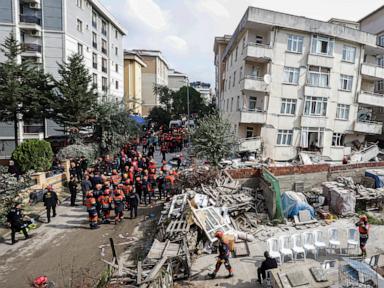
Dust settles over the narrow streets of Istanbul, but the silence that follows a structural failure rarely signals peace. Two people are dead, several more remain trapped beneath tons of concrete and twisted rebar, and municipal authorities are scrambling to issue statements that sound identical to the ones they read after the last disaster. This is not an act of God. This is the predictable outcome of decades of deferred maintenance, lax enforcement, and an economic pressure cooker that forces families into compromised living spaces.
Urban infrastructure failure in Turkey's largest metropolis does not happen in a vacuum. When a residential building pancakes onto the sidewalk during a quiet afternoon, the immediate investigation always points to sub-standard materials or unauthorized modifications on the ground floor. Yet, blaming a rogue contractor or a single greedy landlord misses the bigger picture. The underlying pathology involves a construction sector addicted to speed, a regulatory apparatus stretched thin by rapid urbanization, and an aging housing stock built during eras of minimal oversight.
The Anatomy of a Failing Foundation
Most visitors see Istanbul through the lens of Byzantine walls, Ottoman minarets, and bustling waterfronts. Beneath that romantic veneer lies a city constructed in frantic waves of migration starting in the mid-twentieth century. Millions arrived from rural provinces looking for work. They built homes quickly, often informally, establishing the sprawling neighborhoods known locally as gecekondus. Over time, these areas densified. Four-story concrete blocks multiplied into eight stories without anyone checking the load-bearing capacity of soil or foundation.
Saltwater intrusion from the surrounding seas corrodes the internal steel reinforcement of countless structures across the region. Concrete loses its integrity when mixed with unwashed sea sand, a notorious shortcut taken by unscrupulous developers during the construction booms of the past forty years. Combine degraded materials with seismic tremors, routine ground settling, and unauthorized commercial excavation in basement levels, and the safety margin vanishes entirely.
When a building gives way, the rescue operation dominates the news cycle for forty-eight hours. Heavy machinery arrives. Helicopters circle overhead. Politicians tour the site in high-visibility vests, promising thorough investigations and swift justice. Then the cameras leave. The rubble gets hauled away to an anonymous dumping site. The survivors find themselves in temporary shelters or priced out of the rental market entirely, while neighboring blocks stand untouched, harboring the exact same structural vulnerabilities.
Bureaucratic Blind Spots and Economic Pressures
Municipal authorities possess the legal tools to condemn dangerous structures, but enforcement remains notoriously inconsistent. Urban renewal projects often stall in legal limbo or face fierce resistance from residents who cannot afford the displacement costs. A government-backed transformation initiative aimed at earthquake-proofing millions of homes sounds good on paper, but execution lags behind reality. Property owners frequently opt out of inspections because passing means condemnation, and condemnation means losing their only asset.
Inflation and currency depreciation compound the crisis. When households struggle to pay for basic groceries and utilities, structural retrofitting drops to the bottom of the priority list. Fixing a crumbling foundation or replacing corroding support columns costs a fortune. Tenants lack the leverage to demand engineering reports, and landlords prefer to collect rent until the structure forces their hand.
This dynamic creates a quiet emergency unfolding block by block. Engineers walk past residential facades daily, spotting the telltale vertical cracks and efflorescence that signal water infiltration, yet nothing happens until catastrophe strikes. The system reacts to bodies pulled from the wreckage rather than proactively removing people from ticking time bombs.
Accountability tends to dissipate in the complex web of municipal districts, national housing agencies, and subcontracted inspection firms. When everyone is responsible for safety, no one is held liable when the roof caves in. Until structural integrity becomes non-negotiable and independent audits are strictly enforced without political interference, the streets of Istanbul will remain vulnerable to gravity and neglect.