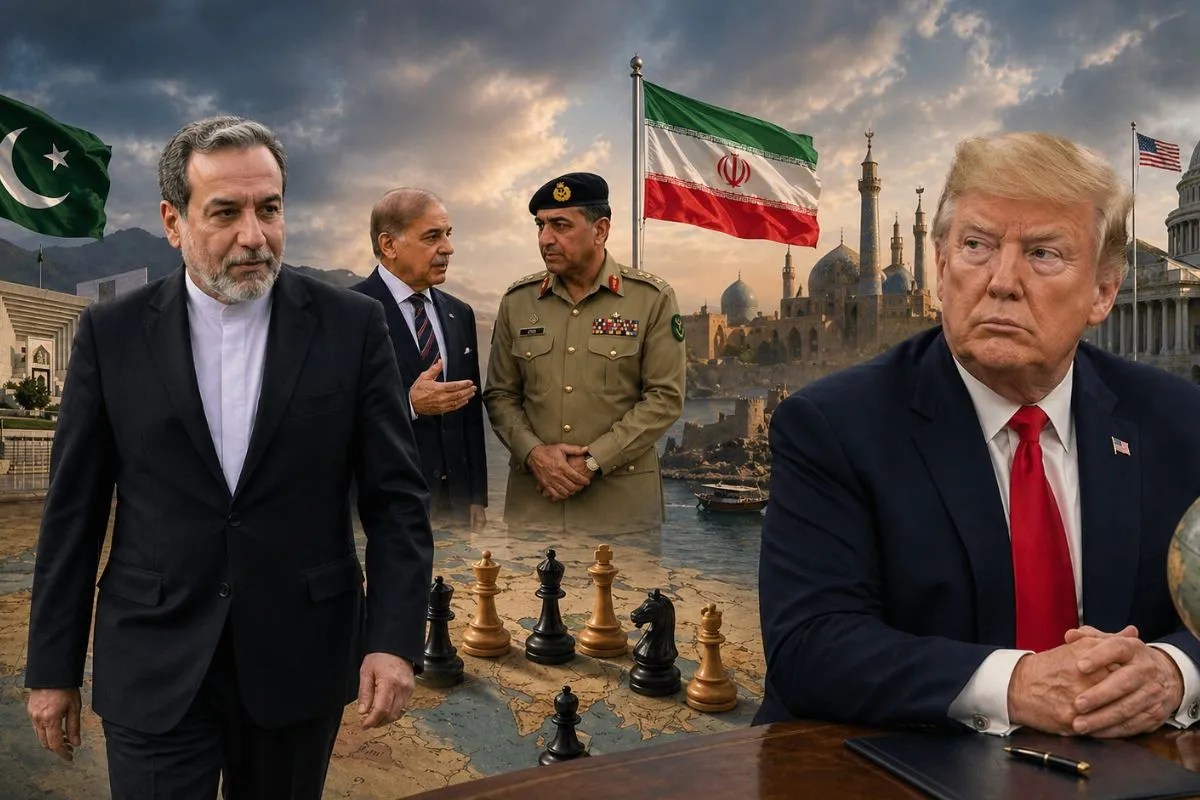
The press is currently obsessing over Iranian Foreign Minister Abbas Araghchi’s sudden return to Islamabad. They see a "shuttle diplomacy" masterclass. They see two neighbors smoothing over a rough patch after the January missile exchanges. They see a unified front against regional instability.
They are wrong. If you liked this post, you should check out: this related article.
This isn’t a diplomatic triumph. It’s a desperate inventory check by two regimes that are running out of options and friends. If you think Pakistan is acting as a bridge between Tehran and the West, or even between Tehran and Riyadh, you’ve bought into a geopolitical fairytale. Islamabad isn’t a bridge; it’s a tightrope walker trying to avoid falling into a canyon of debt and domestic unrest while holding a ticking Iranian bomb.
The Myth of the "Brotherly" Reset
Standard reporting suggests that this second visit in 48 hours signifies a deepening bond. It’s a classic misinterpretation of proximity for intimacy. In reality, the frequency of these meetings reveals a breakdown in trust, not a surplus of it. For another angle on this story, check out the recent update from TIME.
When the IRGC lobbed missiles into Balochistan in January, they didn't just hit a militant group; they shattered the illusion of the "special relationship." Pakistan’s retaliatory strikes weren't just a military response—they were a message to the Arab world and Washington that Islamabad can still play rough.
Now, Araghchi is back because Tehran realizes it cannot afford a hot border to its east while it stares down Israel and the United States to its west. This isn't "brotherhood." This is Iranian damage control. Tehran is trying to buy Pakistani neutrality with vague promises of trade and energy cooperation that both sides know will never materialize under the weight of US sanctions.
The Gas Pipeline Ghost
Every time an Iranian official touches down in Islamabad, the "Peace Pipeline" (IP Gas Pipeline) gets dragged out of the closet. Analysts talk about it as a potential "anchor" for regional stability.
Let’s be blunt: The IP Pipeline is a corpse.
Pakistan is currently under the thumb of the IMF. The chances of the Shehbaz Sharif government risking "secondary sanctions" from the US to complete a pipeline that would benefit an Iranian economy under maximum pressure are zero. I have watched diplomats spin this for a decade. The math never changes.
- The Cost of Compliance: For Pakistan, the potential loss of IMF tranches and US military aid outweighs the benefit of Iranian gas by a factor of ten.
- The Reality of Infrastructure: The Pakistani side of the pipeline doesn't exist in any functional capacity.
- The Sanction Trap: Even if the physical pipe was laid tomorrow, the financial clearing mechanisms to pay for the gas don't exist without triggering a total collapse of Pakistan’s banking relationship with the West.
Araghchi isn't here to talk about gas. He's here to ensure that if the conflict with Israel escalates, Pakistan doesn't allow its soil to be used as a staging ground for Western intelligence or air operations. He's buying silence, not selling energy.
Pakistan’s Impossible Balancing Act
The "People Also Ask" sections of the internet want to know if Pakistan is moving closer to the "Resistance Axis."
The answer is a brutal "No."
Pakistan’s military establishment is functionally tied to the Saudi-UAE-US orbit. The General Headquarters (GHQ) in Rawalpindi knows where the checks come from. While the public rhetoric in Pakistan is often pro-Palestine and anti-imperialist—aligning perfectly with Tehran’s talking points—the actual policy is dictated by the ledger.
The Saudi crown prince, Mohammed bin Salman, has invested billions in Pakistan's stability. He didn't do that to see Islamabad become a proxy for the Ayatollah. Every handshake between Araghchi and Pakistani officials is being watched by Riyadh with a stopwatch. If Islamabad leans too far West-ward, they lose the Iranian border security. If they lean too far toward Tehran, the Gulf money dries up.
This isn't a strategic "vision." It's a hostage situation.
The Balochistan Tinderbox
The real reason for the frantic travel schedule is the one thing neither side wants to admit: they are both losing control of their shared border.
The Sistan-Balochistan region is a vacuum of authority. Groups like Jaish al-Adl and various Baloch separatist factions operate with near-impunity because neither Tehran nor Islamabad has the resources to govern the periphery effectively.
When the media reports on "security cooperation," they are missing the point. The January strikes proved that the bilateral "hotline" is a joke. Iran struck first without warning. Pakistan struck back to save face. Now, they are trying to patch together a security framework that is essentially two drowning men trying to share a single life jacket.
They aren't collaborating to fight terror; they are collaborating to make sure they don't accidentally start a war with each other while they are busy fighting their own people.
Stop Asking if the "Visit is a Success"
The question itself is flawed. "Success" in this context is merely the absence of a catastrophic misunderstanding for the next twenty-four hours.
If you want to understand the true state of US-Iran-Pakistan relations, look at the silence from the US State Department. Washington isn't panicking about Araghchi’s visit because they know the reality on the ground. They know Pakistan is too broke to be a real Iranian ally.
I’ve seen this movie before. A high-profile visit, a joint press conference about "sovereignty" and "mutual respect," and then… nothing. The structural problems remain. The sectarian tensions in Pakistan remain. The sanctions remain.
The Counter-Intuitive Truth
The more Iran visits Pakistan, the weaker Iran looks.
A strong regional power doesn't need to send its Foreign Minister twice in two days to a neighbor that just bombed its territory. Tehran is signaling its isolation. It is knocking on every door, looking for any crack in the international wall of containment.
Islamabad, meanwhile, is playing a dangerous game of "Diplomatic Rent." They are renting their attention to Tehran to show Washington that they have other options. It’s a bluff. Washington knows it’s a bluff. Tehran knows it’s a bluff.
The only people who don't seem to know are the journalists writing about a "new era of cooperation."
There is no new era. There is only the same old desperation, dressed up in a suit and a tie, flying back and forth between two capitals that are both terrified of what happens when the money finally runs out.
Stop looking for a breakthrough. Start looking for the exit strategy. Neither of these regimes has one.