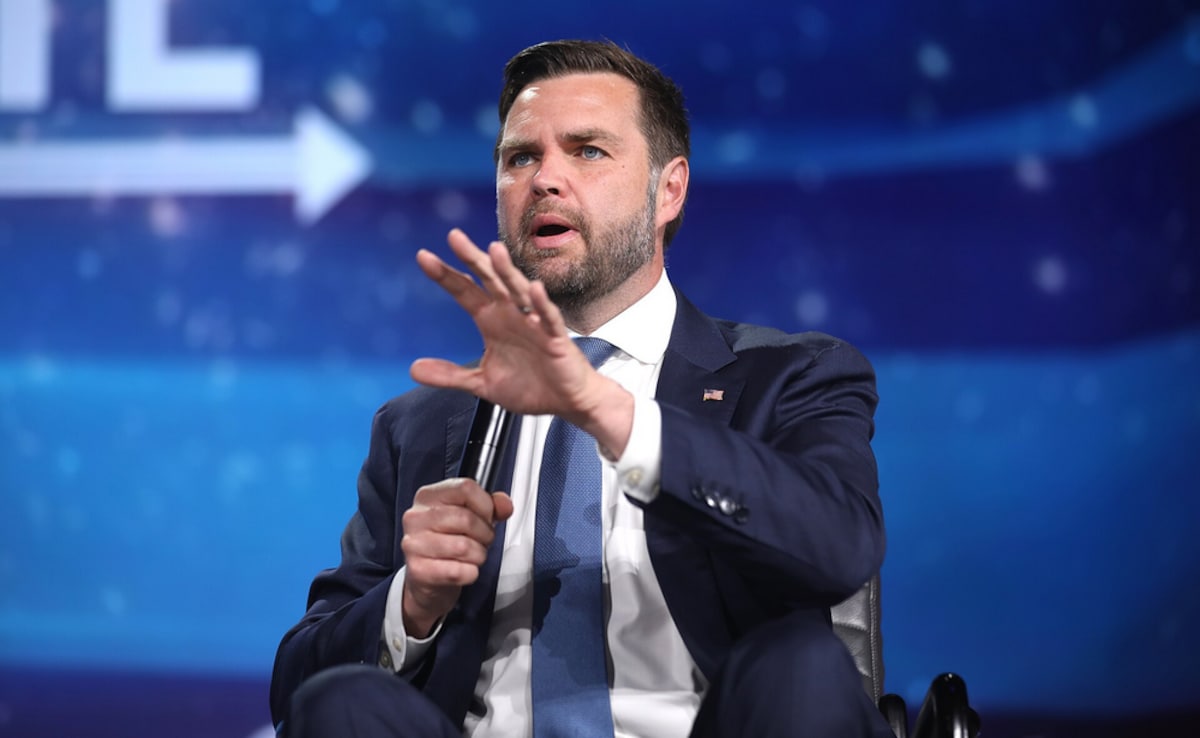
Vice President JD Vance boarded Air Force Two for Islamabad on Friday with a message that was part diplomatic overture and part street-fighter ultimatum. He warned Tehran not to "play" the United States during the high-stakes ceasefire negotiations scheduled for Saturday, even as the Trump administration simultaneously reloads its carrier decks in the Persian Gulf. This is the central tension of the Islamabad summit: a Vice President who built his career on skepticism of foreign entanglements is now the man tasked with closing the deal on a war he reportedly never wanted.
The primary objective of this mission is to secure a permanent end to the hot war that has crippled 85% of Iran’s defense industrial base and spiked global energy prices. For Vance, the stakes are more than just geopolitical; they are deeply personal and political. If he secures a truce, he validates the "America First" doctrine of ending "forever wars" through overwhelming force followed by pragmatic deals. If he fails, he remains the lead face of a military escalation that risks a generational quagmire in the Middle East.
The Strategy of the Open Hand and the Clenched Fist
The Islamabad talks are not a standard diplomatic summit. They are a post-kinetic reckoning. After weeks of Operation Epic Fury—a campaign that decimated Iranian naval assets and command structures—Washington is operating from a position of tactical dominance. President Trump has been blunt, stating that Iran has "no cards" left other than its residual ability to harass shipping in the Strait of Hormuz.
Vance’s "don't play us" rhetoric serves as a necessary shield against domestic critics who view any negotiation with Tehran as a sign of weakness. By positioning the U.S. as the "open hand" that is "willing to negotiate in good faith," Vance is attempting to shift the burden of failure entirely onto the Iranian delegation. However, the reality on the ground is far more complex than the Vice President’s soundbites suggest.
The Hidden Prerequisites
While Vance talks about "good faith," the Iranian delegation, led by Parliamentary Speaker Mohammad Baqer Qalibaf and Foreign Minister Abbas Araghchi, has laid out hard conditions that the U.S. has yet to officially acknowledge. These include:
- The Lebanon Factor: Tehran is demanding a cessation of Israeli strikes in Lebanon as a prerequisite for a final signature. Vance has publicly dismissed this, claiming Lebanon was never part of the original ceasefire framework.
- Asset Liquidity: Iran is seeking the release of billions in blocked assets before the formal commencement of the "Real Agreement."
- The Nuclear Floor: Despite the destruction of key facilities like the Shahid Boroujerdi site, Iran still holds the technical "know-how" and refined material that cannot be bombed away.
A Vice President Out of His Comfort Zone
The most intriguing element of this diplomatic push is Vance himself. Sources within the administration suggest Vance has privately voiced significant reservations about the scale of the Iranian campaign. He is a man who rose to prominence by criticizing the neoconservative interventionism of the Bush era. Now, he is the point man for a conflict that has seen the U.S. strike more than 13,000 targets in a matter of weeks.
This creates a unique psychological dynamic at the negotiating table. The Iranians know Vance is a skeptic of long-term Middle Eastern occupations. They may attempt to exploit this by offering a "thin" deal—one that stops the bombing and reopens the Strait of Hormuz but leaves the core of their regional proxy network intact. Vance must balance his own instinct to bring the troops home with Trump’s demand for a "Real Agreement" that permanently ends Iran’s nuclear and missile ambitions.
The Strait of Hormuz and the Global Energy Tax
For the business world, the Islamabad talks are about one thing: the price of a barrel of Brent crude. Iran has used its remaining maritime capabilities to sow the Strait of Hormuz with mines, effectively holding the global economy hostage. This "maritime extortion," as the White House calls it, has kept oil prices at levels that threaten the domestic economic recovery Trump promised on the campaign trail.
Vance’s mission is to break this stalemate. The U.S. is demanding the immediate and verified removal of all naval mines and a guarantee of safe passage for all international vessels. In exchange, the U.S. is offering a "modified" proposal that reportedly softens previous demands for total regime change in favor of strict, permanent technical limits on enrichment.
The Role of the Technological Ghost
Interestingly, Vance revealed that the first draft of the peace proposal—which he claimed was "probably written by ChatGPT"—was immediately discarded. This detail, while seemingly a throwaway quip, highlights a shift in how this administration views diplomacy. They are rejecting the "tapestry" of traditional State Department jargon in favor of blunt, transactional exchanges.
The current "workable basis" for the talks was developed through back-channel exchanges involving Pakistan and China. The presence of Jared Kushner and Steve Witkoff in the delegation underscores that this is a "family and friends" operation, relying on personal loyalty and business-style dealmaking rather than the established diplomatic corps.
The Islamabad Ultimatum
If the talks in Islamabad collapse, the alternative is already parked in the North Arabian Sea. The administration has made it clear that the "loading up of the ships" is not a bluff. For Vance, the walk across the tarmac in Pakistan is a tightrope. He is carrying the weight of a presidency that has bet everything on the idea that an adversary can be bombed into submission and then talked into a partnership.
The Iranians are masters of the long game, often using negotiations to "delay the possibility of a US attack," as French intelligence recently noted. Vance’s warning not to "play" the U.S. is an attempt to break that historical cycle. He is telling Tehran that the clock has run out, the cards are gone, and the only thing left to discuss is the terms of their surrender to a new regional reality.
The Islamabad summit will either be the moment JD Vance secures his legacy as a master of "Peace Through Strength" or the moment he becomes the face of an avoidable escalation. There is no middle ground left in the rubble of the Iranian defense industrial base. The choice now belongs to Tehran, but the pressure remains firmly in Vance’s hands.