In a small, impeccably clean workshop in an industrial suburb of Nagoya, an elderly machinist named Hiroshi runs a calloused thumb over a titanium component. For decades, his life has been dictated by the "Three Principles." They weren't just laws; they were a collective penance. Since 1967, Japan had looked at the charred remains of its mid-century history and made a vow: we will not profit from the machinery of death. We will build cars, cameras, and transistor radios. We will build the future, but we will not arm it.
That titanium piece in Hiroshi’s hand is destined for a fighter jet. Until recently, that jet could only be used for defense, and the parts Hiroshi made could never leave Japanese soil to be sold to a third party. But the air in Tokyo has changed. The silence has broken.
Japan has officially lifted its self-imposed ban on the export of lethal weapons, specifically focusing on next-generation fighter jets developed with the United Kingdom and Italy. This isn't just a regulatory tweak or a boring line item in a trade agreement. It is a seismic shift in the tectonic plates of global power. It is the moment the "pacifist constitution" began to breathe in a way it hasn't since the smoke cleared over Nagasaki.
The Ghost of Article 9
To understand why this feels like a betrayal to some and a necessity to others, you have to feel the weight of Article 9. This clause in the Japanese Constitution didn't just limit the military; it renounced war as a sovereign right. For generations of Japanese citizens, this was the bedrock of their identity. They were the world’s quiet conscience, a nation that had seen the abyss and walked away.
But the world outside Japan’s archipelago didn't stay quiet.
Consider the hypothetical map sitting on a desk in the Ministry of Defense. To the west, North Korea tests missiles with the frequency of a metronome. To the south, the South China Sea is a tinderbox of territorial disputes. To the north and west, Russia and China are deepening ties that make the old "buffer zones" feel dangerously thin.
The pacifism of 1947 was built for a world that no longer exists. Today’s reality is built on sensors, stealth technology, and long-range precision. When the Japanese government looked at its aging fleet and its shrinking domestic defense industry, they realized a cold truth: you cannot maintain a "Self-Defense Force" if you can't afford to build the tools for defense.
The Global Combat Air Programme
The catalyst for this change is a sleek, lethal bird of prey known as the Global Combat Air Programme (GCAP). This is a tri-national effort to build a sixth-generation fighter jet.
Before this policy shift, Japan was a difficult partner. If Japan, the UK, and Italy spend billions developing a jet, they need to sell it to other nations to recoup the costs. If Japan refuses to export, the price per jet skyrockets. It becomes an economic suicide mission. By lifting the ban, Japan has signaled that it is ready to be a full-fledged member of the global military-industrial complex.
The math is brutal. Modern warfare is expensive. Developing a new engine or a radar system costs more than the GDP of some small nations. To stay relevant, Japan’s defense giants—Mitsubishi Heavy Industries, IHI Corp—need markets beyond the Japanese Self-Defense Forces. They need the world.
The Human Toll of Hesitation
Imagine a young pilot in the Air Self-Defense Force. Let's call her Yuki. She flies sorties over the East China Sea, intercepting foreign aircraft that stray too close to Japanese airspace. She is flying technology that is, in many ways, a generation behind.
If Japan doesn't innovate, Yuki is at risk. But to innovate, Japan needs the "synergy"—a word often overused but here meaning the literal sharing of blueprints and costs—of international allies. By joining the GCAP and allowing exports, Japan ensures that Yuki flies the most advanced aircraft on the planet.
But this comes at a psychological cost. For a citizen like Hiroshi in Nagoya, the shift feels like a loss of innocence. He remembers his father talking about the fire raids. The pride of postwar Japan was that their engineering went into the "Shinkansen" high-speed trains, not missiles. Now, the line is blurred. The same precision that makes a bullet train run smoothly will now guide a missile to its target.
The Guardrails of the New Order
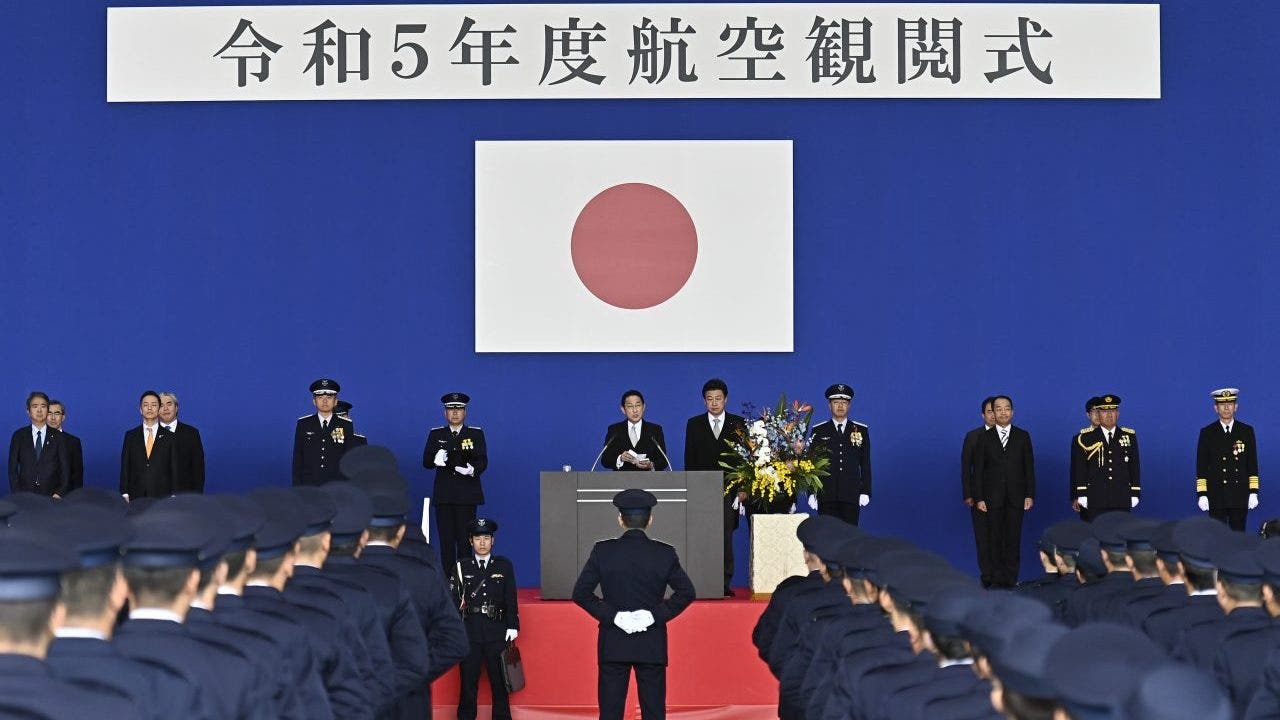
The Japanese cabinet, led by Prime Minister Fumio Kishida, isn't throwing the doors wide open. They are stepping through them with a cautious, almost agonizing deliberation. The new rules come with strings attached.
- Exports are currently limited to the specific fighter jet being co-developed.
- Sales are forbidden to countries currently involved in active conflicts.
- Every single sale must be approved by the cabinet.
It is a "limited" shift, but in the world of international diplomacy, there is no such thing as a small change in a pacifist policy. Once the seal is broken, the pressure begins to equalize.
This isn't just about jets. It’s about the "interoperability" of the West. By aligning its defense exports with NATO standards and European partners, Japan is stitching itself into a global security net. It is a move away from being a protected ward of the United States and toward being an active, lethal partner in the Pacific.
The Invisible Stakes
Why should a reader in London, New York, or Sydney care about a policy change in Tokyo?
Because the balance of power in the Indo-Pacific is the most significant geopolitical story of the 21st century. If Japan becomes an exporter of high-end military tech, the "cost of entry" for regional aggression goes up. A well-armed Japan, backed by a robust domestic industry that can sell its wares to allies like Australia or the Philippines, changes the calculus for any nation looking to redrawing borders.
There is also the matter of technological sovereignty. In a world where supply chains can be snapped by a single pandemic or a localized war, having the ability to design and build your own defense hardware is the ultimate insurance policy. Japan is buying that insurance, and the premium is its decades-long reputation as a non-combatant.
The tension in the Japanese streets is palpable. Protests outside the Diet, the Japanese parliament, aren't just about budgets. They are about the soul of the nation. One side argues that true "strength" is the refusal to fight. The other argues that "peace" is only possible when you carry a sword long enough to keep the wolves at bay.
Hiroshi looks at the titanium part one last time before placing it in a padded crate. He knows that his work is excellent. He knows it is necessary. But he also knows that the "Three Principles" that defined his youth are now ghosts, fading into the background of a world that has grown much louder, and much more dangerous, than he ever hoped it would be.
The rising sun is no longer just a symbol of a new day; it is reflecting off the polished wings of a machine designed to ensure that day remains unbroken, whatever the cost to the national conscience.
Japan has decided that to keep its peace, it must join the trade of war. It is a gamble of historic proportions, played out in the quiet offices of Tokyo and the loud factories of Nagoya, where the hum of the machines has taken on a sharper, more metallic edge.